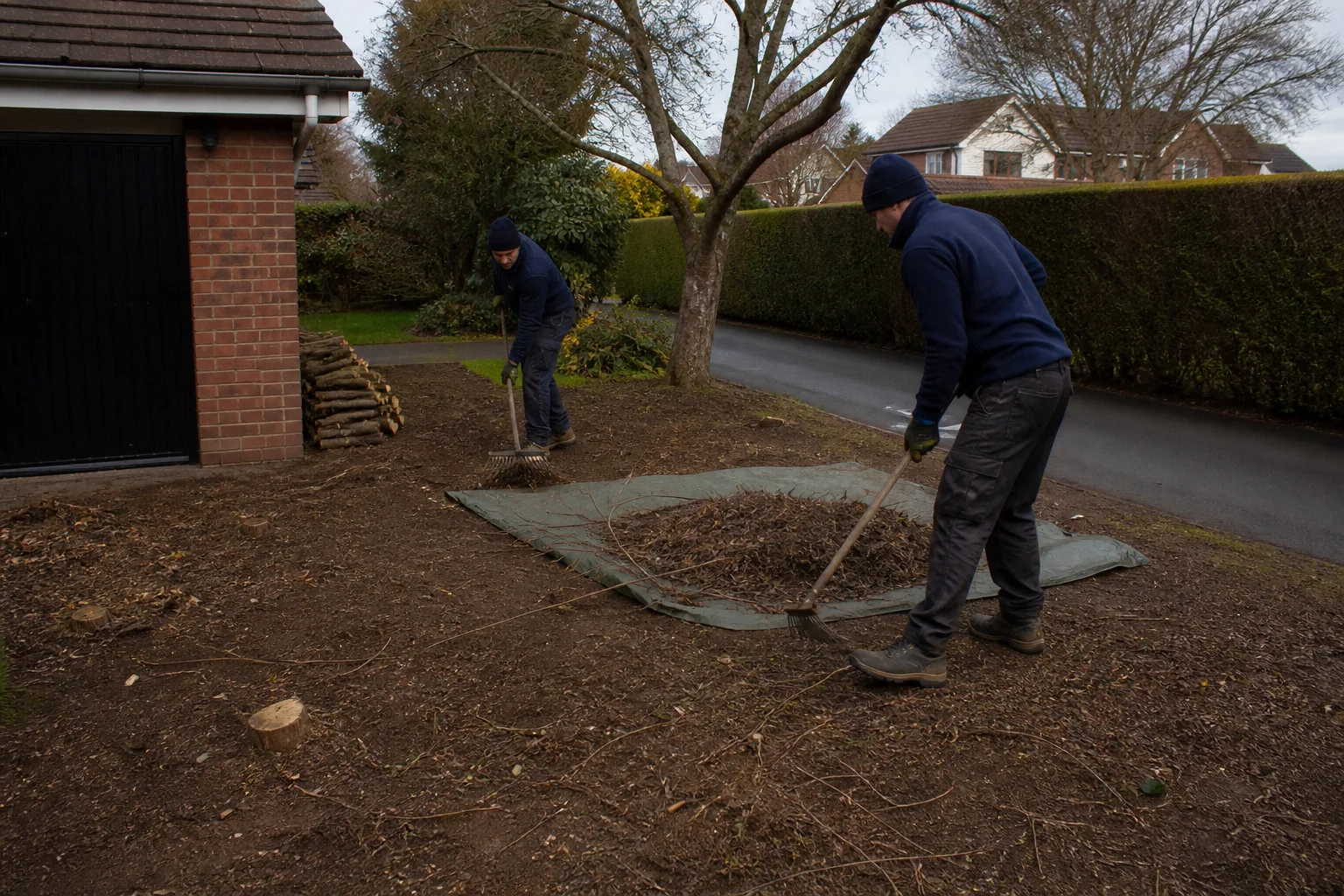
Site clearance in Chalfont St Peter
Site and land clearance in Chalfont St Peter
Site and land clearance in Chalfont St Peter begins with a marked area and a list of mature trees, hedges and shrubs that stay. Cutting, stump work and ground preparation are quoted separately.
Mark the boundary and retained growth
A clearance area may contain bramble, self-seeded stems, overgrown hedge growth and agreed unwanted small trees. Mature trees and planted boundaries contribute to Chalfont St Peter's local character, but the decision on site still comes from the customer's marked retained list and required work.
Photograph the strip from both ends and provide a simple plan where the edge is unclear. Ownership must be known before work starts. We do not provide boundary, ecology or tree surveys, so obtain separate advice where a written assessment or disputed line needs resolving.
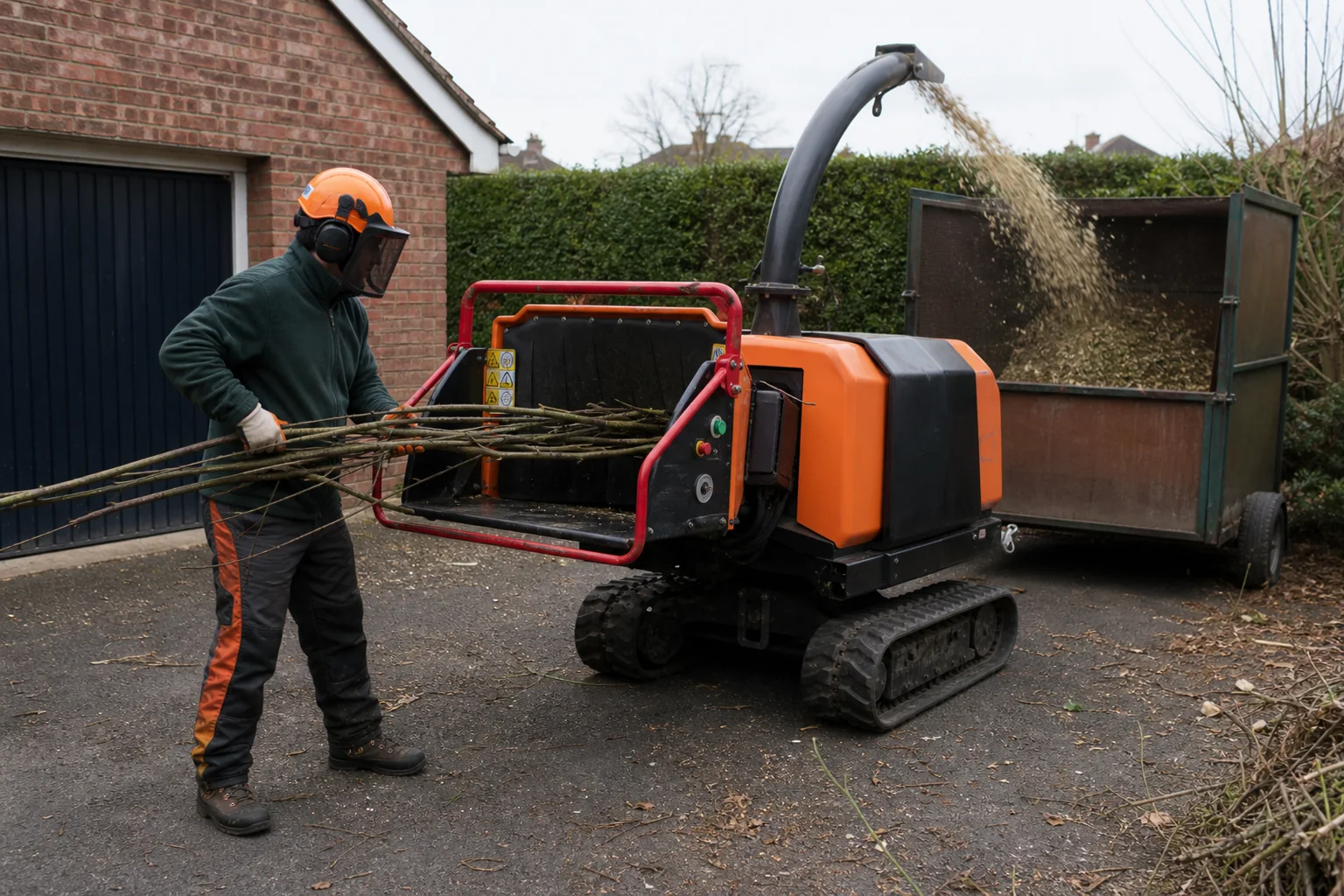
Plan garage, drive and gate access
The drive may provide room for a chipper while the clearance sits around a garage turn or behind a narrow gate. Show the full route, surface changes, soft ground and corners. Identify drains, glass, overhead cables and any access that must remain open.
Protected trees and active nests can alter the boundary or timing. Check the three local conservation-area boundaries and any TPO before tree removal or heavy pruning forms part of the job. The clearance plan should mark protected or retained growth clearly.
Define the ground after cutting
Cutting scrub, felling small trees, grinding stumps and preparing soil are separate operations. We list what is included. Low stems and roots remain where stump work is not requested. Supply another contractor's access and level requirements before pricing.
Clean-up is included. Brash, chip and timber are handled as agreed, while marked material stays in place. Mulching or landscaping can be added where requested. The completed area is checked against the boundary, retained list and finish written into the quote, not an assumed bare plot.