
Show us the site
Send the address, boundary photographs, access width and a clear note about what must stay.

Site and land clearance
We clear scrub, hedges and unwanted small trees across Iver, Slough and Buckinghamshire to make an agreed area usable again. Before cutting, we mark the boundary and everything that stays.
What this service covers
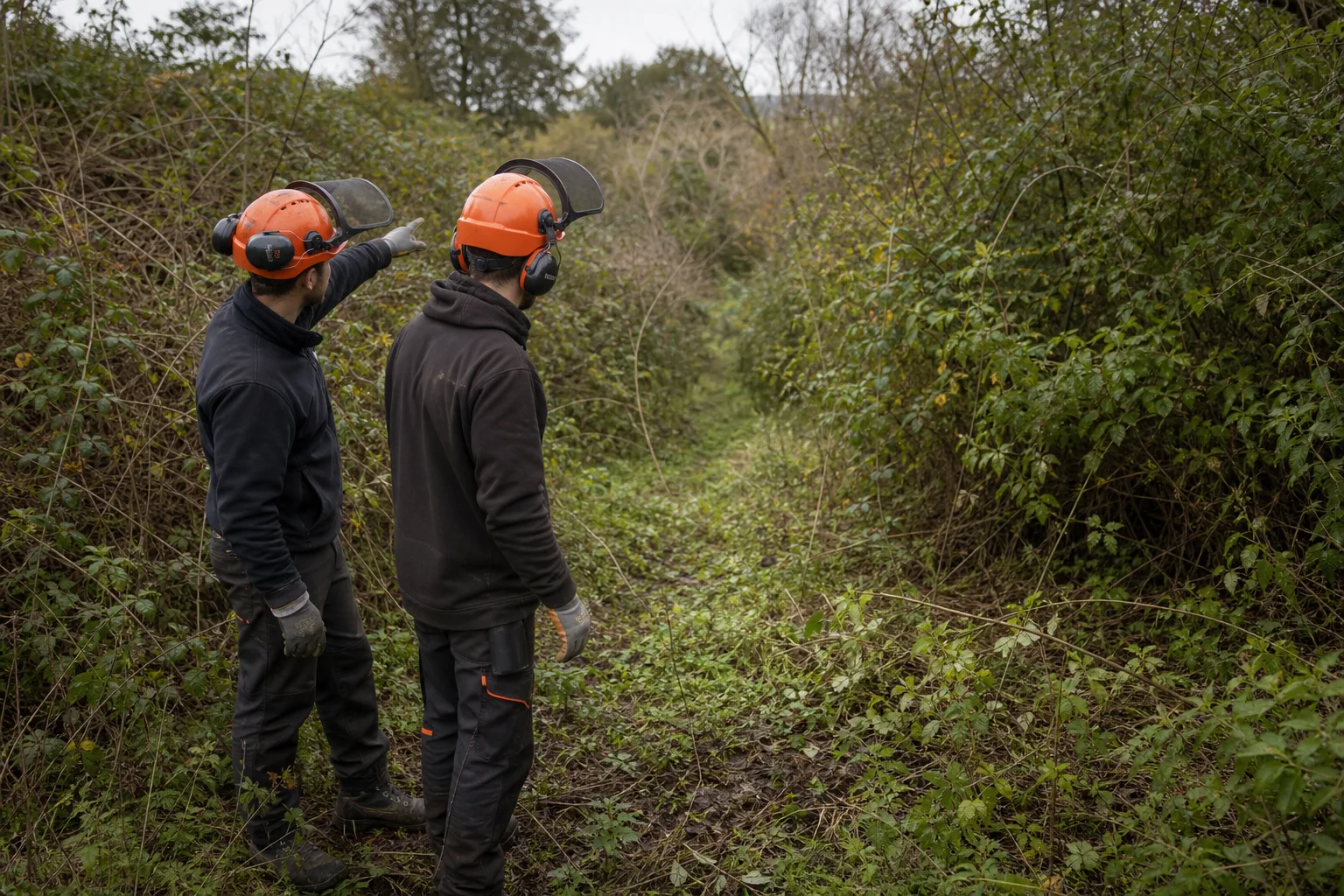
This service is for land where scrub, bramble, dense hedge growth, saplings or unwanted small trees have taken over the usable space. It may be an inaccessible garden edge or a plot that needs opening up for an agreed next use. We agree what stays as well as what goes. A mature tree, retained hedge or useful screen should not be lost because the clearance line was vague.
Site clearance is not one automatic operation. Cutting back scrub is different from felling larger trees, grinding stumps or changing the ground level. The quote separates those tasks so you know which vegetation is included and whether any stumps are to remain. Woodside also offers stump grinding, hedge removal, mulching and landscaping, but these are only included when they are written into the agreed work.
Dense growth can close paths, hide damaged fencing and make later work slower. Woody stems thicken and thorny growth spreads into the working route. A clear scope protects retained planting and avoids clearing the same route twice.
How it works
Send the address, boundary photographs, access width and a clear note about what must stay.
We write the clearance line, access, included tasks and any permission needed before work.
The qualified team carries out the specified work and completes the included clean-up.
The first job is to mark the area accurately. Plans, photographs and a walk around the plot can identify the boundary, retained trees, known services, neighbouring property and the route to the road. If the edge is disputed or unclear, that needs resolving before cutting starts. We carry out the agreed clearance. We do not provide boundary advice, tree surveys, land surveys or consultancy reports.
Access changes the method and price. A firm entrance is different from a narrow gate, soft ground or a route shared with residents. The team needs a controlled working zone, and approaches may need to stay clear during cutting. HSE forestry guidance stresses planning access routes and protecting people from the work area. The quote must reflect who uses the site and when.
For a useful first look, send wide photographs from each end of the plot, close views of thicker stems, the entrance width and the route to the road. Add a marked image showing what should stay. Photographs explain the layout, but do not replace permissions or specialist checks.
Clearance must not start on the assumption that every tree or hedge can be removed. A Tree Preservation Order can cover individual trees, groups or woodland. Conservation-area trees can also be controlled, and countryside hedgerows have separate rules. Larger volumes of growing trees may require a Forestry Commission felling licence. The landowner or person commissioning the work needs to confirm the position and provide any decision or licence before affected work starts.
Wildlife can change the programme. It is an offence to intentionally damage or destroy a wild bird's nest while it is in use or being built. Government guidance identifies cutting trees, bushes, hedges and rough vegetation as work that can affect birds. If the proposal needs an ecological survey, mitigation plan or wildlife licence, the owner may need to appoint a qualified ecology specialist separately. We do not offer ecology surveys or consultancy.
There is no single clearance month that suits every plot. Timing depends on active nests, other protected species, consent conditions, weather, ground condition and the next use of the site. When a relevant constraint appears, the work may need to pause, move to another area or be rescheduled. That is better than cutting first and discovering the problem afterwards.
Permission and specialist ecology are separate from Woodside's clearance service where the site requires them.
Before work begins, the team confirms the clearance line, retained vegetation, access route and working zone against the quote. Cutting then follows the agreed sequence so brash and stems do not block the route needed for the next part of the job. Qualified team members carry out the tree surgery tasks assigned to them. We carry £10 million public liability insurance.
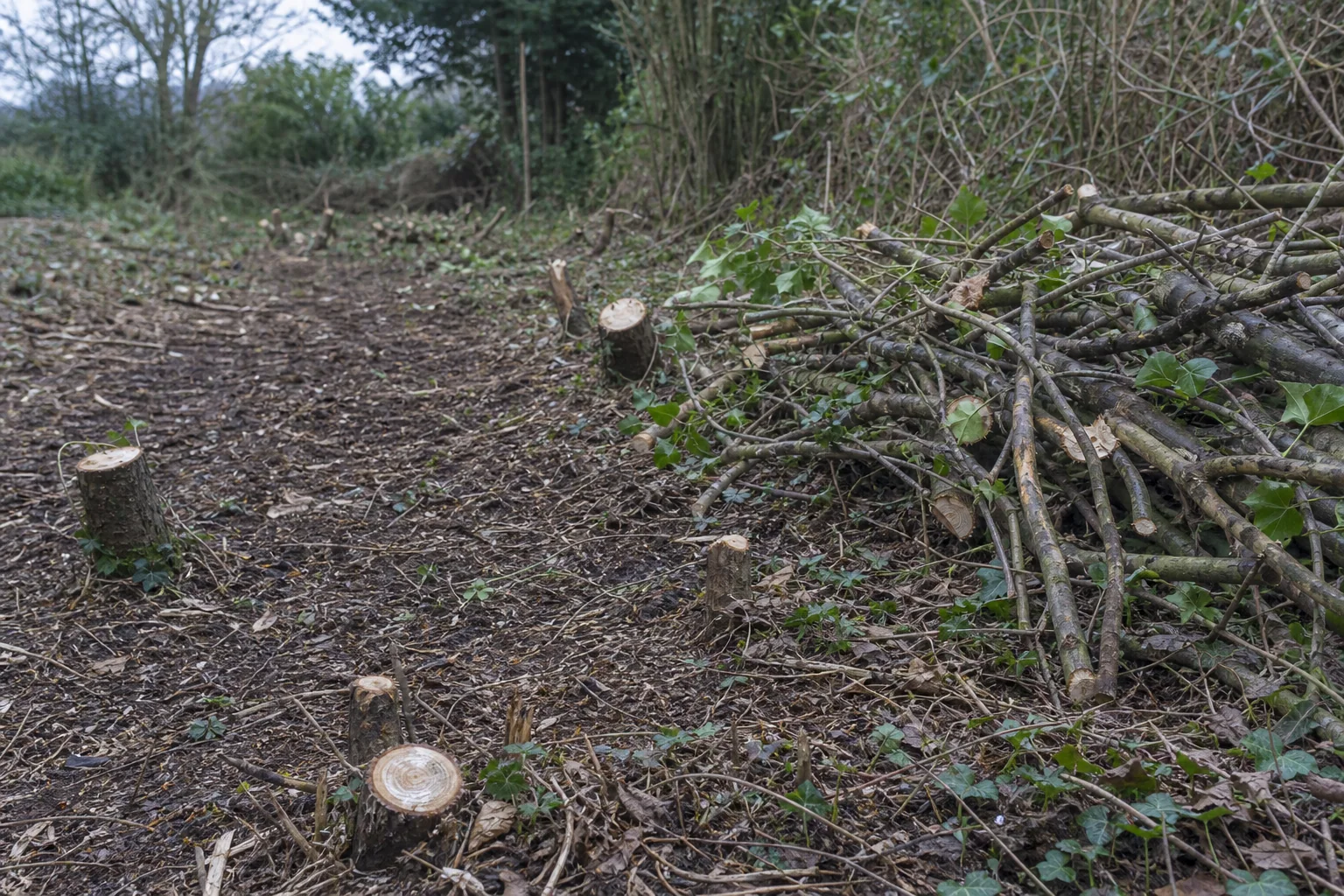
Clean-up is included in every job. We agree what happens to cut vegetation, timber and chip for that site. We do not promise one disposal method for every clearance. Mulching or follow-on landscaping can be discussed and priced separately.
Straight answers
Yes, where the required work falls within the agreed site-clearance scope. Send photographs of the whole area, the thickest growth and the route to the road. Larger trees, stumps and follow-on landscaping are identified separately in the quote.
The law protects nests while they are being used or built, rather than setting one universal stop date. The work must be planned around active nests and other protected wildlife. A site may need specialist ecology input or a revised date, arranged separately by the owner where required.
Not automatically. Clean-up is included, but stump treatment and the handling of timber, chip and other cut material are agreed for each job. The written quote is the place to check exactly what is included.