
Show us the whole hedge
Send its length, height, both ends, base and the access from the road.

Hedge trimming and removal
We trim, reduce and remove hedges across Iver, Slough and Buckinghamshire. Before cutting starts, we agree the finished height, boundary line and whether the hedge bases stay or go.
What this service covers
Hedge trimming takes off recent growth to bring an established hedge back to its usual line. It suits a hedge that is broadly the right height and width but has become untidy or started to narrow a path. Regular cutting also makes it easier to keep the sides even instead of chasing several seasons of growth in one visit.
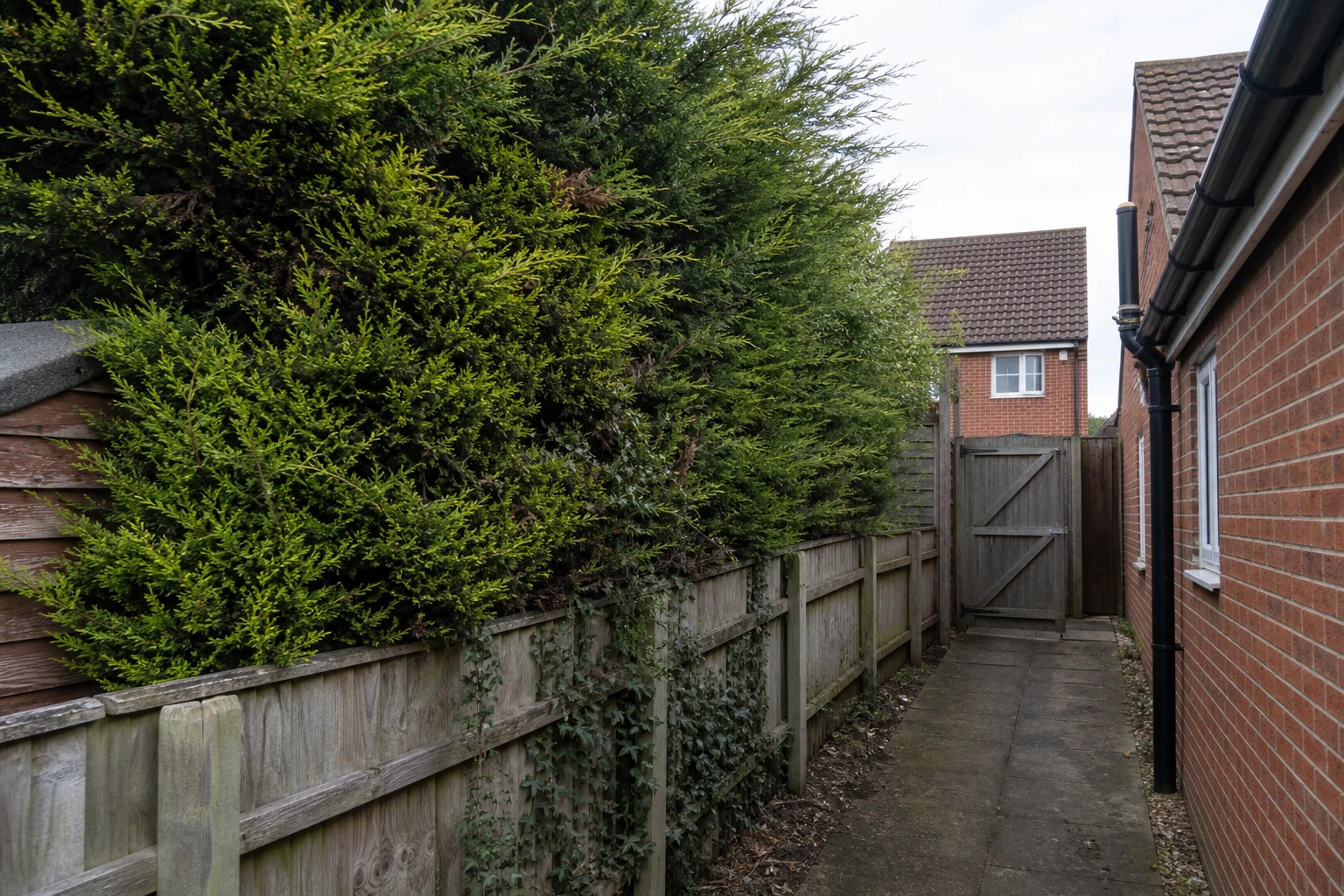
A reduction changes the height or width more noticeably. The species matters before that cut is set. Many conifers, including common cypress hedges, do not reliably produce green shoots from old brown wood. Cutting behind the live foliage can leave a bare face that does not fill in. Broadleaf hedges can respond differently, but the likely finish still needs to be discussed before a hard cut.
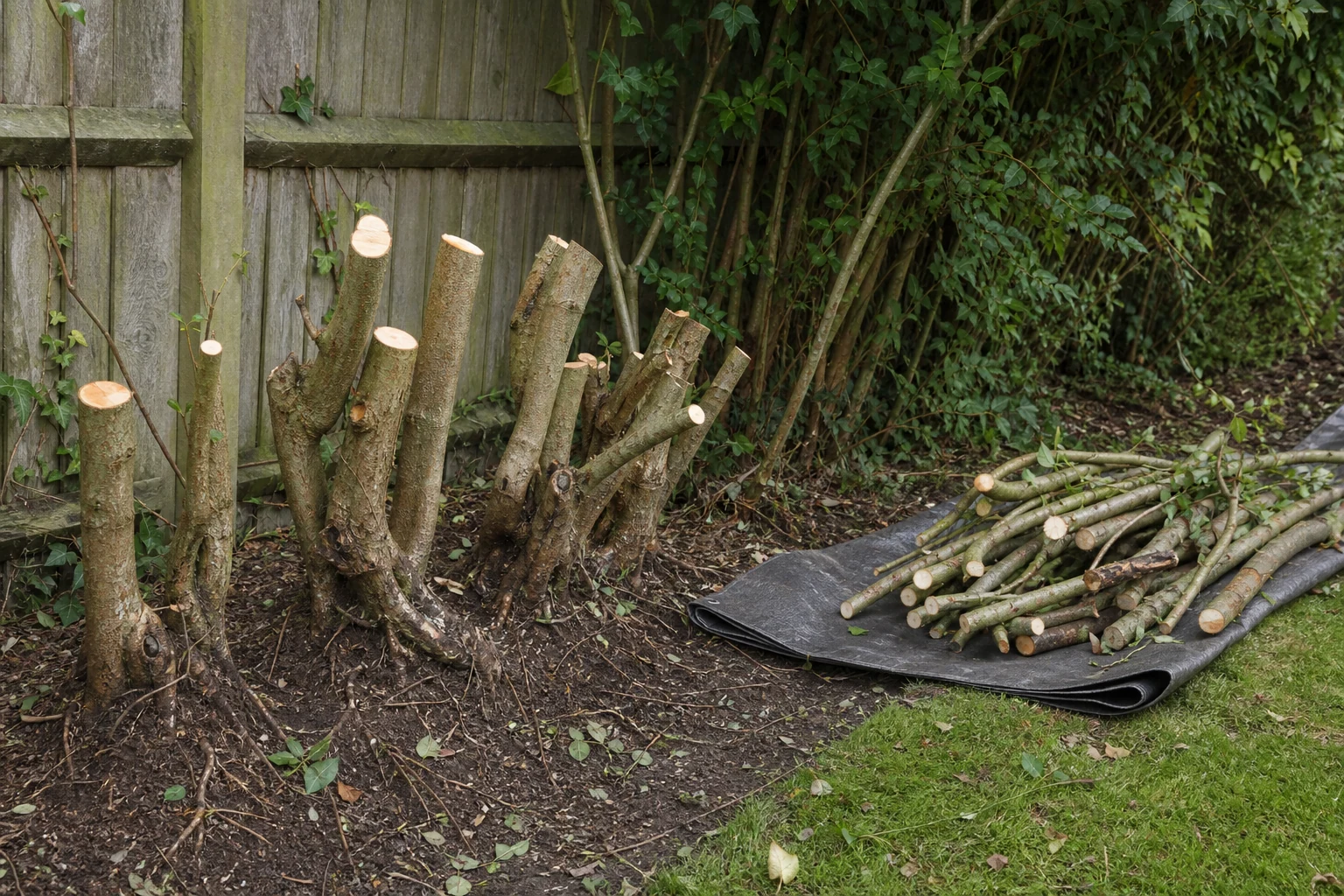
Removal means taking down the complete line rather than managing its size. Cutting the stems, treating or removing the woody bases and preparing the ground for a fence or new planting are separate decisions. The quote should state which parts are included. If the main aim is privacy, we can also quote for fencing or landscaping rather than leave the new boundary to guesswork.
How it works
Send its length, height, both ends, base and the access from the road.
We write trimming, reduction or removal and any separate base work.
We carry out the agreed work and include clean-up of the working area.
Send photographs of both ends of the hedge, its full height, the base and the route from the garden to the road. A hedge beside a wide drive is a different job from the same length behind a terraced house. Gates, steps, sheds, conservatories, ponds, overhead lines and a narrow side passage can all change the working space and the size of material that can be moved out.
Please confirm who owns the hedge and where the agreed boundary sits. Government guidance says overhanging branches or roots can normally be cut back only as far as the property boundary, with extra checks where protected trees or conservation areas are involved. We do not settle ownership or boundary disputes. Where a neighbour is involved, agreeing the proposed line before booking avoids a disagreement after the cut.
Two metres is not a blanket maximum height for every garden hedge. It is one of several tests used in the council process for complaints about certain evergreen or semi-evergreen hedges. That process expects neighbours to try to resolve the matter first. If a complaint, notice, planning condition or covenant is already in play, get the position confirmed by the council or an appropriate adviser before work is booked.
There is no single trimming month for every hedge. RHS guidance gives different timings for yew, privet, beech, hornbeam, leylandii, laurel and flowering hedges. Some formal hedges need more than one light cut during the growing season. A flowering hedge may need to be left until after flowering, while a larger renovation cut may suit a different part of the year.
Birds, eggs and nests in use are protected by law. An active nest can stop or change the work whatever the date. Government guidance identifies 1 March to 31 August as the usual main nesting period, but a calendar alone is not a nest check. Hedges on agricultural land also have separate management rules. Countryside hedgerow removal can require notice or permission from the local planning authority, so rural and field boundaries need checking before they are treated like a domestic garden hedge.
This is practical signposting, not legal advice. The council or relevant authority should confirm restrictions for the particular hedge and address.
Before cutting starts, we confirm the agreed height, face and ends of the hedge. The working area needs to stay clear while material is brought down and moved. Where mature stems within the hedge turn the work into tree surgery, the relevant part is handled by qualified tree surgeons. A removal quote also records whether bases stay in the ground or need separate treatment.
Clean-up is included in every job. What happens to cut branches and other material is agreed for that job, so the finish is clear before the team arrives. Removing a hedge can expose a tired fence, uneven ground or a view that dense foliage had hidden. New fencing or landscaping should be planned from the real condition found at the boundary, not from an assumed result.
Regrowth depends on the species, the depth of cut and the condition of the hedge. We will not promise that a hard-reduced hedge will green up where live growth has been removed. If a tidy green screen cannot be kept at the requested size, replacement may give a more honest result than cutting deep into old wood and hoping it recovers.
Straight answers
Not always. Many conifers do not reliably regrow from old brown wood. We need to see how much live foliage remains at the proposed line before a likely finish can be discussed.
The ownership and boundary need to be clear first. Government guidance describes cutting encroaching growth only to the boundary and warns that protected trees may need council permission. We do not decide a disputed boundary or provide legal advice.
Not automatically. Cutting down the hedge, dealing with the bases and installing fencing are separate parts of the job. We agree what is included. Woodside also offers fencing and landscaping when those are needed afterwards.