
Show us the tree and access
Send the address, a whole-tree photograph, the area below the crown and the route to the road.

Tree pruning
We prune trees across Iver, Slough and Buckinghamshire to clear roofs, paths and gardens, remove damaged growth or manage an overgrown crown. Before work starts, we write down which branches or part of the crown we will cut.
What this service covers
Good pruning starts with a reason. You may need space above a roof or path, a damaged branch removed or an overgrown crown brought back under control. Cutting every branch to the same line rarely gives a tree a natural shape.
Leaves feed the tree and every cut leaves a wound. Removing too much can weaken the tree, while large cuts give decay a bigger opening. We look at the branch sizes and the clearance you need before agreeing the work. Whole-tree photographs help, although we may still need to see the crown in person.
Sometimes pruning is the wrong answer. Crown reduction may suit a tree that has outgrown its space. If the whole tree has to come down, that is tree felling and removal. We will keep those jobs separate in the quote.
How it works
Send the address, a whole-tree photograph, the area below the crown and the route to the road.
We write down the part of the crown, the result you want, the access and what happens to the cut branches.
The qualified team completes the agreed work and clean-up, with material handled as quoted.
‘Cut it back’ can mean several different jobs. Crown lifting creates more room below the canopy. Crown thinning removes selected inner growth without changing the outside size. Crown reduction shortens the height or spread. Deadwooding removes dead branches. You do not need to know the trade term, but we do need to agree the result.
We identify the tree, the part of the crown involved and the clearance or reduction you need. This is particularly important for a protected tree, where the proposed work must match the council application or decision. Send us any reference and approved wording with your enquiry.
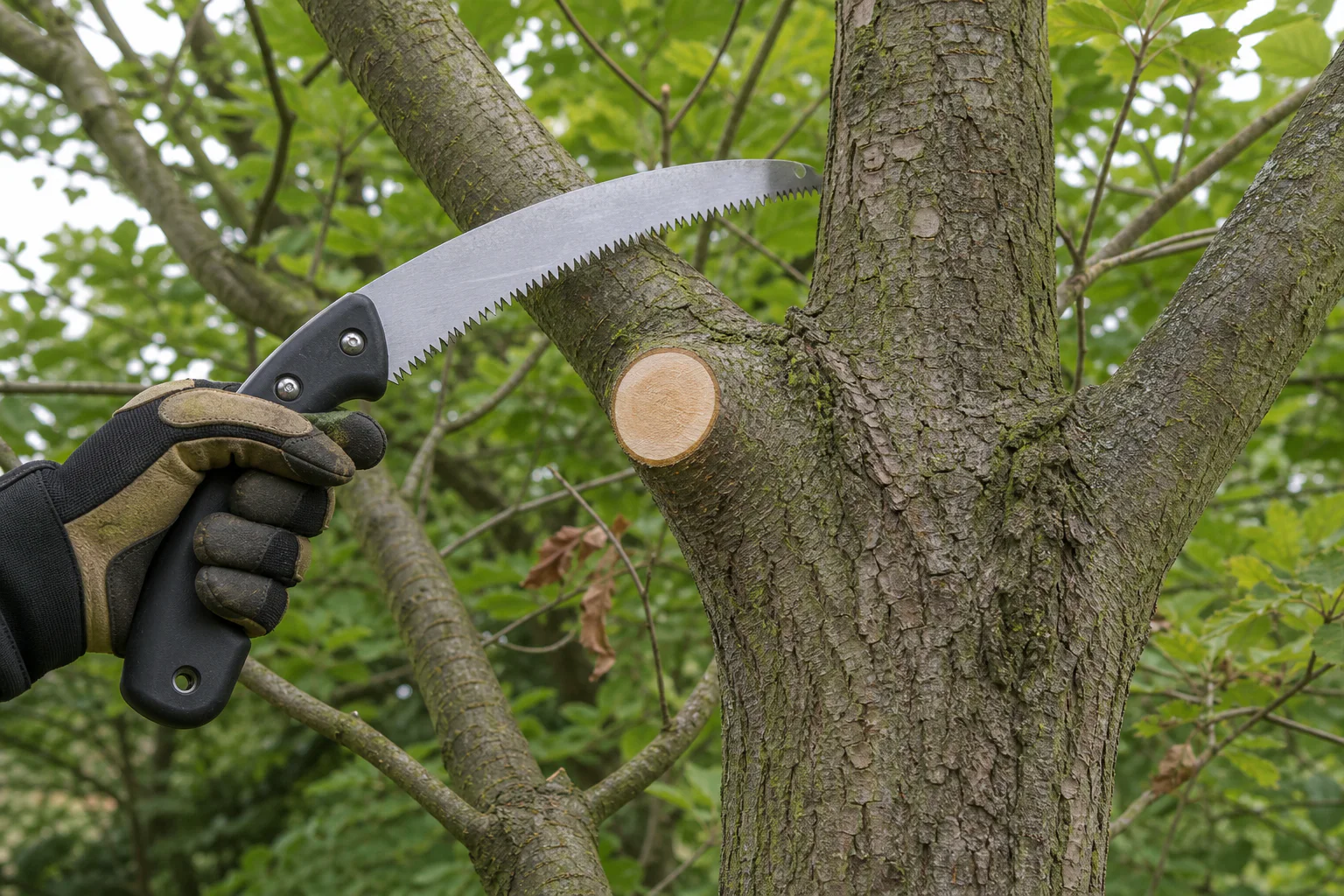
Cut position matters. A branch normally has a collar where it meets its parent stem. Cutting outside that collar avoids a flush cut into the parent branch and keeps the wound smaller. Timing depends on the pruning aim and the type of tree. One month does not suit every tree.
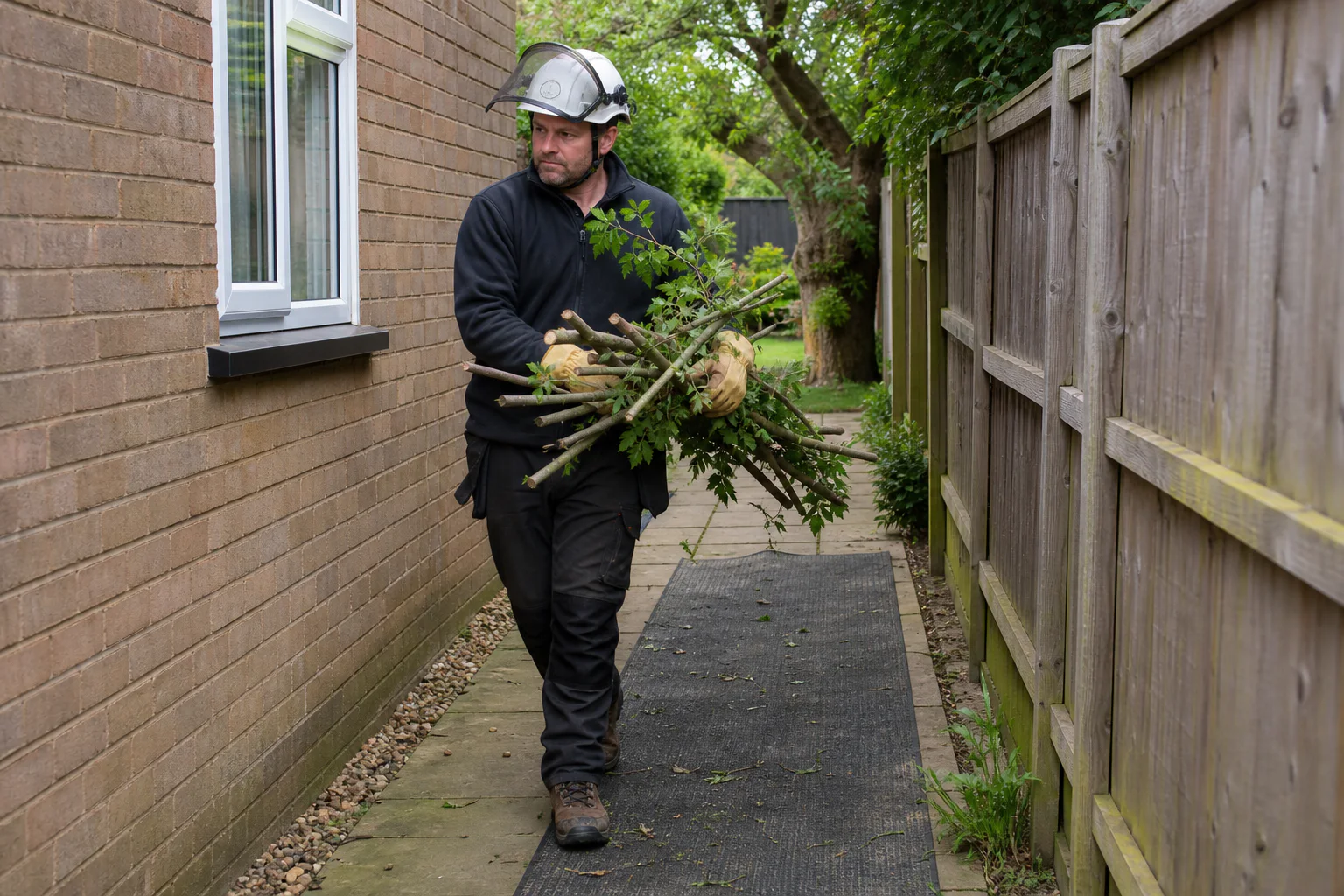
Two similar trees can need very different plans. Open lawn below an Iver garden tree is not the same as a narrow passage behind a Slough terrace. Show us any greenhouse, shed, planted bed, overhead cable or delicate paving, along with every gate and tight turn on the route to the road.
If the branches cannot be reached safely from the ground, a qualified climber may work from a rope and harness. The tree and access decide the method. Woodside Forestry is established 2008 and has £10 million public liability insurance.
Clean-up is included. We agree what happens to the branches, chip and timber before work starts. On a narrow site, we also cut each piece to a size that can pass walls, windows and planting safely.
A Tree Preservation Order can cover pruning, while trees in a conservation area can require six weeks' notice. Check with the local planning authority before work starts and send us any council decision or reference.
Wild birds, their eggs and active nests are protected by law. If we find an active nest, the timing or part of the crown we can work on may need to change. The tree itself must be checked rather than relying on a date in the calendar.
Pruning time also depends on the type of tree, the reason for the work and the size of the cuts. We agree the date around the tree, permission, wildlife, weather and safe site conditions.
For an immediate danger after high winds, keep people away from the area and use the 24-hour emergency call-out service.
Straight answers
It depends on the type of tree, reason for pruning and cut size. Permission, active nests and weather can also affect the date, so one season cannot be used as a rule for every tree.
One percentage does not fit every tree. Crown size, branch diameter, condition and the intended result all matter. Heavy removal can reduce vitality, so the specification should remove only what is needed.
Yes. Clean-up is included in every job. The quote also states what will happen to branches, chip and timber, because those details are agreed for the individual site.