
Practical pruning advice
When is the best time to prune a tree?
The best time to prune a tree depends on its species, the reason for cutting and whether the work can wait. There is no single month that suits every garden tree.
Start with the reason for pruning
Tree pruning should have a clear purpose. That may be removing dead branches, creating clearance from a roof, correcting damaged growth or reducing a crown that has become unsuitable for its space. The right cut and the right season follow from that purpose.
A calendar alone cannot tell you what to do. A small amount of deadwood may be dealt with differently from a large crown reduction. Work on a young apple is not planned in the same way as work on a mature oak. Decide what needs to change, then check how that species is likely to respond.
Age matters as well. Formative pruning on a young tree can remove a developing problem while the branches are small. The same correction on a mature tree may create large wounds or remove too much leaf area. Where the tree is healthy and the concern is mainly appearance, a restrained specification is often more useful than trying to force it into a shape that does not suit the species.
Timing changes with the tree
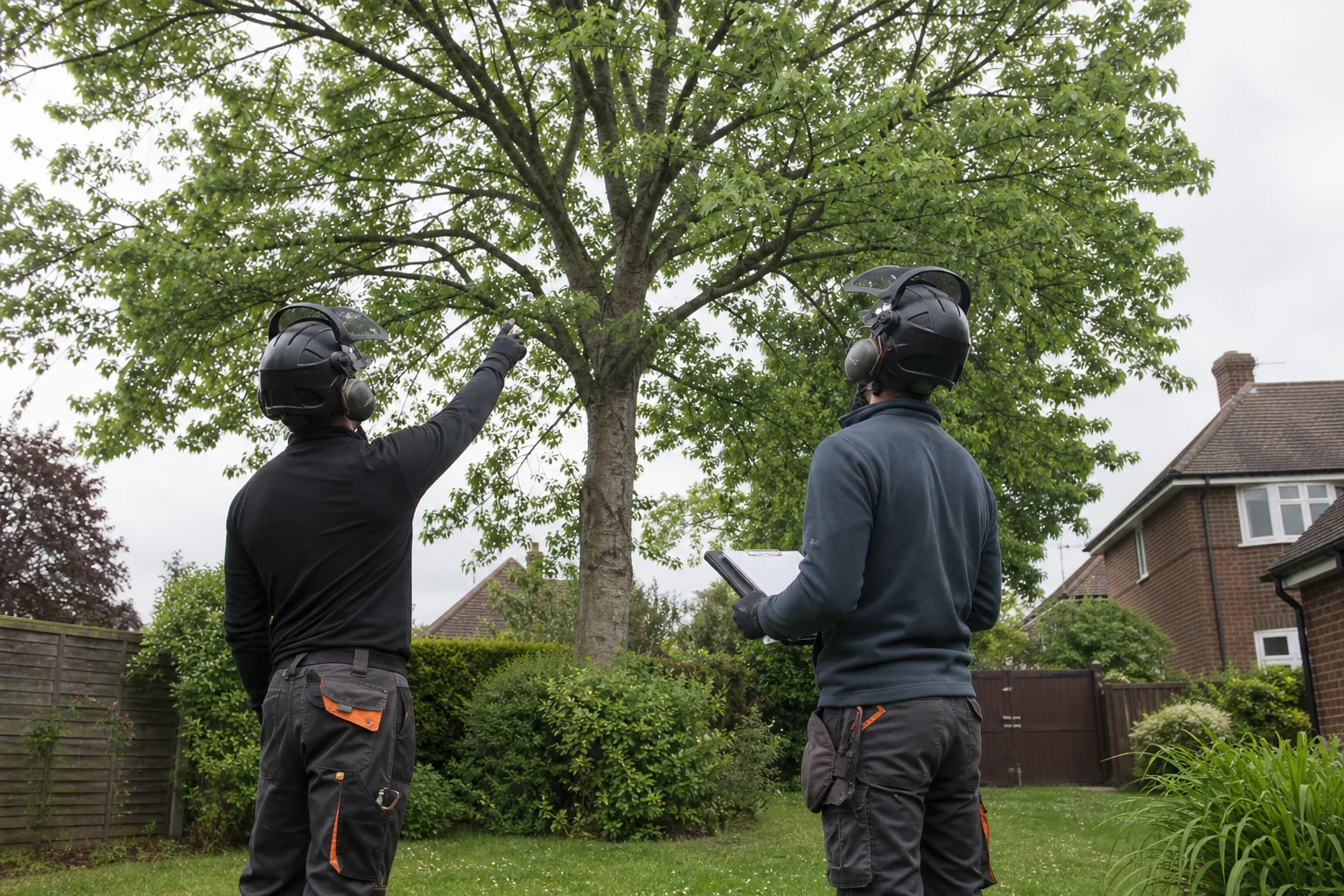
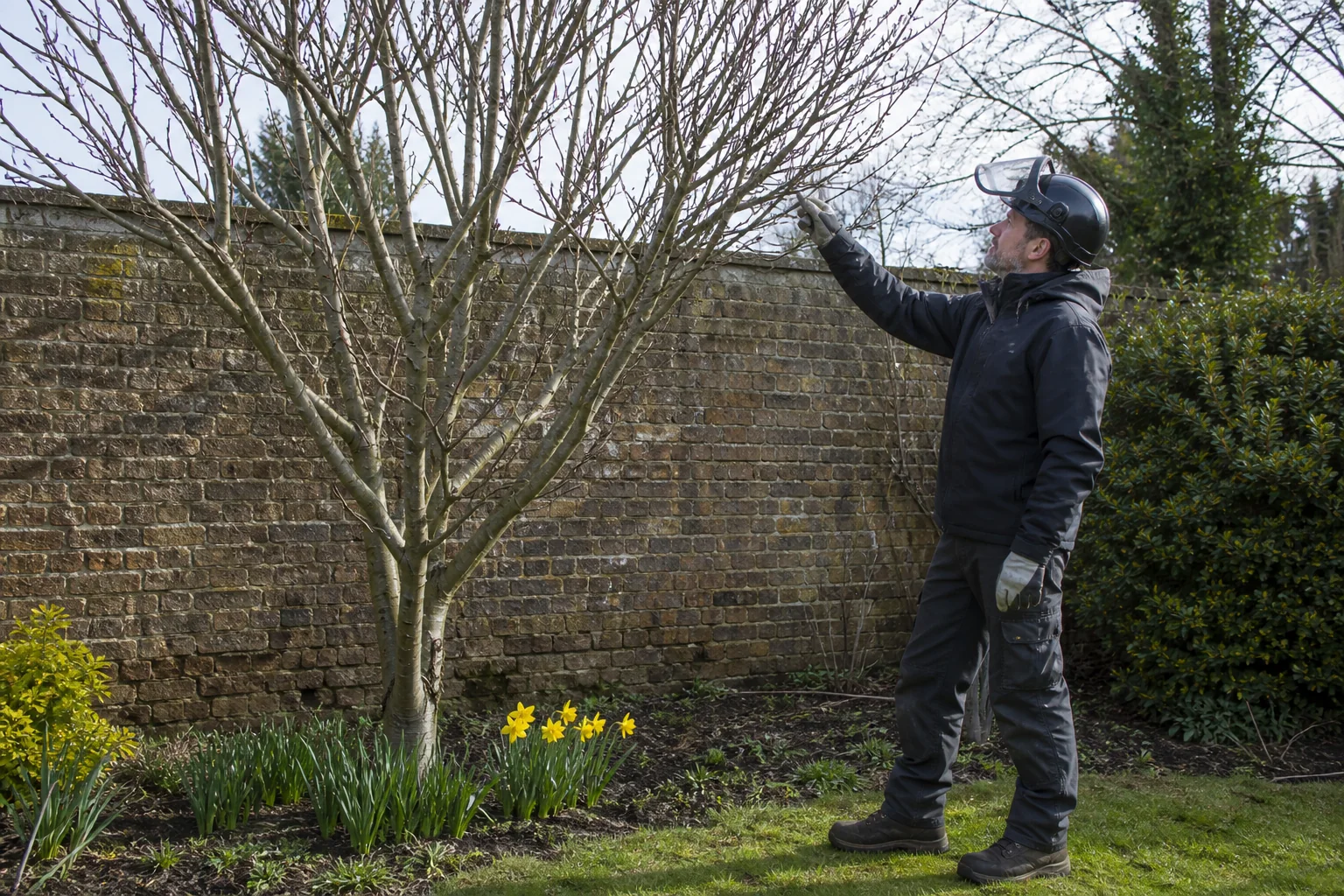
Many deciduous trees are commonly pruned while dormant, when the crown structure is visible and leaves are out of the way. That is not a blanket winter rule. Some trees bleed sap heavily when cut at the wrong time, while cherries and other Prunus are usually pruned in summer to reduce the risk of silver leaf disease.
Fruit trees add another consideration. Winter pruning can encourage growth on apples and pears, while summer pruning can be used to control vigorous shoots on established trained trees. Evergreens and conifers have their own limits because cutting into old bare wood may leave a gap that does not refill.
The amount of work also changes the choice. Removing one damaged branch is different from reducing an entire crown. A larger operation may be spread or postponed when the tree is under stress, while light work may fit a broader window. Good timing cannot make an unsuitable cut harmless, so the pruning specification still comes first.
Weather and condition can change the plan
Avoid treating a booked date as more important than the tree or site. Strong wind, frozen conditions, saturated ground or poor visibility can affect safe access and the way cut material is controlled. A tree that is already weak, split or decayed may also need a different method from routine pruning.
Urgent work after failure is separate from routine seasonal pruning. Keep people away from a hanging branch or an unstable tree and arrange an assessment. Do not stand beneath it to take close photographs, and do not try to pull down a damaged limb with a rope from the garden.
Ground conditions matter beyond the base of the tree. Climbing and lowering equipment needs a safe working area, and machinery can mark wet lawns or compact soft ground. If the job is not urgent, moving it to a drier period may protect the garden and give the crew a more dependable access route.
Check for nests and protected trees
Wild birds, their eggs and active nests are protected. The practical check is whether a nest is being built or used, not whether the date falls inside a simple fixed season. If activity is found, work that would damage or disturb the nest must stop and the plan may need to change.
Protection attached to the tree is a separate matter. A Tree Preservation Order or conservation-area control can require consent or notice before pruning. Confirm the position with the local planning authority before non-emergency work starts and keep any approved specification with the job details.
A nest check is made close to the planned work, not just from a photograph sent weeks earlier. Dense ivy, evergreen foliage and cavities can hide activity. Tell the tree surgeon about birds you have noticed using the tree, and avoid clearing surrounding shrubs before the work merely to make access easier.
What to send for a pruning quote
Send a photograph of the whole tree in its setting, a closer view of the branches causing concern and a picture of the route from the road. Name the species if you know it, but do not guess if you are unsure. Explain what you want the pruning to achieve rather than prescribing a percentage without context.
We can then discuss the work, access and suitable timing. We write the agreed specification and clean-up. If a separate tree survey or consultancy report is required, that must be arranged with a suitable specialist because we do not provide surveys.
Leaf-on and leaf-off photographs can help when the concern changes with the season. They may show how far the crown reaches over a roof, where shade falls or which branches failed to come into leaf. Keep any local-council decision with those photographs so the quoted specification matches the permitted work.