

Cherry tree work
Cherry tree surgery
Cherry tree surgery needs a clear reason and the right time of year. We plan the cuts around the tree's form, its condition and the space it shares with the garden.
Show whether it is ornamental, fruiting, weeping or trained
Routine cherry pruning is normally planned for summer
Name the branch, obstruction or clearance causing concern
Cherry tree work
First identify the type of cherry
Cherry covers ornamental flowering trees, fruiting varieties and wild cherry. Their mature size and shape can differ considerably. A weeping ornamental, a trained fruit tree and a broad wild cherry should not receive the same pruning instruction.
Photograph the whole crown, the lower trunk and a clear leaf or flower. Wild cherry has shiny reddish-brown bark marked by horizontal lenticels, pointed toothed leaves and white spring flowers, but those features do not describe every cultivated cherry.
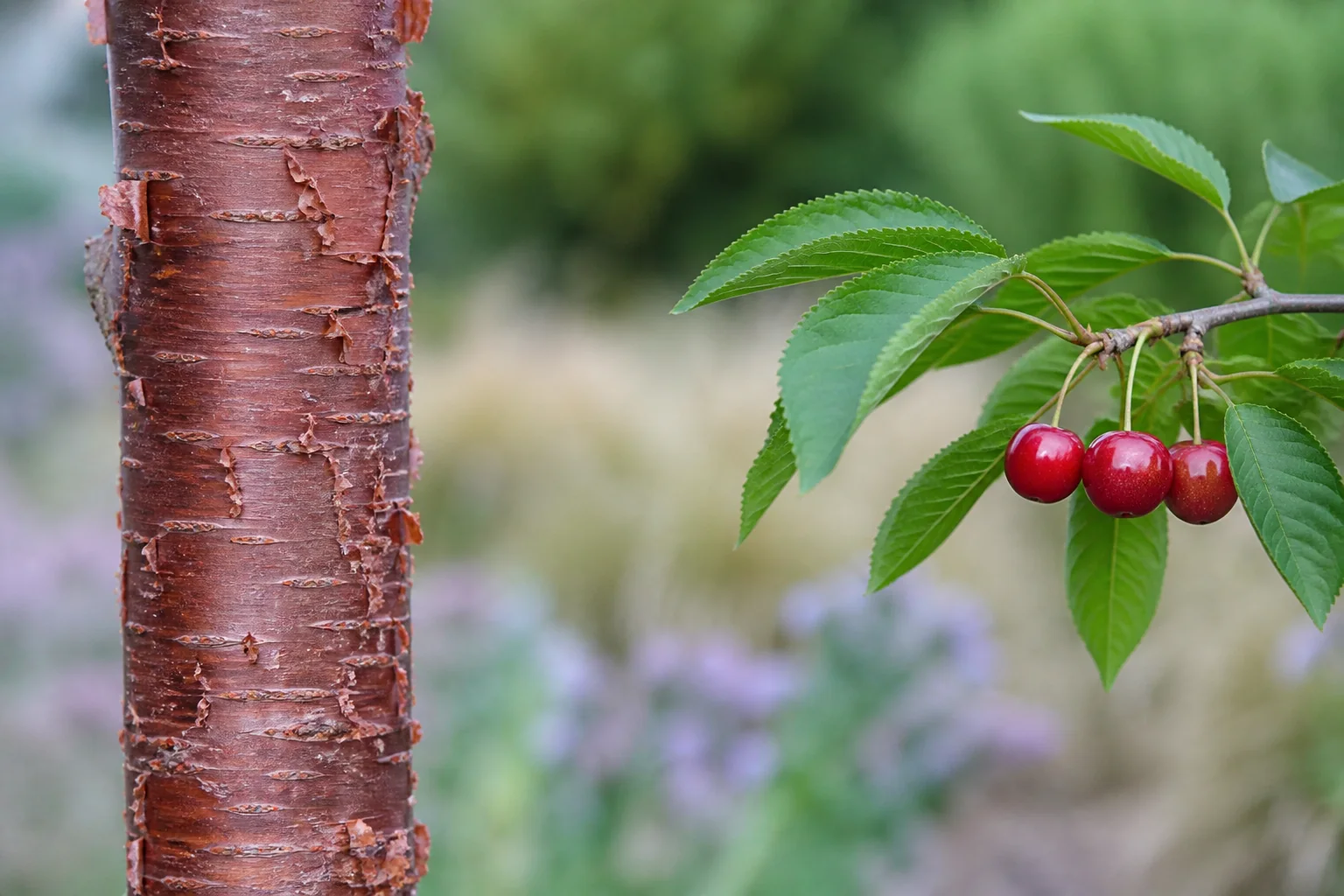
Cherry pruning is usually a summer job
Cherry and other Prunus trees are vulnerable to silver leaf and bacterial canker. The RHS advises pruning in summer, commonly from April to July for ornamental cherries and after harvest for established fruiting cherries. Dry conditions are preferred where the work can be planned.
The exact date still depends on the type of cherry, the work required, nesting birds, weather and any urgent damage. A storm-torn branch cannot always wait for the normal pruning window, so the immediate risk and the longer-term tree response need separate decisions.
Set the reason for every cut
Common aims include taking dead growth out of the crown, lifting a low branch from a path or creating measured clearance from a roof. A general request to make the tree smaller gives no limit for the work and can lead to a poor outline or repeated heavy regrowth.
Send the obstruction and the complete tree in the same set of photographs. We can then discuss which part of the crown causes the problem and whether a selected branch removal or a restrained reduction is more suitable.
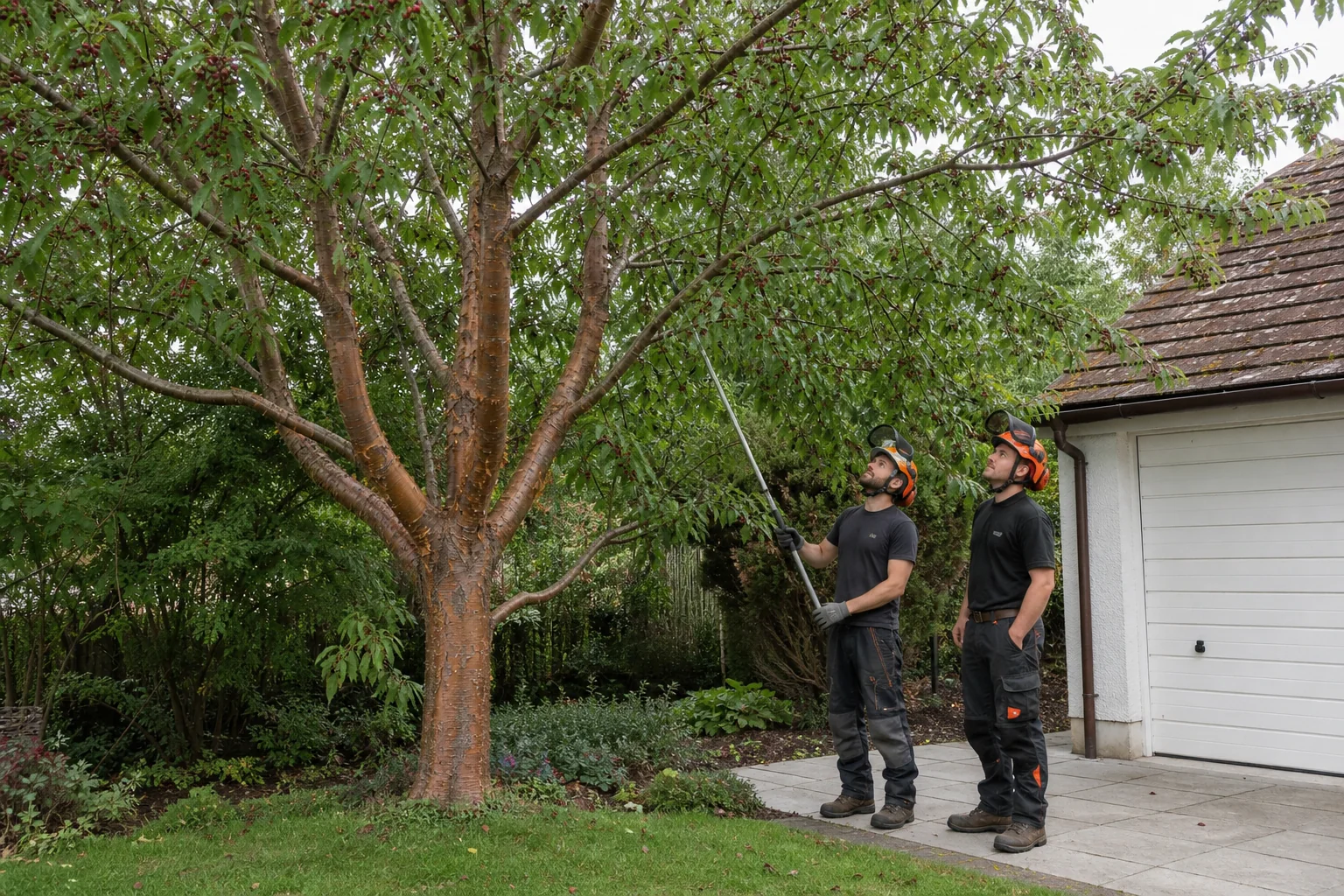
Bark damage and dieback need context
Dead shoots, sunken bark and gummy discharge can occur with bacterial canker, but a photograph does not confirm the cause. Show the affected part, the branch above it and the whole crown. We carry out tree work and do not provide surveys or consultancy reports.
Before cutting, check whether the tree is protected by a Tree Preservation Order or stands in a conservation area. Also show gates, steps, roofs and planting beneath the crown. Clean-up is included, with branch and timber handling agreed for the job.