
Practical tree advice
Do I need permission to cut down or prune a tree?
You may need permission before cutting down or pruning a tree. The answer depends on whether the tree is protected, where it stands and what work is proposed.
Permission depends on the tree and location
Check the tree's protection status before work starts. If it is covered by a Tree Preservation Order, consent is normally needed from the local planning authority. If it stands in a conservation area, the authority normally needs written notice of the proposed work.
The application or notice must describe the work clearly. 'Cut it back' is not a useful specification. State the tree, the branches or crown work proposed and the reason for it.
Permission follows the proposed work, not just the tree's address. Removing one dead branch, reducing the whole crown and felling the tree are different proposals. Ask for the protection record and current application route, then make sure the description on the decision matches the work being quoted.
Tree Preservation Orders
A Tree Preservation Order, usually shortened to TPO, protects an individual tree, a group, an area or woodland. Cutting down, uprooting or carrying out certain work to a protected tree without the required consent can be an offence.
Ask the local planning authority whether the tree is protected. If it is, use the authority's process and wait for the decision before arranging non-emergency work. Keep the decision and approved specification with the job details.
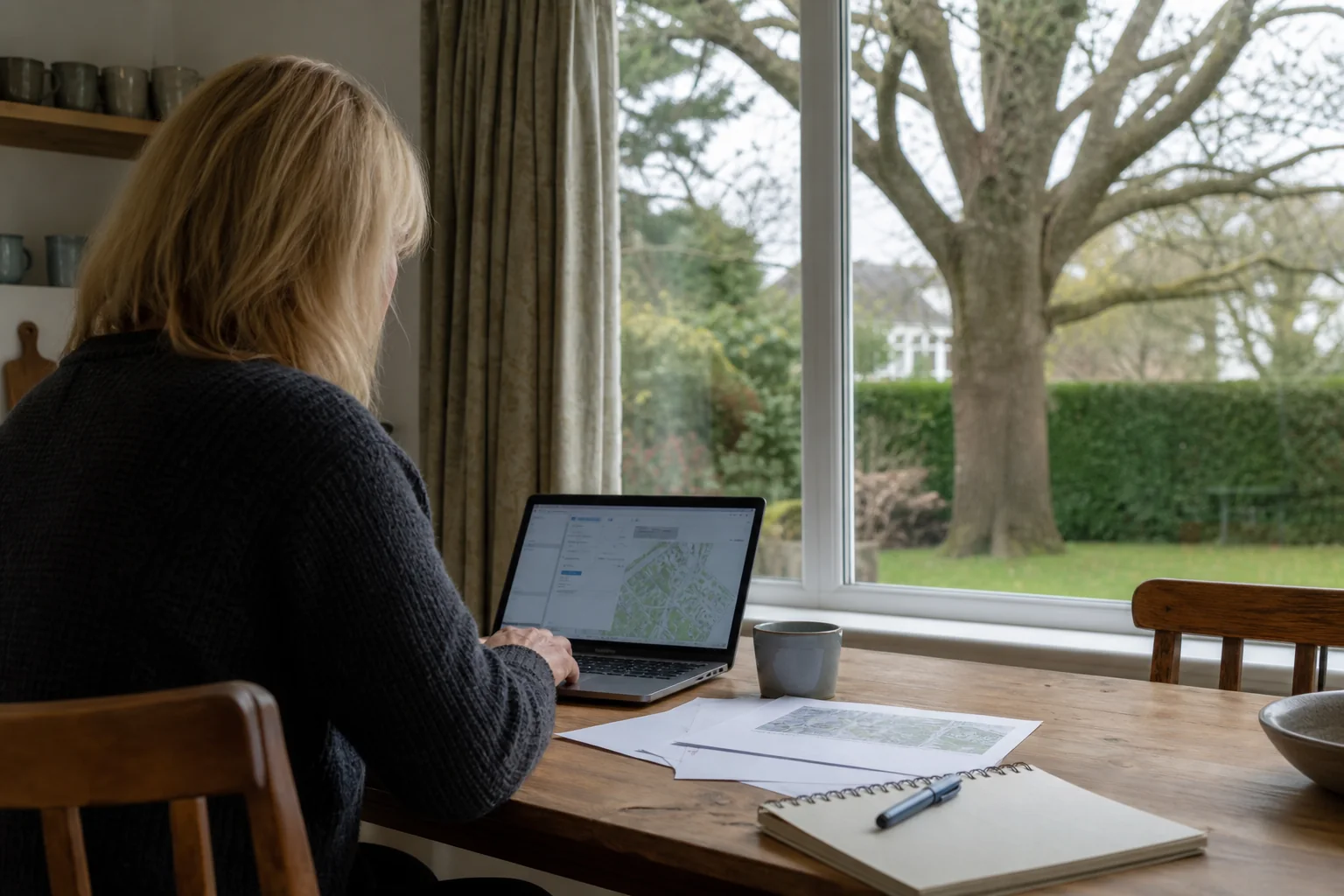
Do not assume that a TPO will be obvious in the garden or mentioned in old house paperwork. Online maps can be useful starting points, but the local planning authority holds the formal record. If several trees stand close together, use a clear plan and photographs so the application identifies the right tree.
Trees in conservation areas
Separate controls apply to many trees in conservation areas. Government guidance describes a six-week notice process that gives the local planning authority time to consider the proposed work. Exceptions exist, so the tree, stem size and circumstances still matter.
Use the local authority's current instructions rather than relying on a neighbour's experience or an old decision. Boundaries and protection records can change, and each proposal is considered on its own details.
The notice period is not an automatic approval for any work described vaguely. Submit a useful specification and wait for the authority's response or the relevant period to pass before booking non-emergency cutting. If the authority makes a TPO during that process, the proposal then follows the protected-tree route.
Check ownership, wildlife and felling rules
Protection is not the only question. Confirm who owns the tree, whether access crosses another property and whether the proposed work reaches over a boundary. If ownership or a boundary is disputed, settle that before the work is booked.
Active wild-bird nests are protected by law, so tree and hedge work must avoid damaging a nest while it is being used or built. Larger or non-exempt felling can also need a Forestry Commission felling licence. That is a separate check from TPO and conservation-area controls.
The condition of the tree matters too. A photograph can show position and access, but it cannot confirm every defect. We do not offer surveys or consultancy reports, so a separate specialist may be needed where a written assessment is required.
Covenants, lease conditions and shared ownership can add private restrictions even when planning consent is not required. They are not decided by the tree surgeon. Check the relevant documents and obtain the landowner's authority where needed, especially for a rented property, managed estate or tree standing on a boundary.
What to send with a quote request
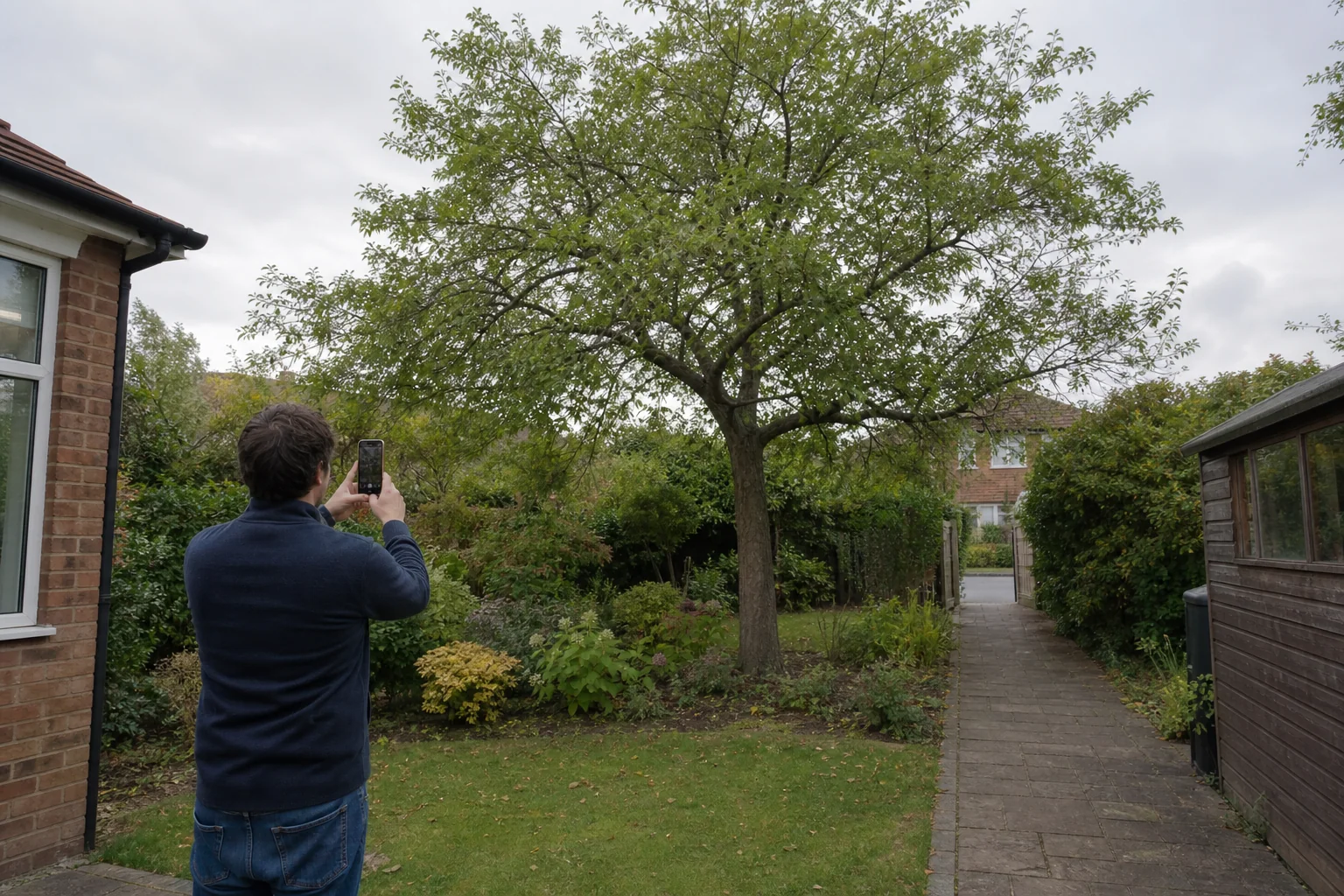
Send a photograph of the whole tree, a closer view of the work area and a picture of the access from the road. Include the address, the reason for the work and any planning reference or decision you already have.
That information helps define the job and the next step. We write the agreed tree work and clean-up. It does not replace the permission process or a tree survey.
If consent contains conditions, send the complete decision rather than a cropped screenshot. The work may need to follow a named drawing, season or replacement requirement. Keeping that information with the quote reduces the chance that an approved percentage, branch or tree is mistaken for something else on the day.
Where permission has not yet been sought, photographs can still support an initial conversation, but the work date should not be treated as fixed. Planning questions sometimes take longer than the physical job. Resolve them early, particularly when access, neighbours or a time-sensitive safety concern also need coordination.