

Oak tree work
Oak tree surgery
Oak tree surgery needs a clear reason and a measured specification. We prune, reduce or remove oaks where the work is appropriate, with the method set by the tree and its surroundings.
Pruning, crown reduction, deadwood removal or felling
Protection status and the agreed specification
Suspected oak processionary moth nests
Oak tree work
Match the oak work to the problem
An oak may need dead branches removed, clearance from a roof or road, or a crown reduction where its spread has become unsuitable for the space. The aim and limits of the work should be clear before cutting starts. Heavy, poorly placed cuts can leave a tree with a result nobody wanted.
Removal is a separate decision. A large oak may be retained with suitable work, while a smaller tree can still present a problem because of damage or position. Photographs help with a first conversation but they do not replace seeing the whole tree and site.
Plan timing around the cut and tree
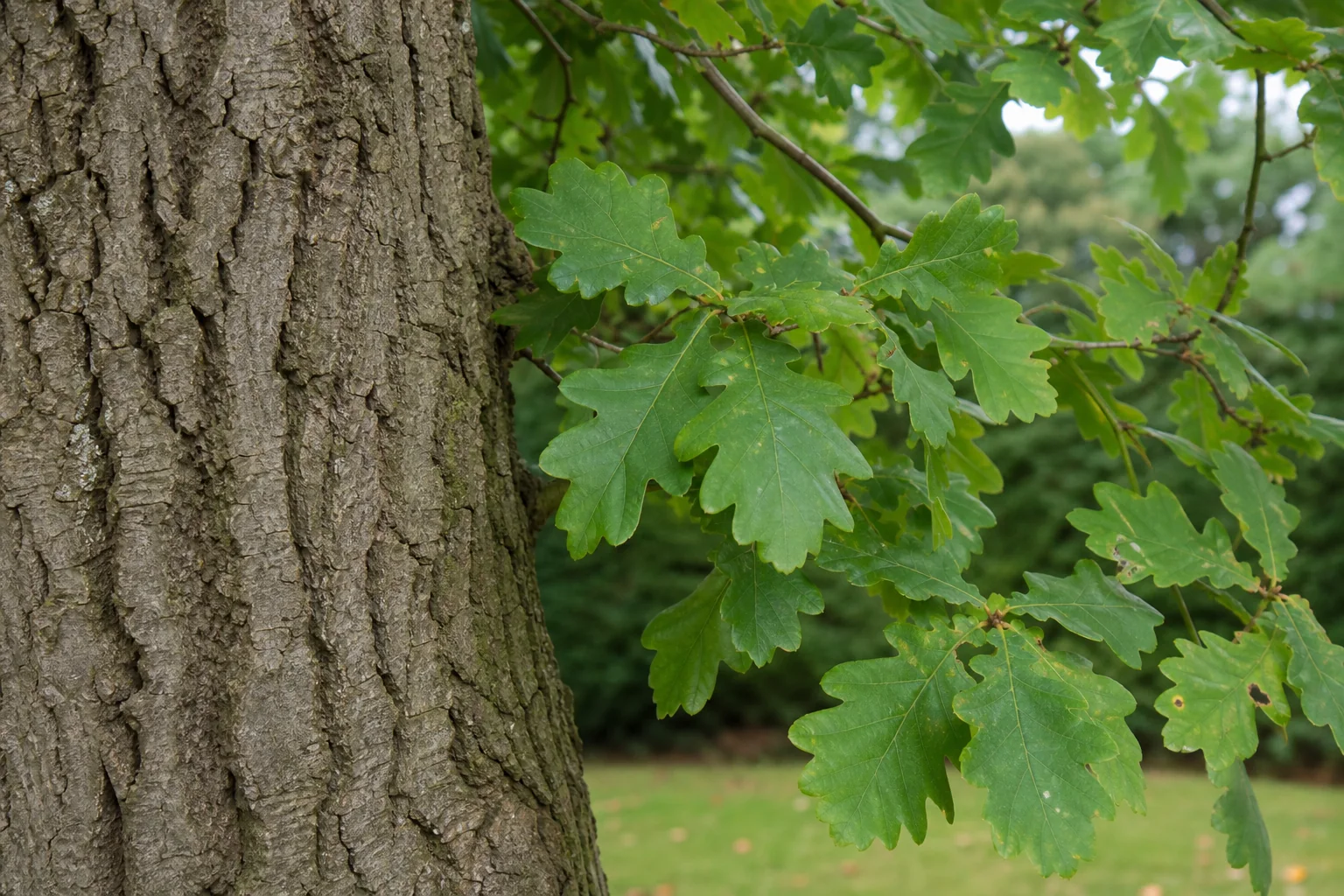
The Arboricultural Association lists late spring to summer as its general optimum period for pruning oak, after leaves have flushed and hardened. That is a starting point, not a fixed appointment. The type of cut, the tree's condition, wildlife checks, weather and current pest guidance all matter. Emergency work on a damaged branch cannot be treated like planned crown work.
Practical timing is set by the specified job and current site conditions. Where there is a suspected pest or disease issue, specialist guidance may be needed before material is handled.
Check protection before setting a date
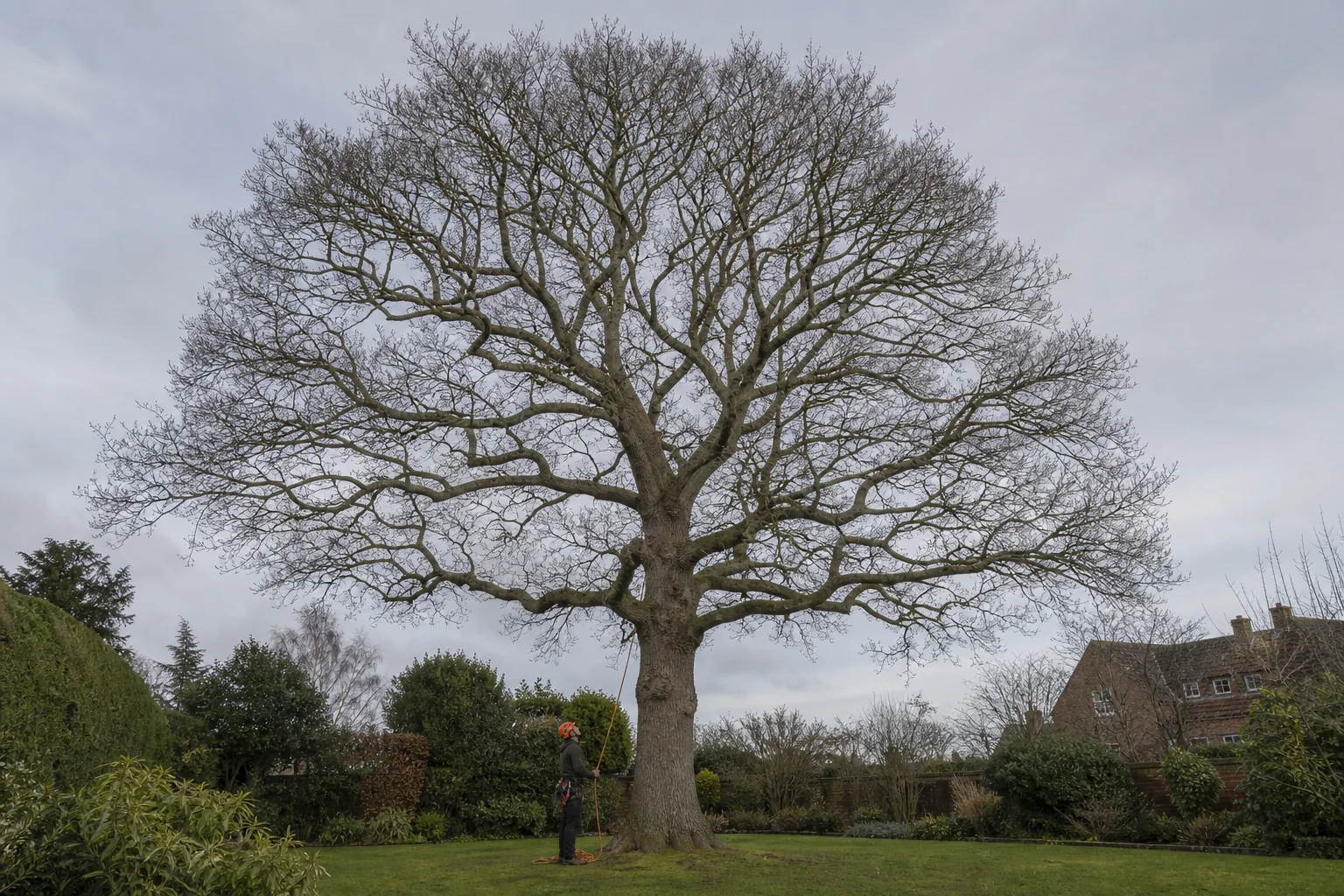
Oaks are not automatically protected simply because they are oaks, but an individual tree may be covered by a Tree Preservation Order. Trees in a conservation area are also subject to controls. The local planning authority can confirm what applies at the address.
Do not assume that a neighbour's previous work means the same work is allowed on your tree. Protection applies to the individual tree and location, and an approved specification matters.
Keep clear of suspected OPM nests
Oak processionary moth is a relevant pre-work check around Iver and Slough because official postcode data places many SL postcodes inside the established management area. Its caterpillars have black heads and grey bodies with long white hairs, and may move nose-to-tail. Nests are often seen on oak trunks and branches. Official guidance says not to touch or approach them. Keep people and pets away, report a suspected sighting through TreeAlert, and write ‘suspected OPM’ in the Woodside quote details before any ordinary tree work is arranged. We do not provide pest consultancy or nest removal.
Current identification, reporting and management advice should come from GOV.UK and TreeAlert. A photograph taken from a safe distance may help with the official report, but nobody should approach a nest to get one.