
Oak tree safety
Oak processionary moth: how to spot it and what to do
Oak processionary moth caterpillars and nests can expose people and animals to irritating hairs. Do not touch or approach a suspected nest. Keep clear and report it.
It is mainly a problem on oak
Oak processionary moth, often shortened to OPM, is a pest of oak trees. Its caterpillars feed on oak leaves and carry many small hairs. Those hairs contain a substance that can irritate skin, eyes and airways in people and animals.
The risk is not limited to a moving line of caterpillars. Hairs can remain in old nests and may be carried in the air. That is why a nest should not be handled, knocked down, burnt or sprayed as a household job.
Activity is seasonal, but an old nest can remain on the tree after caterpillars have moved on. Weathered nests may become brown and less obvious against bark. Do not assume that a structure is harmless because it looks empty or because no caterpillars are visible during a quick check from the ground.
What possible activity can look like
The caterpillars have dark heads and grey bodies with a darker central stripe. They may move together nose to tail, which gives the species its common name. Silken nests can appear on trunks and branches and range from small patches to larger white or brown structures as they age.
Look only from a safe distance. Binoculars or a zoomed photograph can be more useful than walking beneath the crown. Other caterpillars and webbing can be mistaken for OPM, so report the sighting rather than trying to confirm it by touching the tree.
The host tree is an important clue. Webbing across hedges, shrubs or several non-oak plants is likely to involve something else. Even so, do not handle an unknown hairy caterpillar or nest. Include a photograph of the leaves and whole tree with the suspected activity so the official reviewer has context.
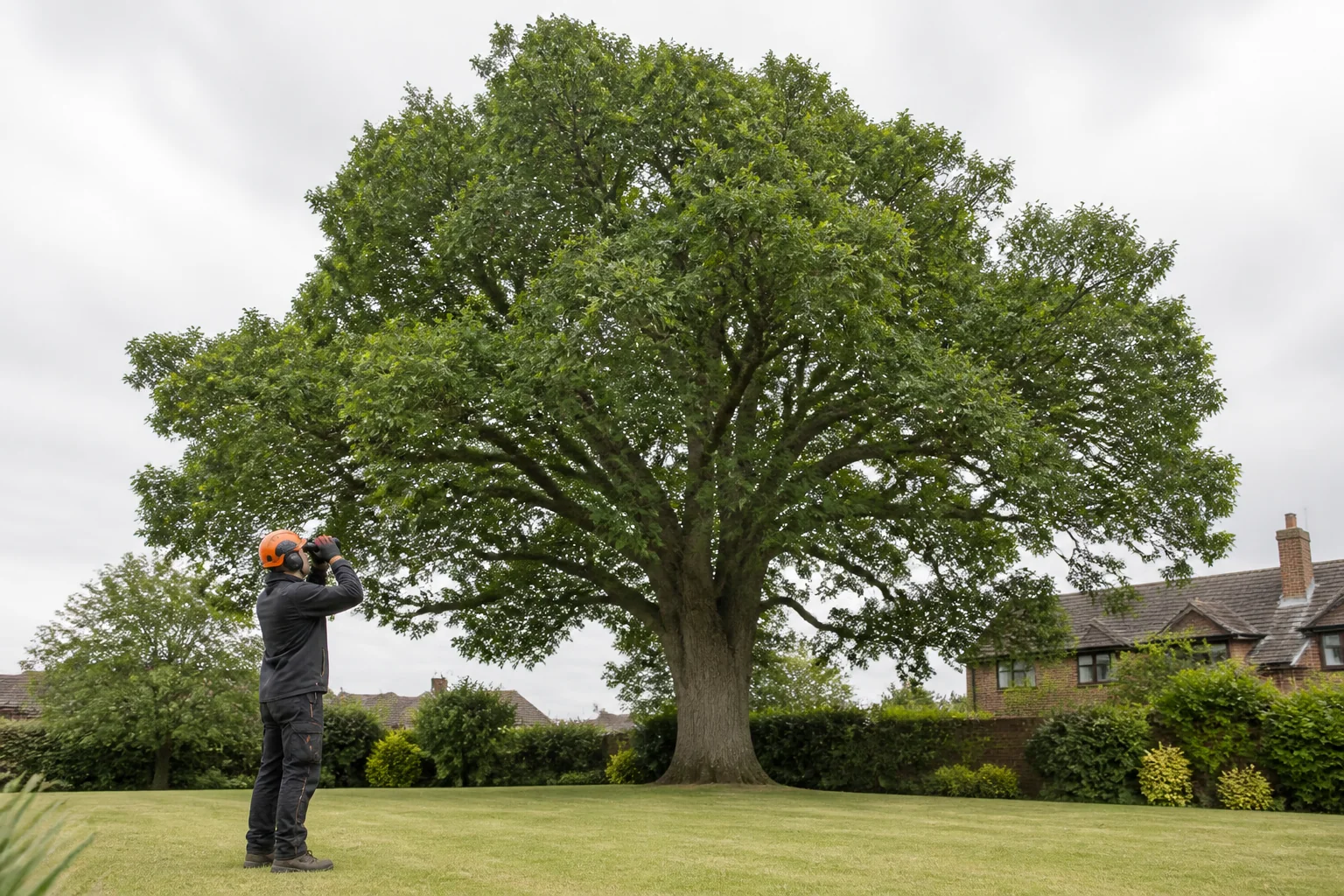
Keep people and pets away
Keep children, pets and other people away from the oak and the ground beneath it. Do not mow, sweep or use a leaf blower close to suspected nests because that could disturb hairs. Avoid placing tape or a sign by walking directly beneath the affected part of the tree.
If you think you have been affected, move away, avoid rubbing the area and seek suitable medical or veterinary advice. Tell the clinician or vet that exposure to oak processionary moth hairs is suspected.
Clothing and tools used close to a suspected nest should not be carried through the house or shaken beside other people. Do not attempt to clean contaminated equipment as an improvised home procedure. Keep the area undisturbed and take advice from the official reporting and health channels appropriate to the exposure.
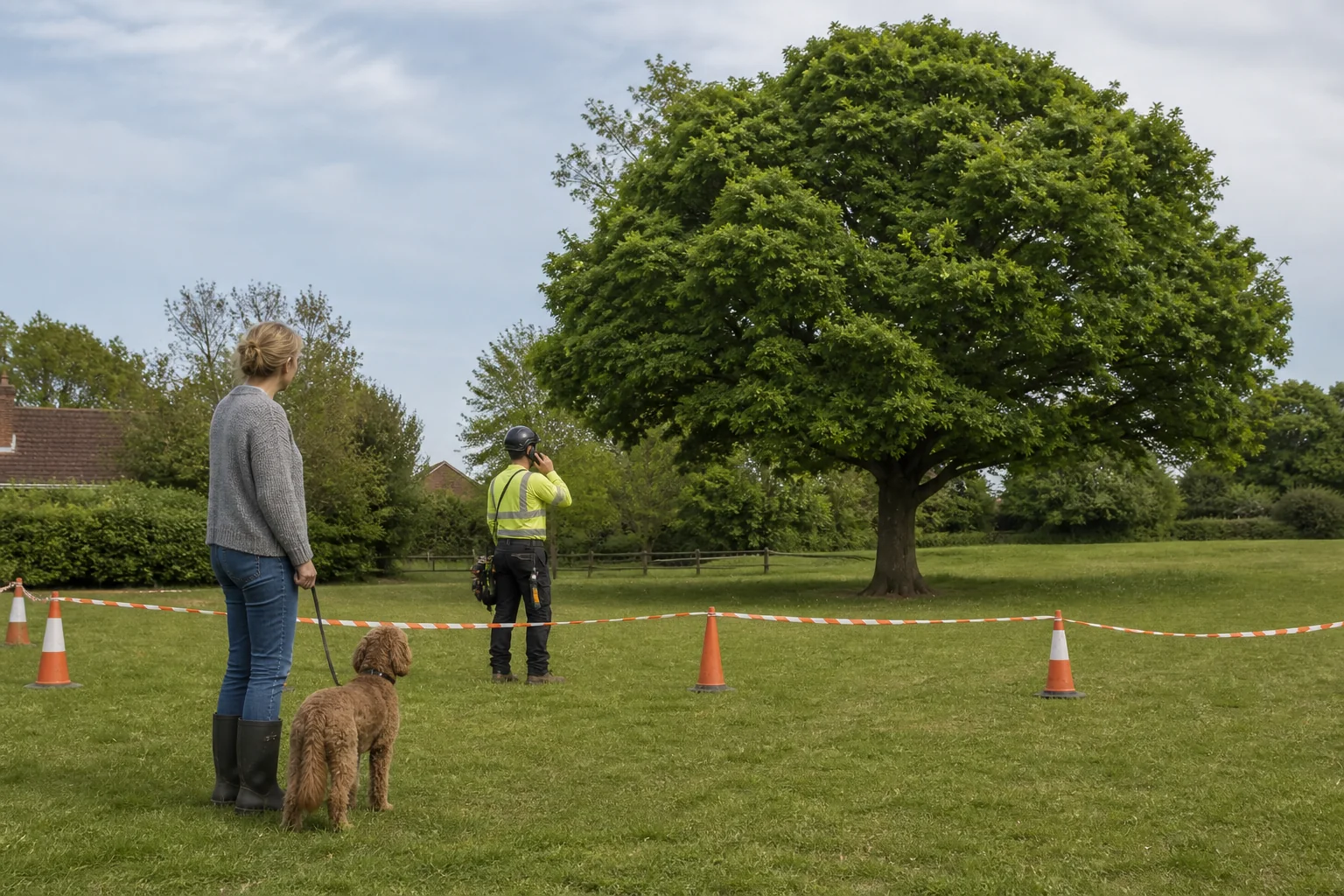
Report a suspected sighting
Report suspected OPM through TreeAlert using photographs taken from a safe position. Include the location and enough of the oak to help reviewers understand where the sighting sits on the tree. Follow current government guidance because management arrangements can change between seasons and areas.
Do not send a physical sample. Pest control and nest removal require suitable training, protective equipment and disposal arrangements. We do not offer pest consultancy or OPM nest removal.
Record the pin location carefully when the tree stands in a group. A wide photograph showing the oak beside a building, path or boundary can help distinguish it from neighbouring trees. Keep the TreeAlert reference and any response so it can be shared before unrelated pruning or safety work is arranged.
Tell the tree surgeon before other oak work
If pruning, deadwood removal or felling is proposed on the same oak, disclose any suspected or confirmed OPM activity before a site visit. The location and timing may change whether the work can proceed and what controls are required.
Send a whole-tree photograph from outside the affected area and any official report reference you have. A suspected nest should never be hidden to keep an appointment. The people planning the tree work need that information before anyone enters the crown or handles cut material.
Tree protection and nesting birds still need separate checks. Confirmation of OPM does not remove planning controls or permit ordinary work to disturb an active bird nest. The sequence may involve the local authority, pest-management guidance and the tree-work specification, with each question resolved by the right person.
If the oak stands beside a public path, school or shared garden, tell the person responsible for that land promptly. A wider group may need to be kept away while the sighting is reviewed. Do not put yourself beneath the tree to create a barrier or take a closer picture.