
Show us the stump and route
Send photos, the address, the narrowest access measurement and details of any known buried services.

Stump grinding and removal
We grind or remove stumps across Iver, Slough and Buckinghamshire to clear space for turf, planting, paving or access. The route, buried services and intended finish decide the method.
What this service covers
A stump grinder uses a guarded cutting wheel to reduce the stump and the main root flare into small wood pieces. The work is concentrated around the base of the old tree. Most finer roots and roots running farther into the garden stay in the soil. They normally break down over time, so grinding is often the practical choice when the aim is to remove a trip point, prepare for turf or clear the upper layer of a border.
Full stump and root removal is different. The root plate is dug, cut or lifted out rather than ground in place. That can require excavation or lifting equipment and it disturbs a much larger patch of ground. It may be needed where foundations, drainage, a hard surface or another fixed structure must occupy the same space. Even then, removing every fine root is not realistic. The quote should name the method so that 'stump removal' does not mean two different things to the customer and the crew.
How it works
Send photos, the address, the narrowest access measurement and details of any known buried services.
We record whether the stump will be ground or excavated, how the ground will be used and what happens to the arisings.
The qualified team carries out the stated method and includes clean-up of the agreed working area.
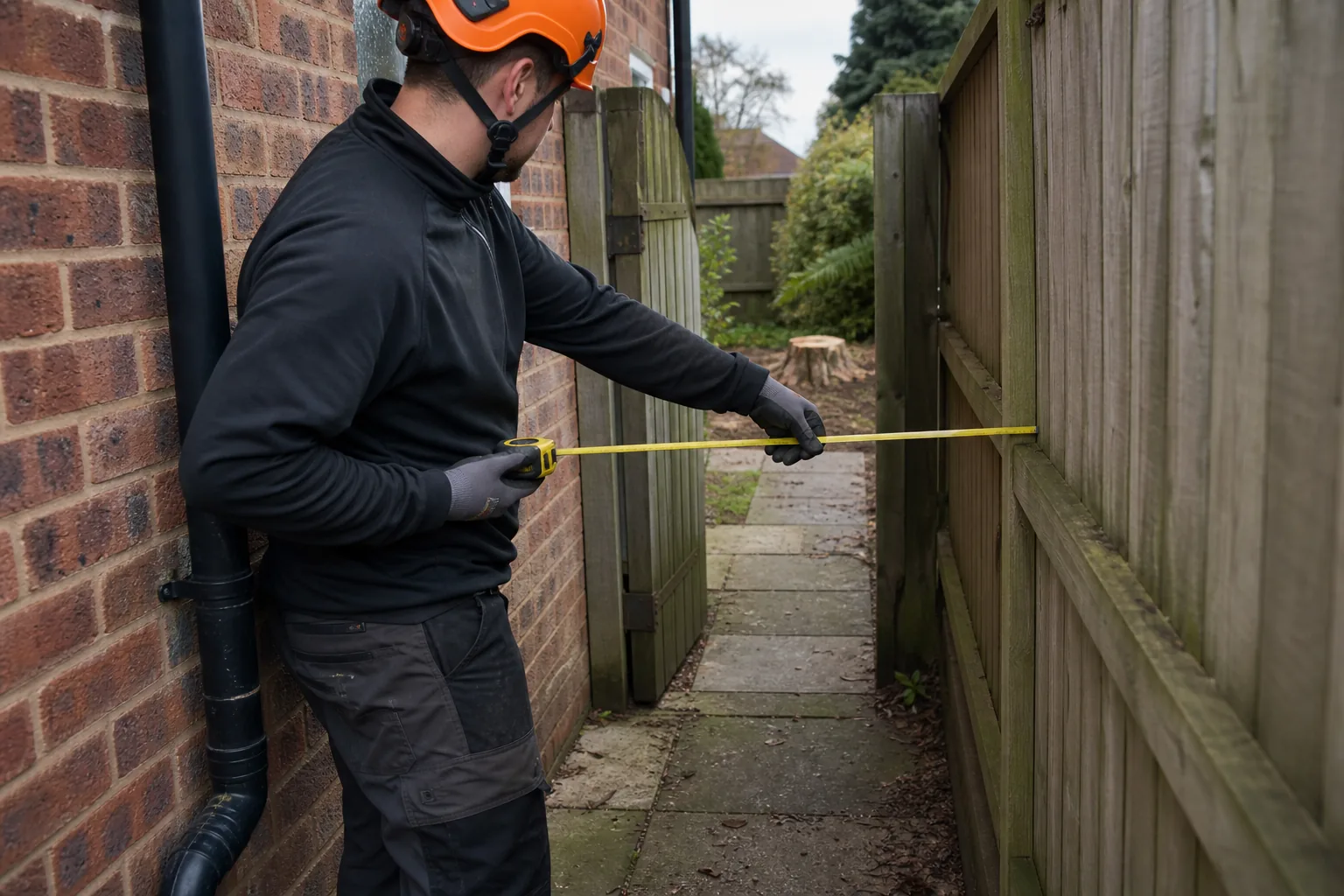
The route matters as much as the stump. We need the clear width at the narrowest gate or passage, not just the width of an open gate leaf. Steps, tight turns, drainpipes, raised beds, soft lawns and the distance from vehicle access can change the workable method. Photos should show the stump, the route from the road and any pinch point. A tape measure in the picture is more useful than a guess made from memory.
Grinding takes place below the original cut, so underground cables, gas pipes, water pipes, drains, irrigation and garden-lighting feeds must be considered. Their position cannot be judged safely from the surface. HSE guidance treats planning, locating services and safe ground work as three connected parts of the job. Tell us about known services and recent building work when asking for a quote. Where the position is unclear, more information may be needed and the proposed depth or method may have to change.
There is no useful standard depth for every stump. The right target depends on what comes next and what is safe at that spot. RHS guidance says about 20 to 25 centimetres below ground level is normally enough for turf, while at least 30 centimetres may be needed for replanting or landscaping. Those figures are a planning guide, not a promise for every site. Root form, stones, nearby walls and buried services can limit the depth that can be reached safely.
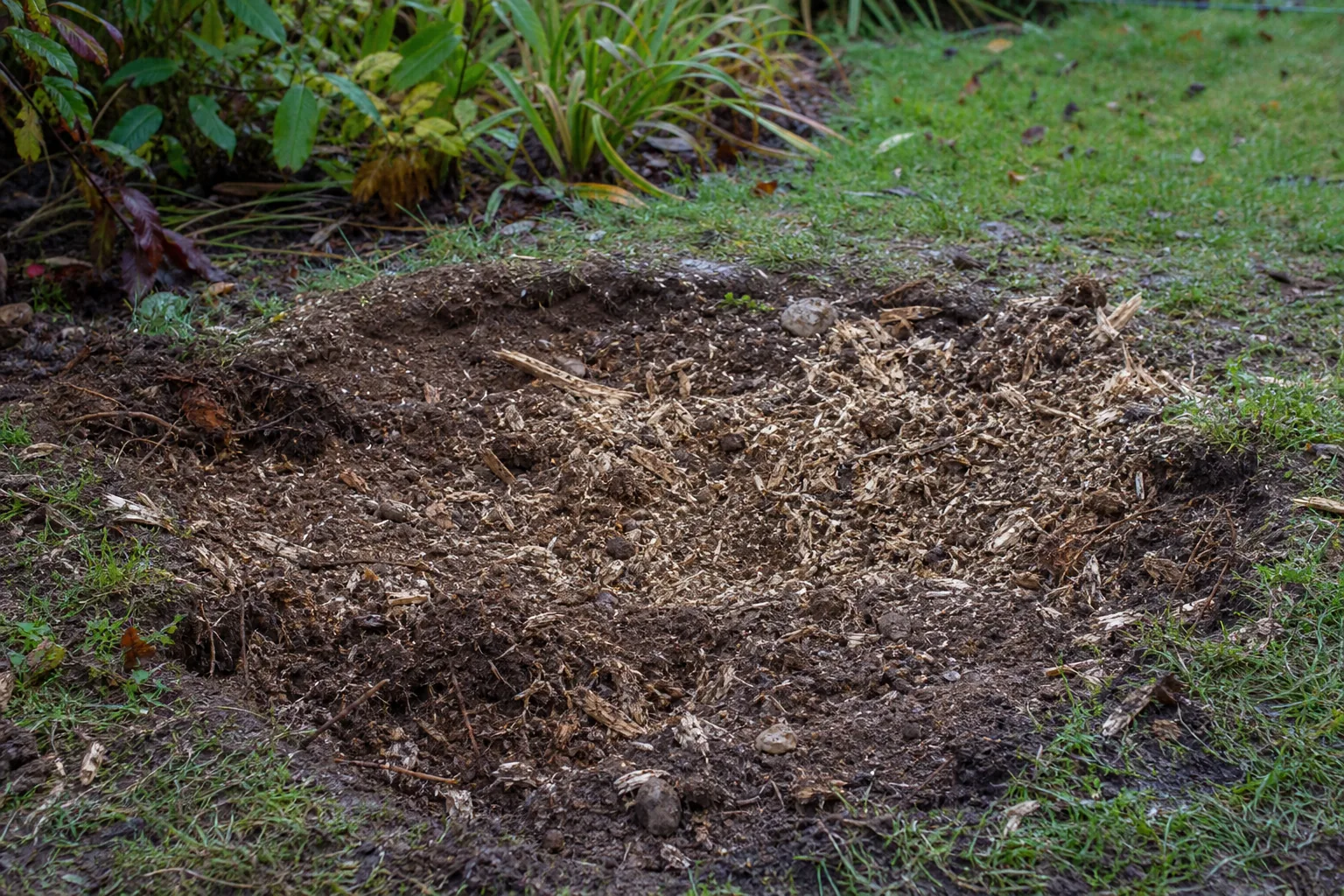
The cutter produces a loose mixture of wood chips, fibrous fragments and soil. It is not the same as clean, bagged mulch. The volume can be greater than the visible stump suggested, and the disturbed patch may settle as remaining wood decays. Clean-up is included in every Woodside job. Whether the arisings are used to fill the hollow, placed elsewhere or taken away is agreed for the individual quote. Extra topsoil and the final turf, planting or hard-landscaping build-up should also be stated rather than assumed.
Send a wide photo of the whole working area and a close photo showing the stump at its widest point, including the root flare. Add the number of stumps, the narrowest access measurement and a note explaining what you want in the space afterwards. Walls, sheds, paving, inspection covers and known services should be visible. If the tree has not yet been felled, say so, because the stump height and felling method need to work with the later treatment.
Woodside's qualified team carries out the agreed tree work and clean-up, backed by £10 million public liability insurance. The quote should record the grinding or removal method, intended depth, access assumptions and the agreed handling of material. We do not provide tree surveys or consultancy reports. If the enquiry depends on a diagnosis, structural report or specialist soil advice, that needs to come from the appropriate independent professional.
A useful quote names the next use of the ground, not just the diameter of the stump.
Straight answers
No. Grinding deals with the stump, root flare and accessible larger roots around it. Roots running farther into the soil usually remain and decay over time. Full root-plate excavation is a separate, more disruptive method.
The quote sets the intended depth around the next use of the ground. Turf, replanting and hard landscaping need different preparation, and nearby services or structures can limit what is safe.
Clean-up is included, but the handling of mixed wood and soil is agreed for each job. We agree whether it is used on site, moved within the property or taken away.