Understanding a quote
How much does tree removal cost?
Tree removal cost depends on the tree, the method needed to take it down and how material leaves the site. Photographs help, but access and the space below the crown often decide the work involved.
Size matters, but the method matters more
A small tree with open ground around it may be felled from ground level. A similar tree beside a conservatory, road or neighbouring garden may need to be dismantled in sections. Each branch then has to be cut, controlled and lowered into the available space.
Height is only one part of the quote. Stem diameter, crown spread, weight, lean and condition also affect the method. A dead or declining tree can require more care because branches and anchor points may not be dependable.
Species and previous work can affect the structure that the crew finds, but they do not create a simple price table. A broad crown can contain more material than a taller narrow tree. Repeated heavy cuts may also have produced unions or decay that change where ropes and cuts can safely be placed.
Access can add more work than the cutting
The route from the tree to the road affects how equipment reaches the work area and how branches and timber come out. A side gate, steps, tight corners, soft lawns and a long carry can all change the time and labour needed.
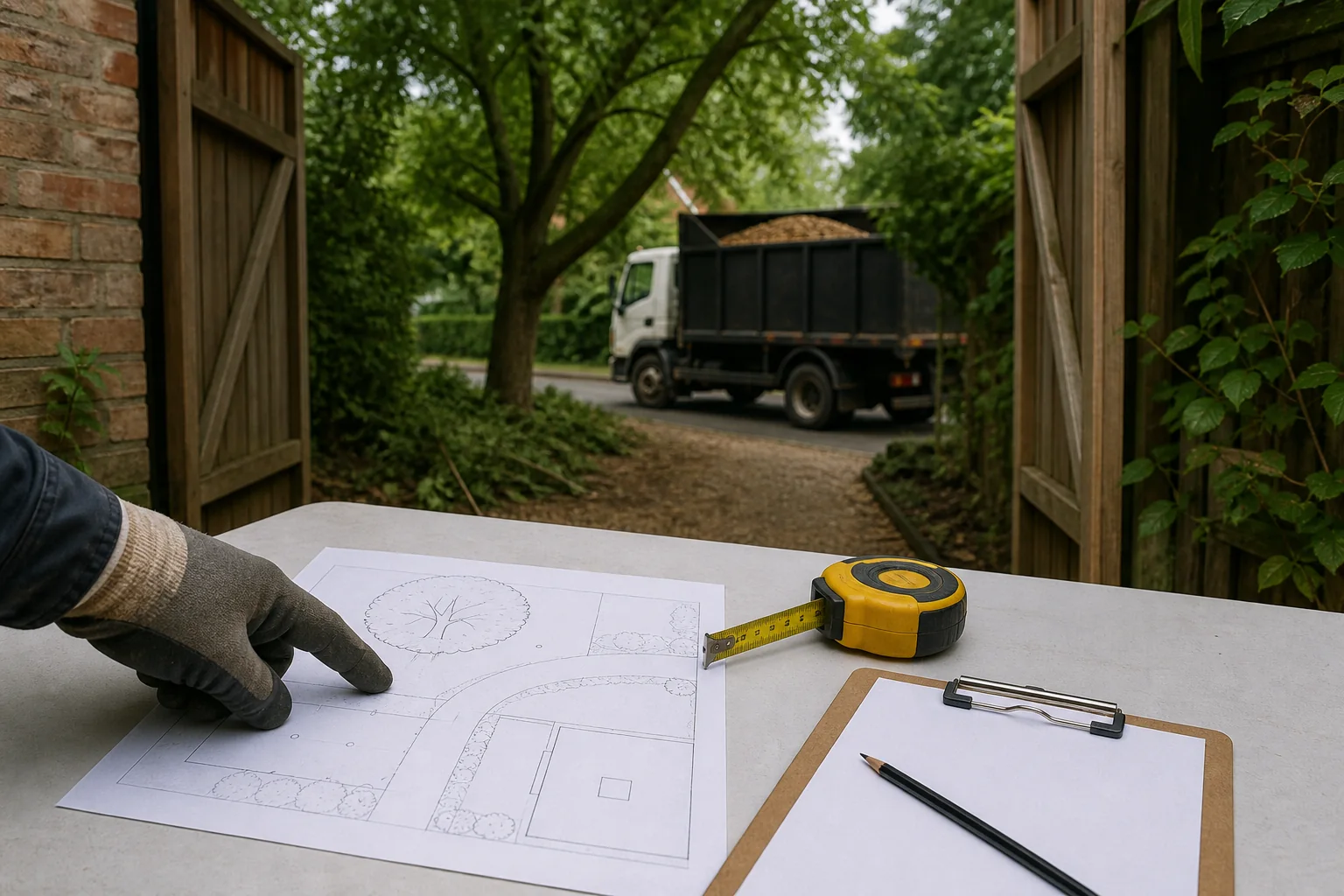
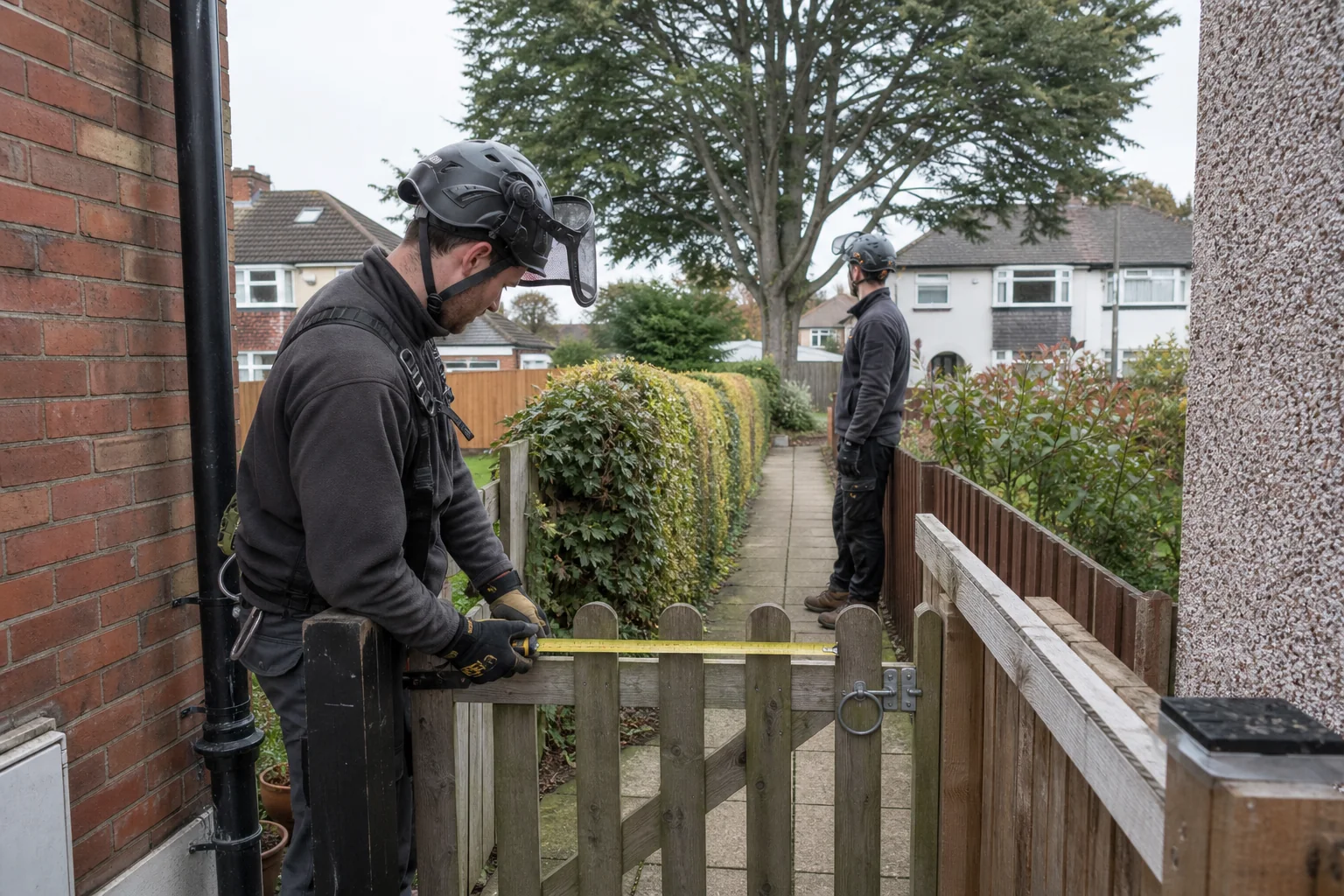
Send photographs facing both ways along the route. Measure the narrowest gate if access looks tight and mention parking restrictions. Do not remove a fence panel or gate before the method has been agreed. It may not be necessary, and another route may be safer.
Access is also needed while the crew is setting up and clearing away, not just for one machine. Ropes, barriers and cut material require working room. Tell us about septic tanks, weak covers, recent paving or hidden steps so the route is not planned around a surface that cannot take the expected use.
The space below the crown sets the controls
Buildings, sheds, glass roofs, fences, planted borders, roads and overhead lines reduce the space available for cut material. Rope systems or lifting equipment may be needed to control sections rather than letting them fall into an open area.
Public paths and shared drives can require a larger team or additional controls to keep people clear. Protected-tree consent, conservation-area notice or a felling licence may also need to be resolved before work starts. These checks are separate from the physical removal.
Moving garden furniture can create room, but fixed targets still set the method. Tell the quoting arborist about fragile roofs, ponds, underground structures and anything hidden by summer foliage. If a neighbour's land is needed for access or lowering, permission should be settled before the work date rather than assumed on arrival.
Branches, timber and the stump are separate decisions
Removing the standing tree does not automatically mean grinding the stump. Stump work needs its own access and depth agreement, especially when the area will be paved, replanted or returned to lawn.
Clean-up is included in every Woodside job. What happens to branches, woodchip and larger timber is agreed for the individual site. Some customers want usable timber left in a suitable position, while other jobs require material to leave the property. The quote should say what is included.
A stump grinder needs a clear route and safe working depth. Stones, metal, nearby walls and underground services can limit what is practical. Removing visible stump material is also different from excavating an entire root system. Explain the intended finish so the quote is based on what will actually be planted or built there.
What a clear tree removal quote should cover
A useful written quote identifies the tree and agreed work, explains whether it will be felled or dismantled, records access assumptions and states how branches, timber and the stump are handled. It should also make clear whether planning permission or other third-party costs sit outside the price.
For a Woodside quote, send the address, whole-tree photographs, the ground below the crown and the route to the road. Mention known protection, cables and access limits. Woodside Forestry Ltd was established in 2008, uses qualified tree surgeons and carries £10 million public liability insurance.
Compare quotations on scope as well as the total. One may include stump grinding, timber removal or traffic controls that another leaves out. Ask for unclear wording to be corrected before accepting it. The cheapest figure is not comparable if it describes a different result, relies on access you do not have or omits necessary controls.
Keep the accepted version with any permission documents so everyone is working from the same scope.