
Show us the whole site
Send views of the tree, trunk base, nearby structures and the complete route from garden to road.

Controlled tree removal
We dismantle trees in sections across Iver, Slough and Buckinghamshire when buildings, boundaries or access rule out a straight fell. The crown and trunk come down in pieces sized for the working space.
What this service covers
A straight fell needs a clear landing area of the right size and direction. Many gardens do not have one. A conservatory may sit beside the trunk, a neighbour's fence may run beneath the crown, or the only route out may be a narrow passage. Sectional dismantling deals with that restricted space by removing the crown and stem in separate pieces rather than sending the whole tree to ground at once.
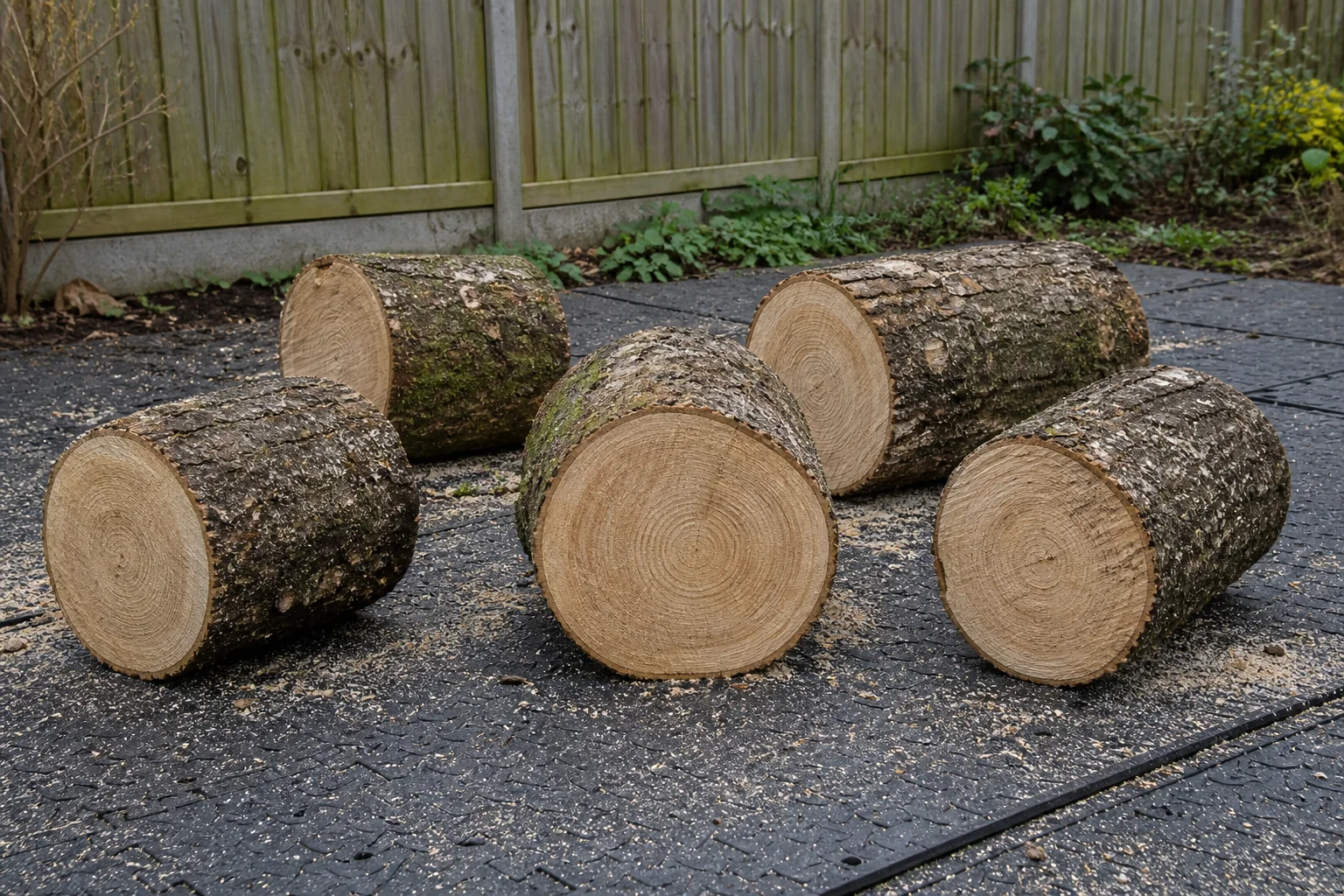
The size of each section is not fixed. It depends on branch weight, the position of buildings and boundaries, the working area below and the way the material must leave the garden. Some pieces may be lowered under control where dropping them is not suitable. Other material may be cut smaller and placed onto a protected area. We decide that after seeing the site, not from a standard recipe.
This is a removal method, not a reason to remove a tree. A tree might be coming out because of an agreed development, damage, an unsuitable position or another clear need. We do not provide tree surveys or consultancy reports. If you need a formal report or an independent decision on whether removal is justified, that must come from the appropriate specialist before the work is booked.
How it works
Send views of the tree, trunk base, nearby structures and the complete route from garden to road.
We confirm the working area, access limits and what should happen to branches, chip, timber and the stump.
The team controls the work area while the crown and stem are taken down in pieces suited to the site.
A useful quote starts with the whole tree and the space around it. We need to see the trunk base, the crown, nearby roofs, sheds, fences, overhead lines and the route from the tree to the road. Gate and passage widths matter. Steps, soft ground, parked cars and a shared driveway can change how pieces are moved. Clear photographs help, but they do not replace the checks needed before work begins.
We plan the job with the ground team as well as the climber. HSE guidance treats climbing operations as team work and calls for the job, risk assessment and emergency arrangements to be discussed beforehand. The working zone, communication and rescue provision all form part of that preparation. The qualified person carrying out each task must have competence relevant to it.
Not every restricted garden needs the same ropes, machinery or number of people. We do not list a fixed setup before access and tree condition are known. Tell us if a neighbour controls part of the access, a gate cannot be removed, or the drive has a weight or timing restriction. That information needs to be clear before the first cut.
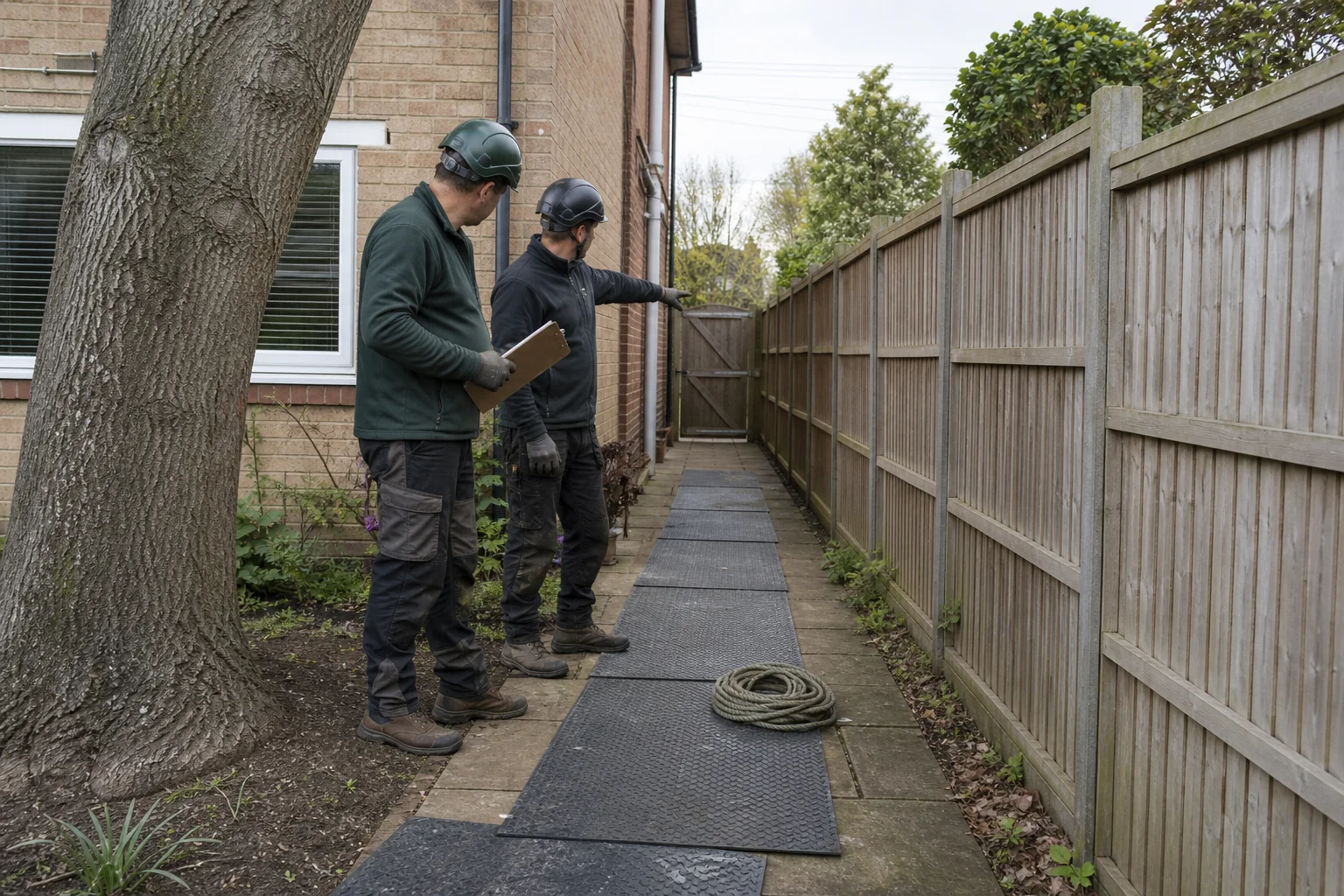
We confirm the agreed work, access and protected areas before cutting starts. The crown is reduced in a planned order, then the remaining stem is divided into sections suited to the space and handling route. Ground staff keep the working zone controlled and deal with each piece as it reaches the ground. Nobody should enter that zone or move barriers without speaking to the team.
Price is affected by tree size, branch spread, access, nearby structures, the amount of controlled handling and what happens to the arisings. A wide open site is different from a rear garden reached through a house-width passage. Tell us whether timber is to be removed, cut to agreed sizes or left in an agreed place. We price the actual arrangement rather than hiding those choices inside a vague removal figure.
Clean-up is included in every job. We leave the agreed work area clear, with branch, chip and timber handling confirmed in the quote. Sectional dismantling does not automatically include stump grinding, so ask for it if the ground must be ready for paving or planting. Delaying agreed removal leaves the same access conflict in place, but it does not make every tree an emergency.
Check whether the tree is protected before removal. A Tree Preservation Order normally requires the local planning authority's written consent. For a qualifying conservation-area tree not already covered by an order, a section 211 notice is normally given six weeks before work unless an exception applies. We do not offer planning consultancy, so the landowner should provide the council decision or reference.
A tree growing in a garden is listed by the Forestry Commission as an exception from the normal felling-licence requirement. That does not cancel Tree Preservation Order, conservation-area or wildlife controls. Trees outside a garden can fall under different rules, and the Forestry Commission says everyone involved should check that a licence or valid exception covers the felling.
Wild birds, their eggs and active nests are protected by law. Cutting a tree can affect them, so the actual tree and timing have to be considered rather than relying on one calendar date. Wind and poor visibility can also change the safe working window. If an active nest, protected wildlife or unsuitable weather affects the planned area, the date or method may need to change.
Straight answers
A whole-tree fell needs clear landing space. Roofs, fences, planting or restricted access can mean the tree must come down in smaller planned pieces.
Not automatically. The tree can be dismantled to an agreed stump height, with stump grinding quoted separately if required. Tell us what you plan to do with the ground afterwards.
The method does not override protection. Consent or the correct notice may be needed. Send us the council decision or reference with the quote details.