
Storm tree safety
Storm-damaged trees: what to check after high winds
Storm-damaged trees can leave split stems, hanging branches and movement at ground level. Check from a safe distance and keep people out of the area until the risk is understood.
Check the whole tree from a distance
Start far enough back to see the whole crown and the base. Look for branches that have snapped but remain caught, fresh splits at a fork, a stem leaning more than before or roots lifting the soil. A branch can be under considerable tension even when it appears to be resting securely.
Compare what you see with the tree before the storm if you have older photographs. Listen for movement and cracking, but do not remain beneath the crown to investigate. A damaged limb can move later as wind direction changes or as another branch supporting it gives way.
Check the ground from outside the potential fall area. Fresh cracks, a raised root plate or a new gap beside the stem can show that the whole tree has moved. An upright crown does not prove the roots are secure. If the base has shifted, keep a wider area clear and report that movement during the call.
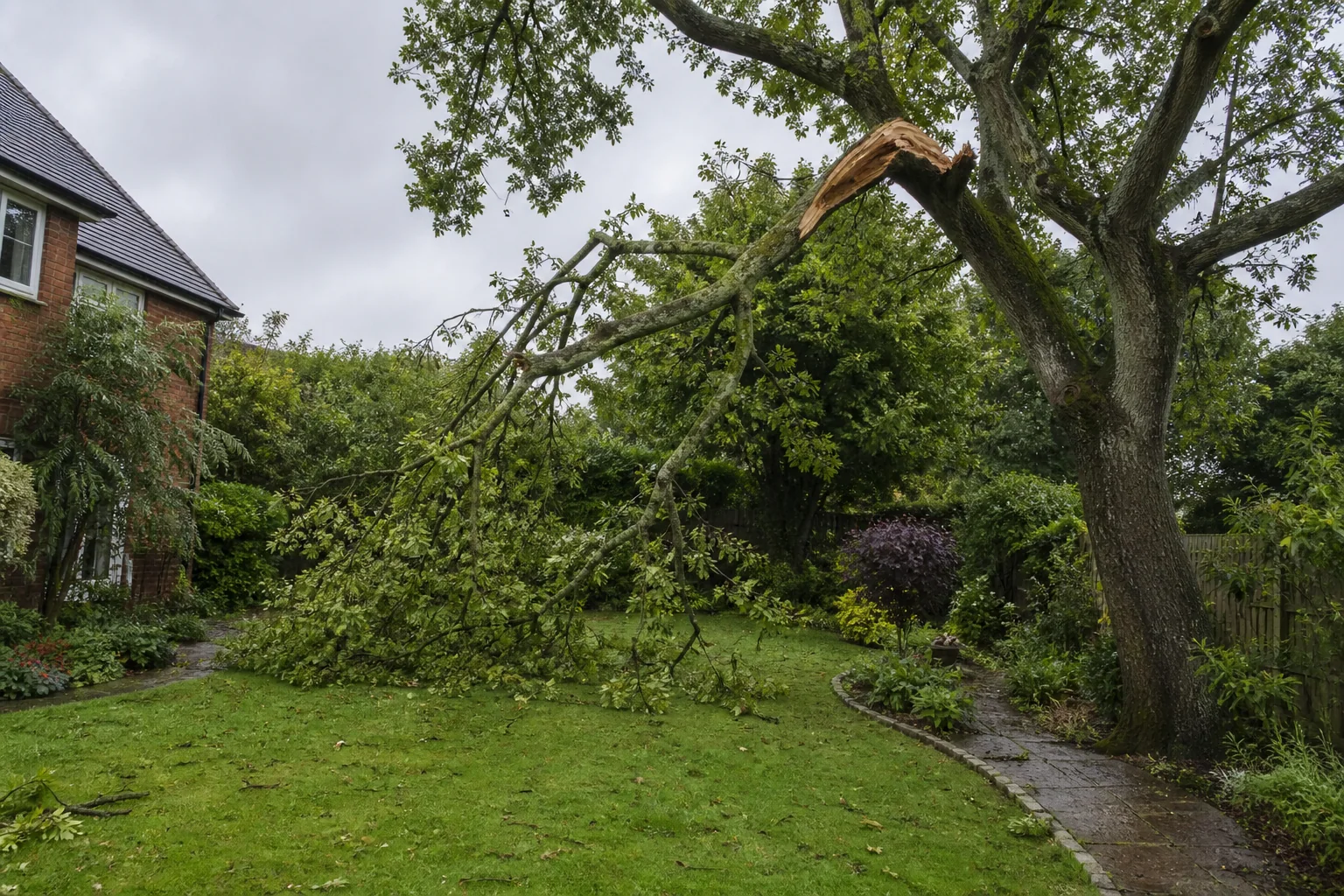
Keep the drop zone clear
Move people, pets and vehicles away from the area below and around the damaged tree. Use a closed gate or a clear temporary barrier if that can be done without entering the likely fall zone. Tell neighbours when a branch could reach their garden, drive or access route.
Do not climb the tree, use a ladder or pull at a hung branch. Windblown and storm-damaged trees can store force in bent stems, roots and trapped limbs. Cutting the wrong part can release that force without warning, which is why this work needs trained people and an agreed method.
Leave fallen material where it is if moving it would take you beneath damaged growth or release a trapped branch. A limb lying across a fence may still be connected and loaded. The quickest-looking route to clear a drive can be the part carrying the most tension, so wait until the work sequence has been assessed.
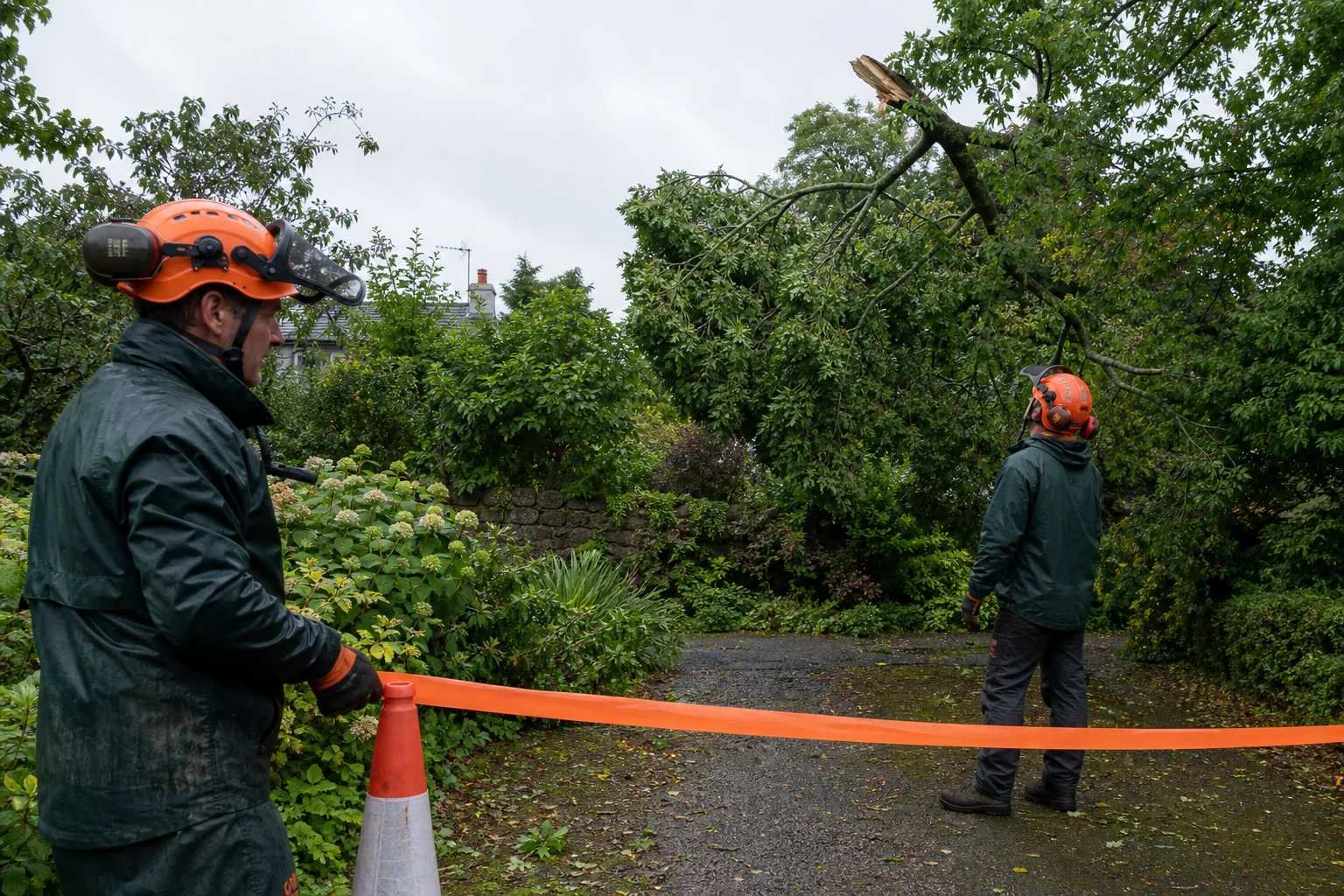
Roads, buildings and cables change the response
If the tree affects a public road or pavement, warn people away and contact the relevant highway authority or emergency service as the situation requires. Do not direct traffic yourself unless you are in a safe position and authorised to do so. Public access must be controlled while tree work is under way.
Treat any branch touching or close to an overhead electricity line as an electrical hazard. Stay clear and contact the electricity network operator. If there is an immediate threat to life or a tree has struck a building, call the emergency services and follow their instructions.
A damaged tree on someone else's land still needs a safe response. Do not cross a boundary or begin cutting without authority. Give the owner or responsible body the location and visible problem, then keep your own side of the likely fall area clear while the right organisation arranges the next step.
What the arborist needs to know
Give the exact address and say what the tree could reach. Describe whether the branch is on the ground, hanging in the crown or resting on a structure. Mention nearby roads, paths, buildings, vehicles and cables. This helps set the urgency and decide what needs to attend the site.
Photographs are useful only when they can be taken safely. A wide photograph from outside the drop zone is better than a close view taken beneath the damage. Include the access from the road if it can be photographed without passing under the tree.
Say whether the damage is changing. Fresh movement, falling pieces or worsening weather can change the priority while help is being arranged. Give a phone number that will be answered and explain any locked gate, narrow lane or other access restriction that could delay reaching the tree.
Woodside's emergency tree call-out
Woodside offers a 24-hour emergency call-out for unsafe and storm-damaged trees. The first conversation is about location, immediate risk and safe access. That does not mean every damaged tree must be removed. The work depends on what has failed and what remains stable.
Once the job is agreed, the work area is controlled and the damaged material is dealt with using a method suited to the site. Clean-up is included. Whether timber is removed, cut to size or left on site is agreed for that job.
Emergency work may deal first with the immediate hazard, leaving further non-urgent work for daylight or a later visit. The scope should make that distinction clear. A safe temporary result is not the same as a full garden clearance, and any additional work should be agreed before it is added.