

Apple tree work
Apple tree pruning
Apple tree pruning starts with the form of the tree and what the owner wants from it. Cropping, clearance and renovating an old crown can call for different cuts and different timing.
State whether the tree is free-standing, espalier, fan or cordon
Choose cropping, renovation or a specific clearance
Include the complete crown, trunk base and access route
Apple tree pruning tree work
Bush, standard or trained form
A free-standing bush or standard apple carries a permanent branch framework around an open crown. Cordons, espaliers, fans and pyramids are trained to restricted shapes. The same cut can help one form and spoil another, so send a photograph that shows the entire outline.
Domestic apples also differ in where they carry fruit. Some form most fruit on short spurs, while tip-bearers crop near the ends of longer shoots. If cropping matters, tell us the variety or fruiting habit where known rather than treating every young shoot as unwanted growth.
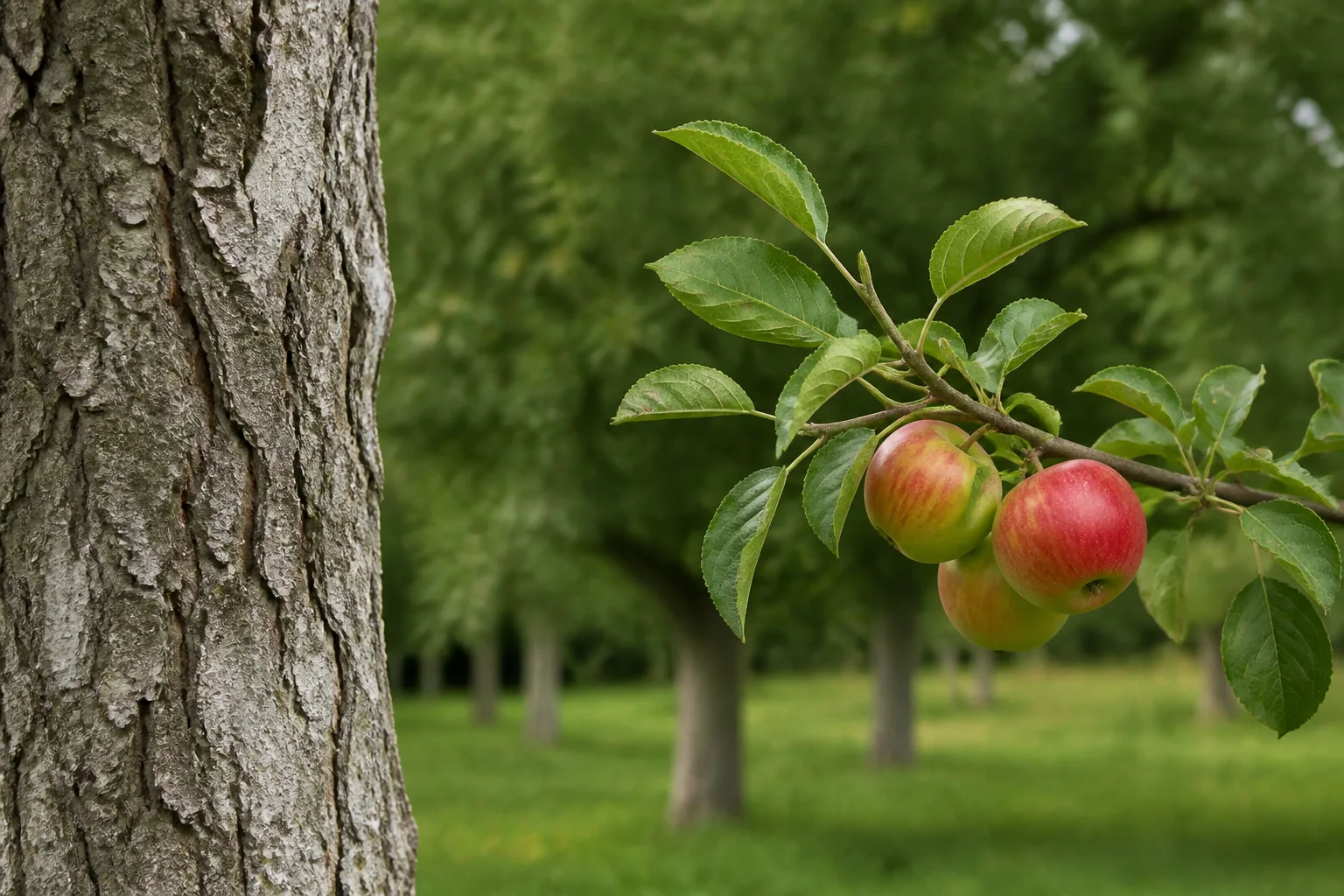
Winter and summer pruning do different jobs
Established free-standing apple trees are usually pruned while dormant, from November to early March. Winter work can remove selected crowded, crossing or damaged branches and maintain the established framework.
Restricted forms are commonly summer pruned between July and September to control new growth and keep their trained outline. The chosen month also depends on fruit ripening, weather, nesting birds and the amount of work required.
Do not solve an old crown in one hard cut
A neglected apple may contain dead wood, crowded limbs and upright shoots through the centre. Removing too much live crown in one winter can trigger dense watershoots and leave large wounds. The RHS advises spreading substantial renovation over more than one year.
Agree the priority first. That may be keeping fruit within reach, opening a congested crown or clearing a path and shed roof. A staged plan can retain useful older framework while avoiding a cycle of hard cutting and vigorous regrowth.
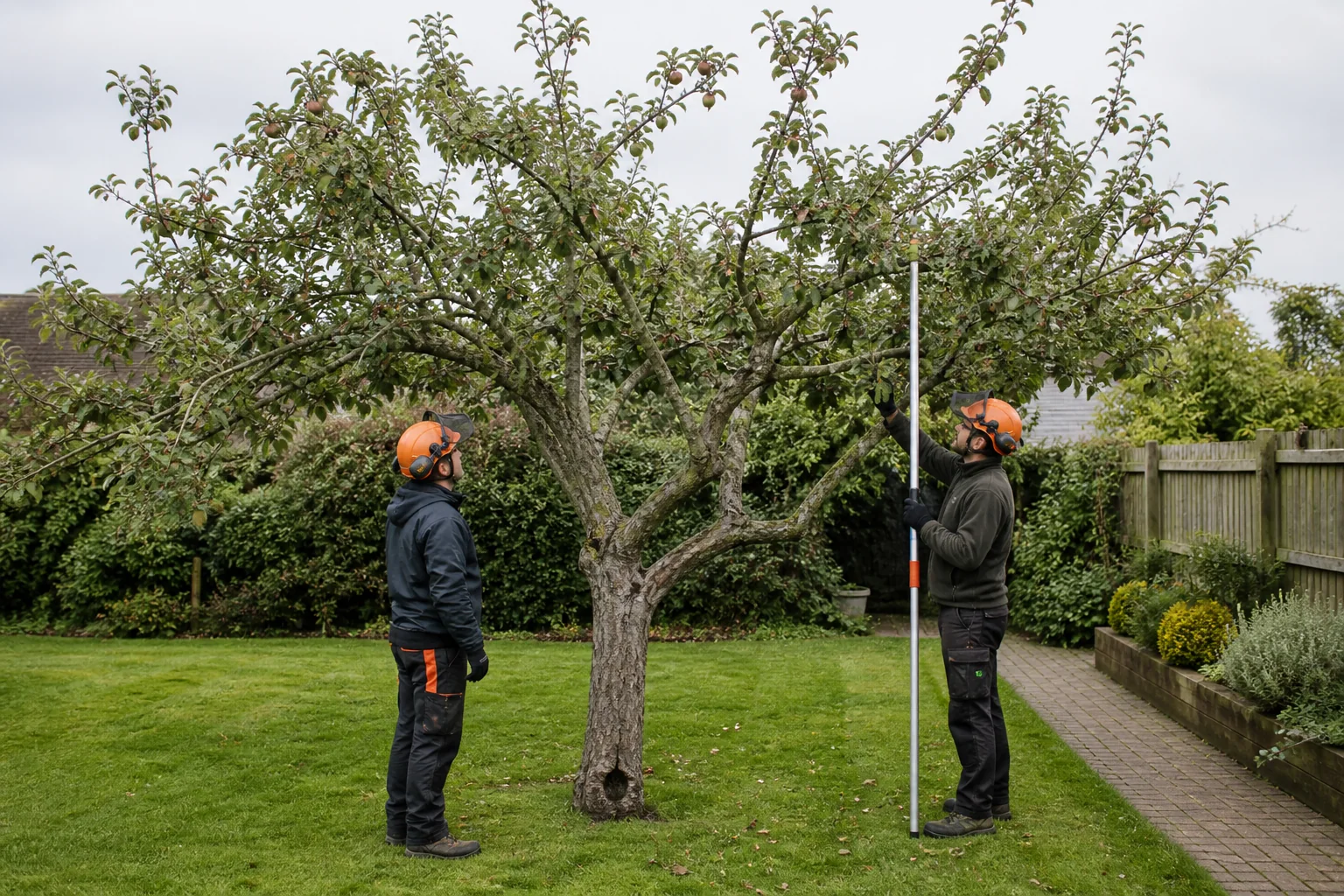
Show the tree and what is beneath it
Send the complete crown, the trunk base and the route to the road. Include greenhouses, sheds, ponds, planted beds and narrow gates. This helps us discuss the working area rather than judging the job from one close photograph of a branch.
An apple or crab apple can be protected by a Tree Preservation Order or conservation-area controls. The local planning authority can confirm the status. Clean-up is included, with the treatment of cut branches and timber agreed for the individual job.