

Horse chestnut tree work
Horse chestnut tree surgery
Horse chestnut tree surgery starts with the broad crown, heavy limbs and the ground below. We plan agreed pruning or removal around condition, access and nearby property.
Five to seven broad leaflets arranged like a hand
Broad with substantial spreading limbs
Photograph the trunk and whole crown from a safe position
Horse chestnut tree work
Work on a broad, heavy crown
A horse chestnut may need dead branches removed, clearance from a roof or highway, or a measured crown reduction. Mature trees can carry large spreading limbs, so the working area beneath the crown is as important as the height of the tree.
Removal may be appropriate where the tree and its setting leave no sensible pruning option, but size alone does not decide that. Condition, branch structure, nearby targets and access all shape the choice and the method.
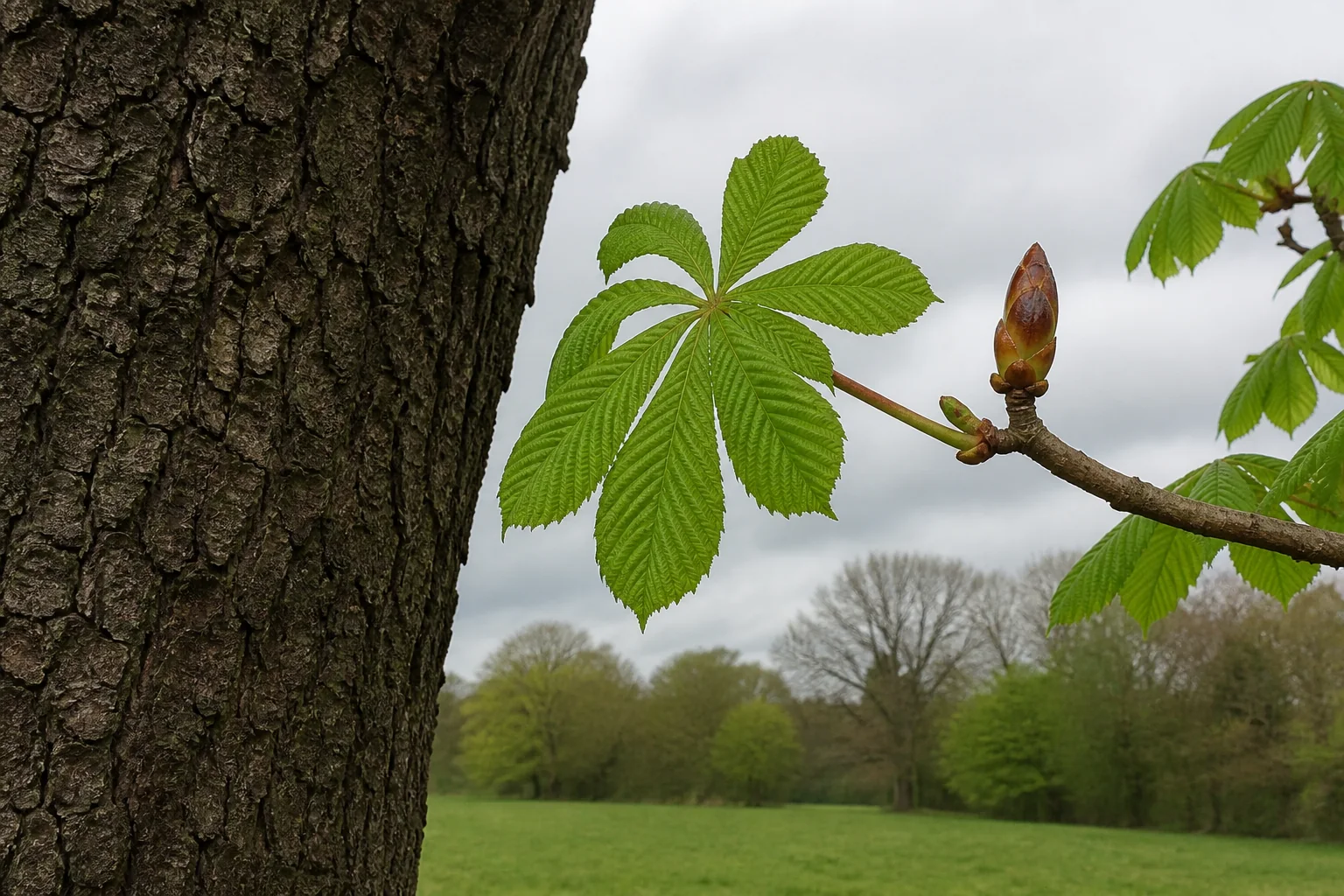
Record changes before arranging cuts
Forest Research lists dark sticky fluid from bark cracks, dead or dying bark, yellowing leaves, premature leaf fall and crown dieback among the signs associated with bleeding canker. A single photograph or symptom does not confirm the cause. Keep clear of hanging branches and record the lower trunk and whole crown from a safe position.
There is no registered chemical treatment that cures the disease. Management depends on the condition and risk presented by the individual tree. We carry out agreed tree work but do not provide surveys or consultancy reports, so a separate report may be needed where formal diagnosis or written assessment is required.
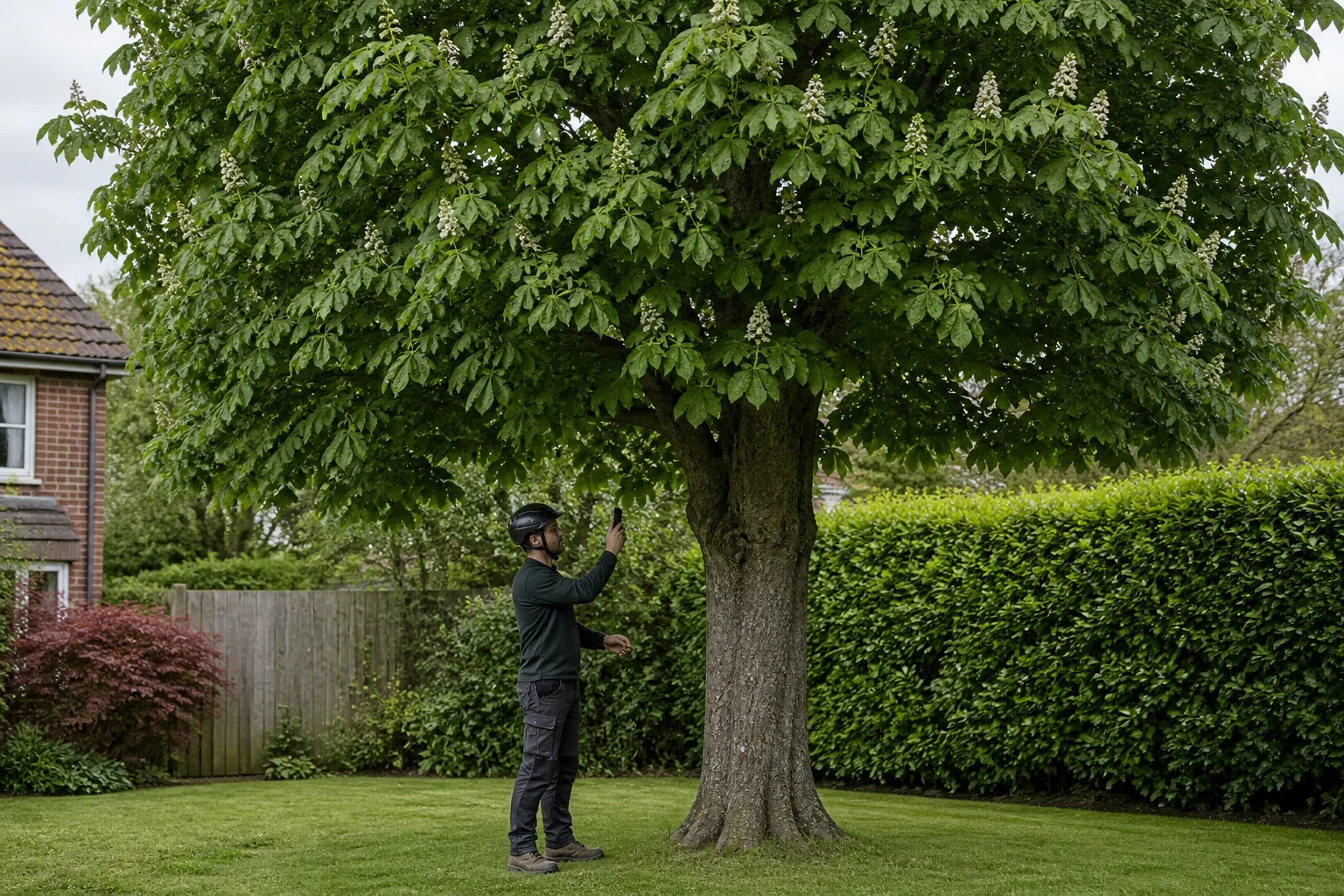
Plan around what sits below
Horse chestnuts are often planted beside lawns, drives and boundaries where the crown reaches over more than one surface. Show conservatories, sheds, parked-car areas and neighbouring property beneath the branches, plus the narrowest point on the route out.
That information helps determine whether cut sections can be lowered into a clear area and how material will be moved. Clean-up is included, while timber and branch handling are agreed for the individual job.
Condition does not remove protection
A horse chestnut may be covered by a Tree Preservation Order, and conservation-area controls can apply. Suspected disease does not automatically cancel those controls. The local planning authority can confirm the tree's status and the process that applies.
Where an exemption is believed to apply because a tree is dead or dangerous, the owner may need evidence. Do not treat a visible stain or thin crown as proof that unrestricted work can begin.