Poplar tree work
Poplar tree surgery
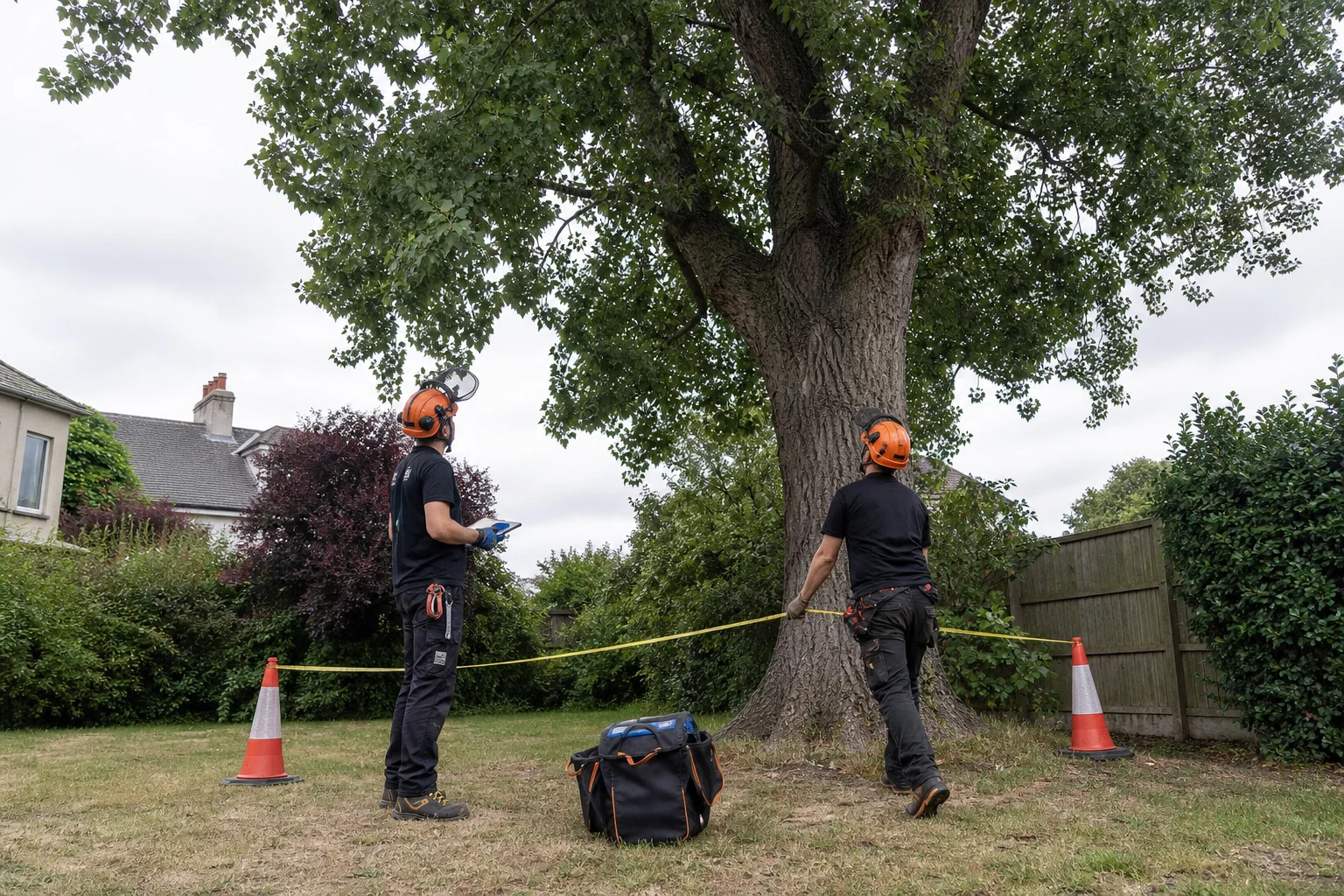
Poplar tree surgery starts with the type of poplar, its height and any previous cutting cycle. We plan the work around the crown, the drop zone and what must be protected below.
Show whether the tree is narrow, broad or previously pollarded
Include fissured bark and any sucker growth
Record roofs, roads, gardens and the available working zone
Poplar tree work
Not every poplar grows the same way
Poplars include narrow upright forms, broad-crowned hybrids and the much rarer native black poplar. Their shape, vigour and previous management differ. A full-tree photograph is more useful than a close leaf shot when the first question is how the work can be carried out.
Pruning may deal with dead branches, clearance or an established management cycle. Removal is a separate decision. The specification should name the branches or pruning points involved, not rely on a vague instruction to cut the tree back.
A lapsed pollard needs a close look
Willow and poplar are both found as established pollards. When the cycle lapses, long heavy stems can develop above the old cutting points. The attachment and size of that regrowth need to be considered before another cut is chosen.
Restarting work after a long gap is not the same as repeating a short known cycle. The RHS advises professional input for large old pollards because weakly attached branches can develop. We carry out the agreed tree work but do not provide surveys or consultancy reports.
Use the whole shape as well as the leaf
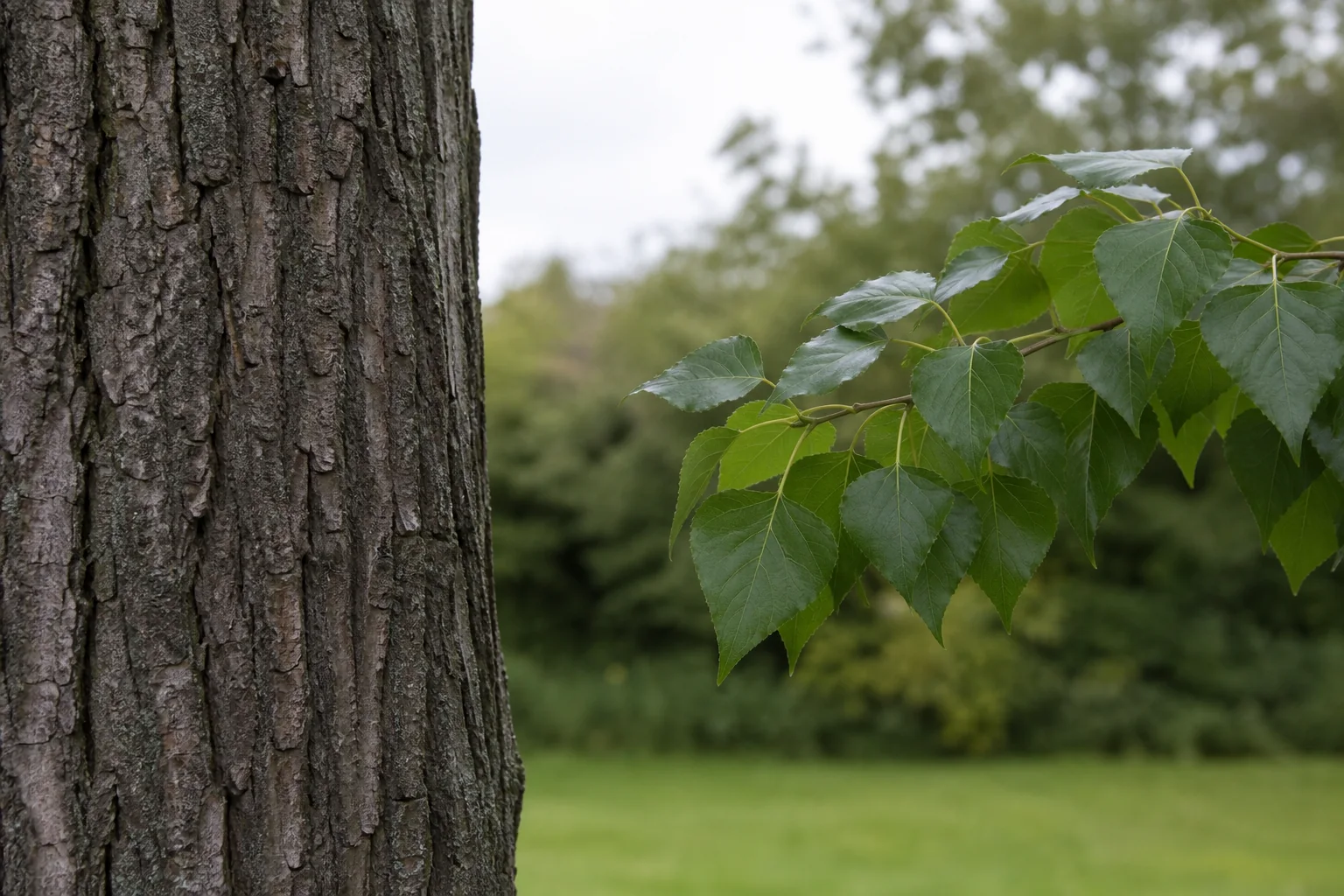
Poplar leaves are often triangular or heart-shaped with a pointed tip, while mature bark can become dark and deeply fissured. Those features vary across species and hybrids. The narrow outline of a Lombardy poplar is quite different from a broad garden hybrid.
Native black poplar is rare, so this page does not assume that label for an ordinary garden tree. If identification matters to the work or an application, send the crown, bark, leaf and any sucker growth around the base.
Height makes the ground plan important
A tall poplar may stand above several gardens, roofs or parking areas. Show the full crown from more than one direction, then include sheds, greenhouses, cables, fences and the route to the road. That gives the first useful picture of the working zone.
Check for a Tree Preservation Order or conservation-area controls before pruning or felling when the status is unclear. Clean-up is included. The route and final handling of timber are agreed for the individual job after the site has been seen.