

Silver birch tree work
Silver birch tree surgery
Silver birch tree surgery usually calls for restraint. We plan pruning or removal around the fine branch structure, the reason for the work and the space beneath the crown.
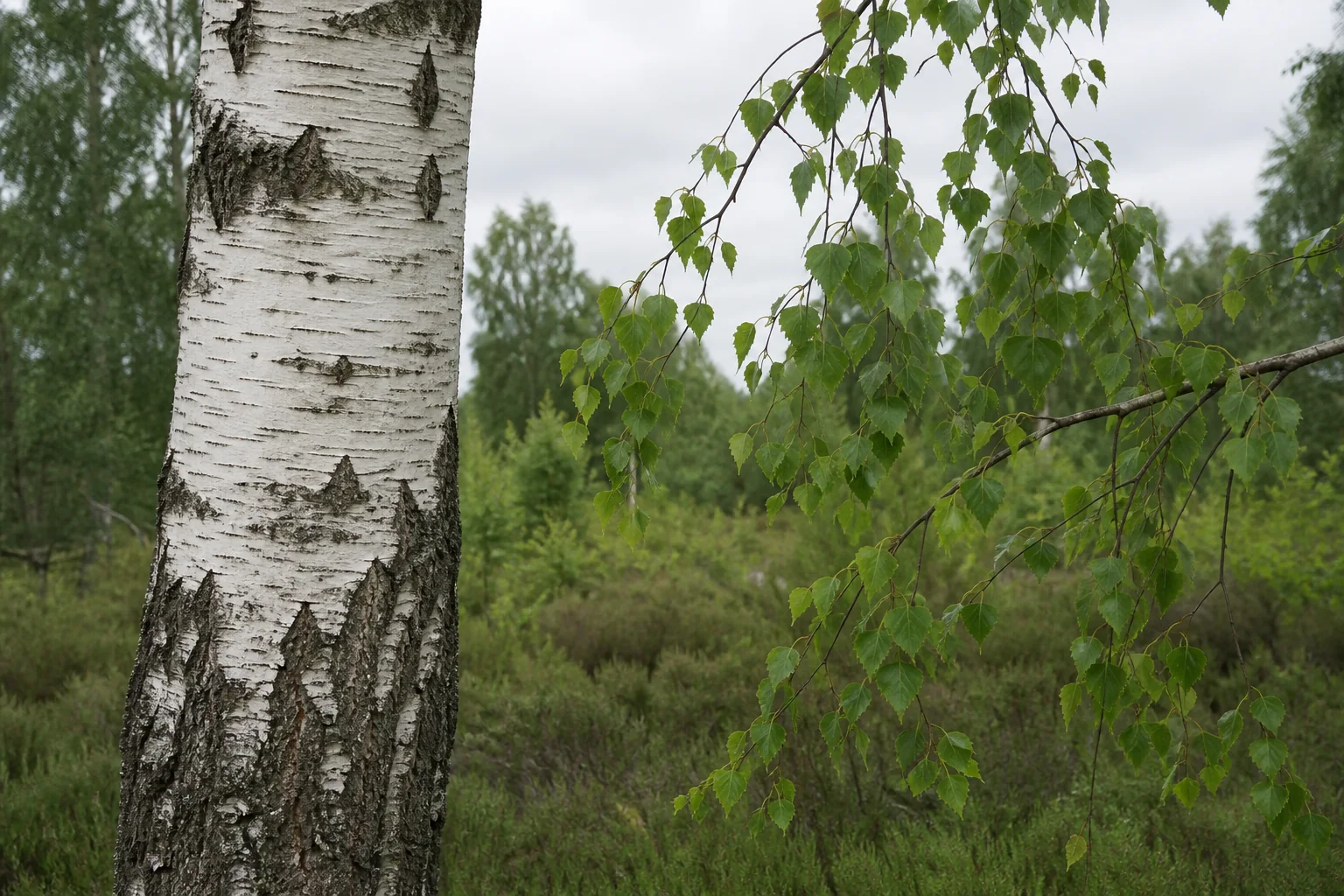
White and papery with rough black fissures near the base
Light, fine and often drooping at the tips
Keep the work modest and time it carefully
Silver birch tree work
Keep silver birch pruning modest
An established silver birch does not usually need routine pruning. Work is better tied to a clear reason, such as a dead branch, a damaged limb or limited clearance from a building or path. Removing too much can spoil the light, fine outline that makes the tree recognisable.
Where the tree is simply too large for the space, repeated hard reductions may not produce a useful long-term result. Removal and replacement can be discussed separately, based on the individual tree, the site and the customer's aim.
Birch can bleed after pruning
The RHS advises that birch can bleed sap when pruned at the wrong time. Where pruning is required, it recommends working while the tree is fully dormant, from late summer to before midwinter. Hard pruning is not recommended.
That timing still sits alongside the specified work, weather, tree condition and wildlife checks. A damaged branch that presents an immediate problem is not handled like planned minor pruning.
Check that it is silver birch
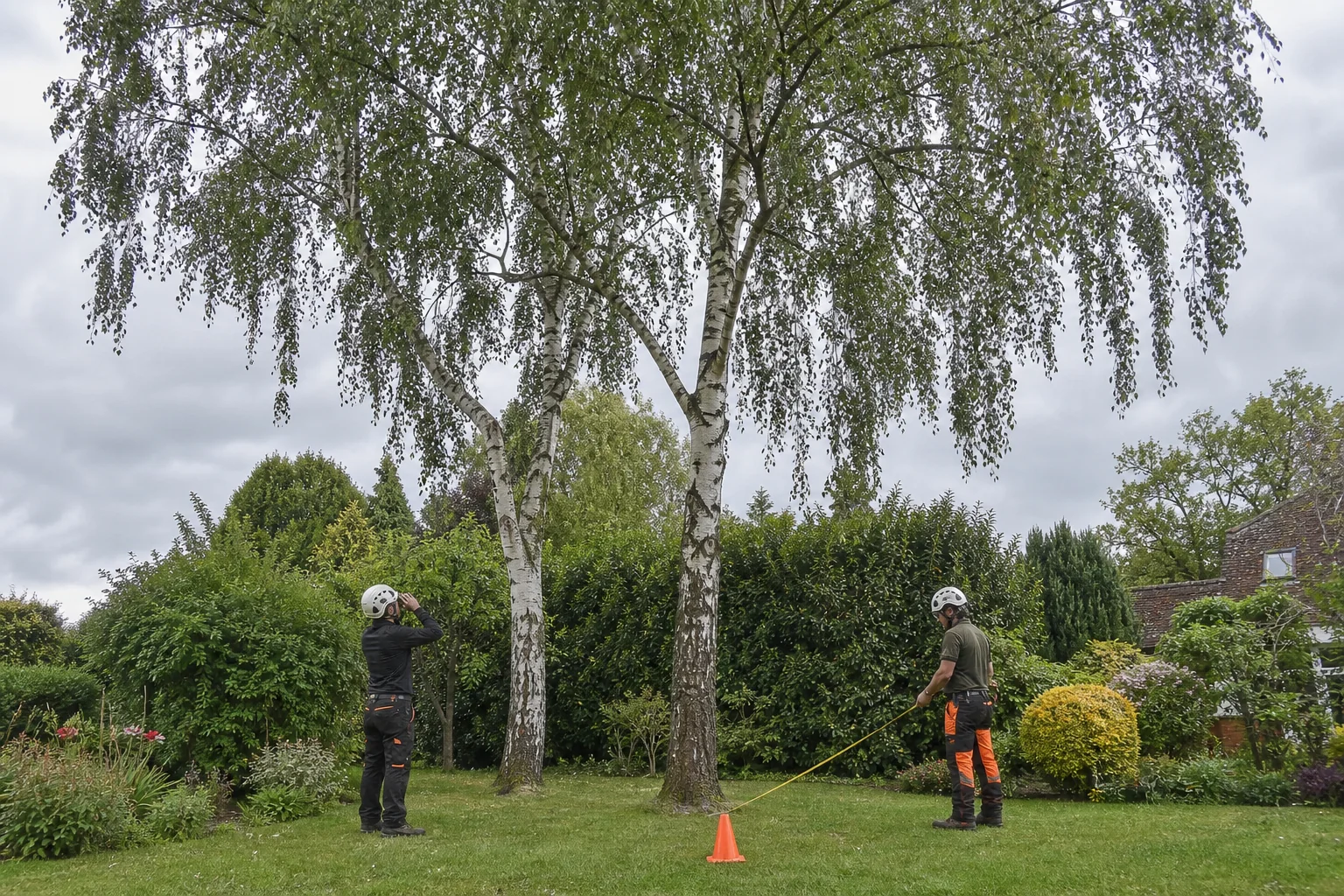
Mature silver birch has white papery bark with dark marks, and the base becomes rougher with black diamond-shaped fissures. The fine twigs tend to droop, and the leaves are triangular with toothed edges.
Young trees and other birches can look similar in one close photograph. Send the full crown, the lower trunk and a clear leaf image if the species matters to the requested work or any formal application.
Small trees can still be protected
A silver birch does not need a huge trunk to be covered by a Tree Preservation Order. Conservation-area controls may also apply. The local planning authority can confirm the position at the address.
Check before pruning or felling when protection status is unclear. A clear description of the intended cuts is more useful than a broad instruction to reduce or tidy the tree.