Willow tree work
Willow tree surgery
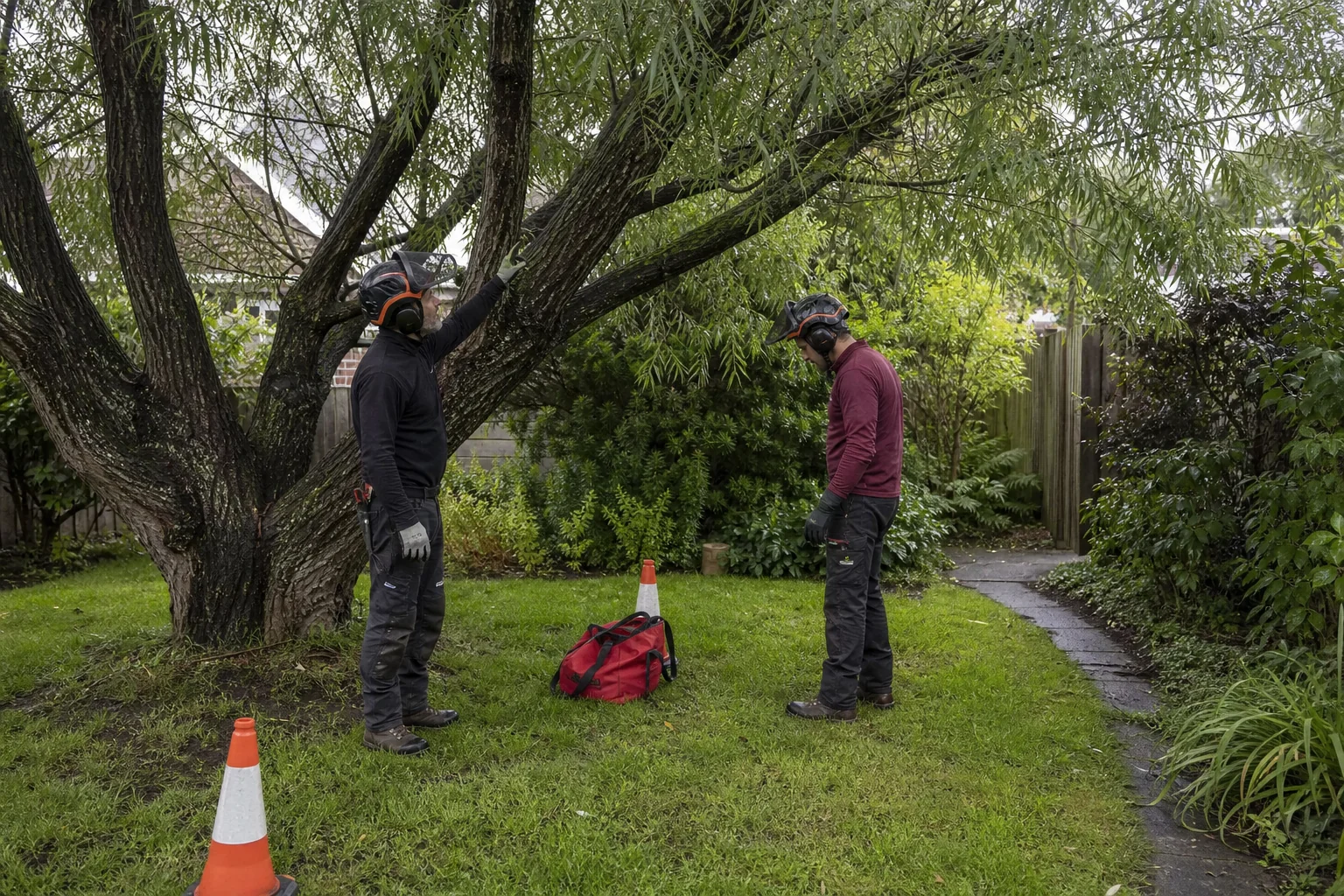
Willow tree surgery needs a clear aim and a close look at earlier cuts. We plan pruning or removal around the particular willow, the weight of its limbs and the ground below.
Often long and narrow, but form varies across the willow group
Show old pollard heads or earlier large cuts
Include wet ground, banks and the route to the road
Willow tree work
Start with the willow in front of us
Willow covers many species and hybrids. Some form large waterside trees, while others have been pollarded or coppiced for years. The photographs should show the full crown, the lower trunk and any old pruning points, because those details change the sensible options.
A request to make a willow smaller could mean removing selected branches, continuing an established pollard cycle, or considering removal where the tree no longer fits the space. We agree the actual cuts before work starts rather than treating every willow in the same way.
Old pollards need their history respected
An established pollard can carry a dense crop of new stems from previous cutting points. Continuing that known cycle is different from making a first hard cut into an unpollarded mature tree. The size of the regrowth and the condition around each old head need to be seen before a specification is agreed.
The RHS places most planned willow pruning between autumn and early spring, with established pollarding or coppicing commonly handled in spring. Timing also depends on the requested work, tree condition, nesting wildlife and weather on the day.
Leaves and bark help narrow it down
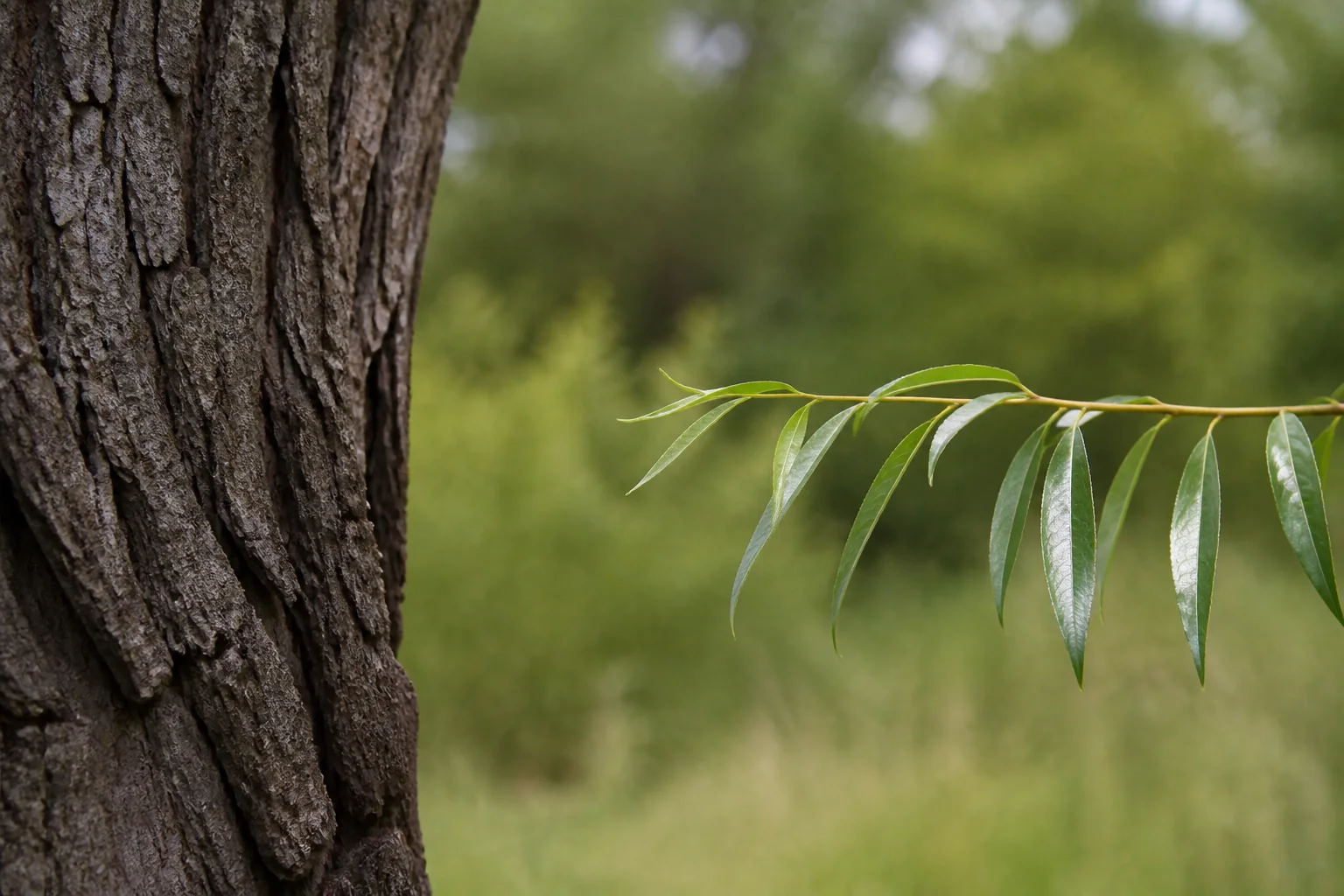
Crack willow is one familiar large willow. It has deeply fissured brown bark and long, narrow leaves that are glossy above and paler beneath. Other willows differ, and hybridisation can make a firm identification from one photograph difficult.
If the exact willow matters, send a clear leaf photograph as well as the whole tree and trunk. The page uses Salix spp. because the working plan should not rest on a guessed species or cultivar.
Soft ground and heavy timber shape the job
Willows are often found where the ground holds water. Show lawns, banks, ponds, drains and the route back to the road, including the narrowest gate. That helps us judge where sections can be handled without promising a method before the site is seen.
A willow can also be protected by a Tree Preservation Order or stand in a conservation area. Check with the local planning authority when the position is unclear. Clean-up is included, while the handling of branches and timber is agreed for the individual job.