
Ash tree guidance
Ash dieback: what tree owners need to know
Ash dieback can thin the crown, kill shoots and weaken affected trees over time. Not every ash declines at the same rate, so position and condition matter more than the disease name alone.
First, make sure it is an ash
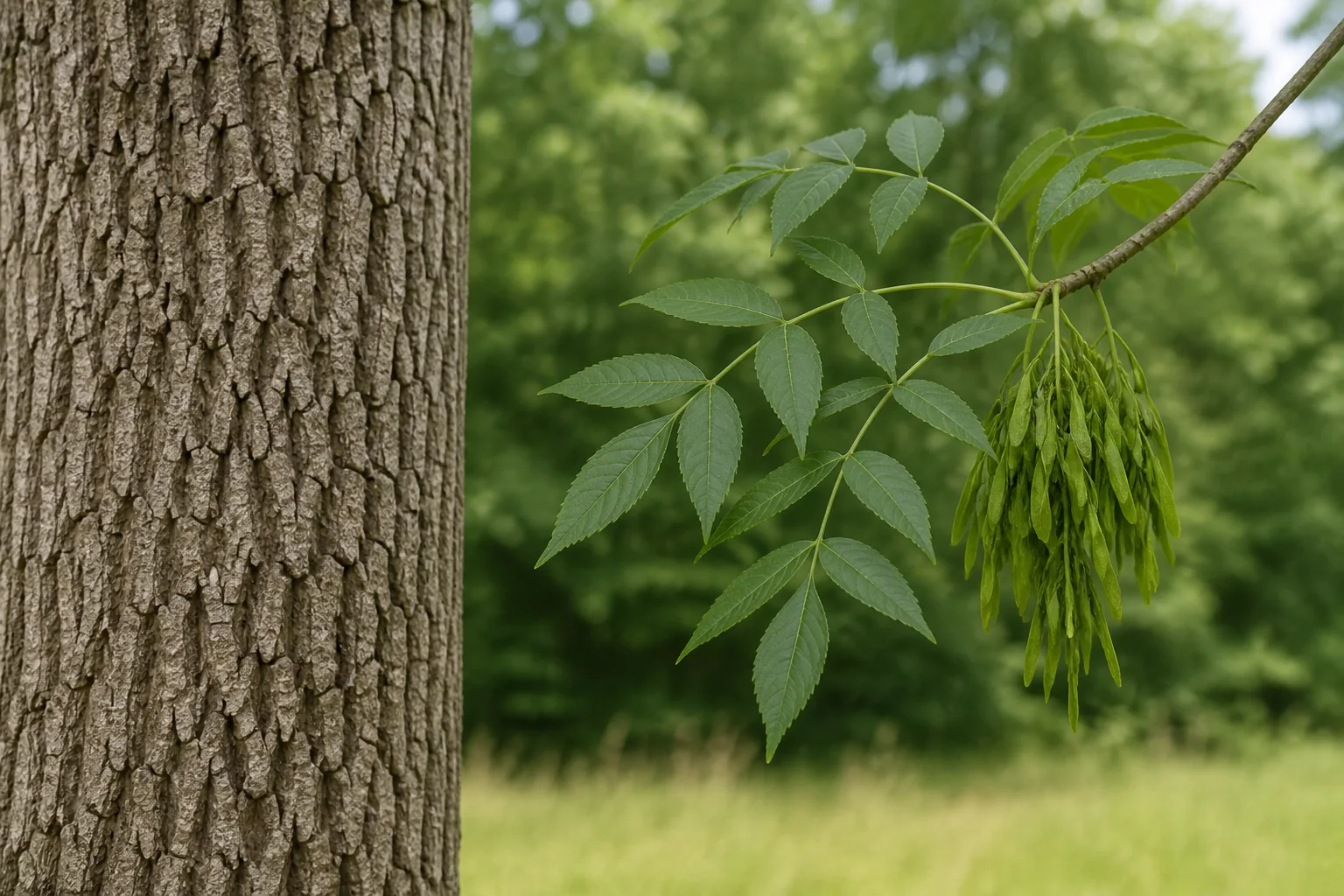
Common ash has compound leaves, with several leaflets arranged in pairs and one at the tip. Its buds are notably dark, and mature bark develops interlocking ridges. The hanging winged seeds, often called keys, can remain visible in bunches.
Identification matters because crown thinning and dead branches have several possible causes. A distant photograph may suggest the species, but it cannot confirm the cause of decline or the strength of the remaining wood.
Season changes which features are easiest to see. Dark buds and branch arrangement help in winter, while leaves and keys are clearer in summer and autumn. Photograph the whole crown as well as one useful detail. A close picture of bark alone rarely gives enough context to identify the tree or explain its condition.
Signs to watch in the crown
Ash dieback commonly causes leaves and shoots to wilt, dark lesions on young growth and loss of foliage through the crown. As shoots die back, the tree may produce dense new growth further inside the crown. The pattern can become clearer when compared across consecutive summers.
Young trees can decline quickly, while some older trees retain a useful crown for longer. Other damage, drought and root problems can look similar from the ground. Record what changes, when it appears and whether dead branches are developing over an area people use.
Look at the distribution rather than one bare twig. Repeated dieback at branch tips, patches that fail to leaf and a growing amount of deadwood give more useful information when seen together. Photographs taken from the same safe position each summer can show whether the live crown is stable or shrinking.
An affected ash does not automatically need felling
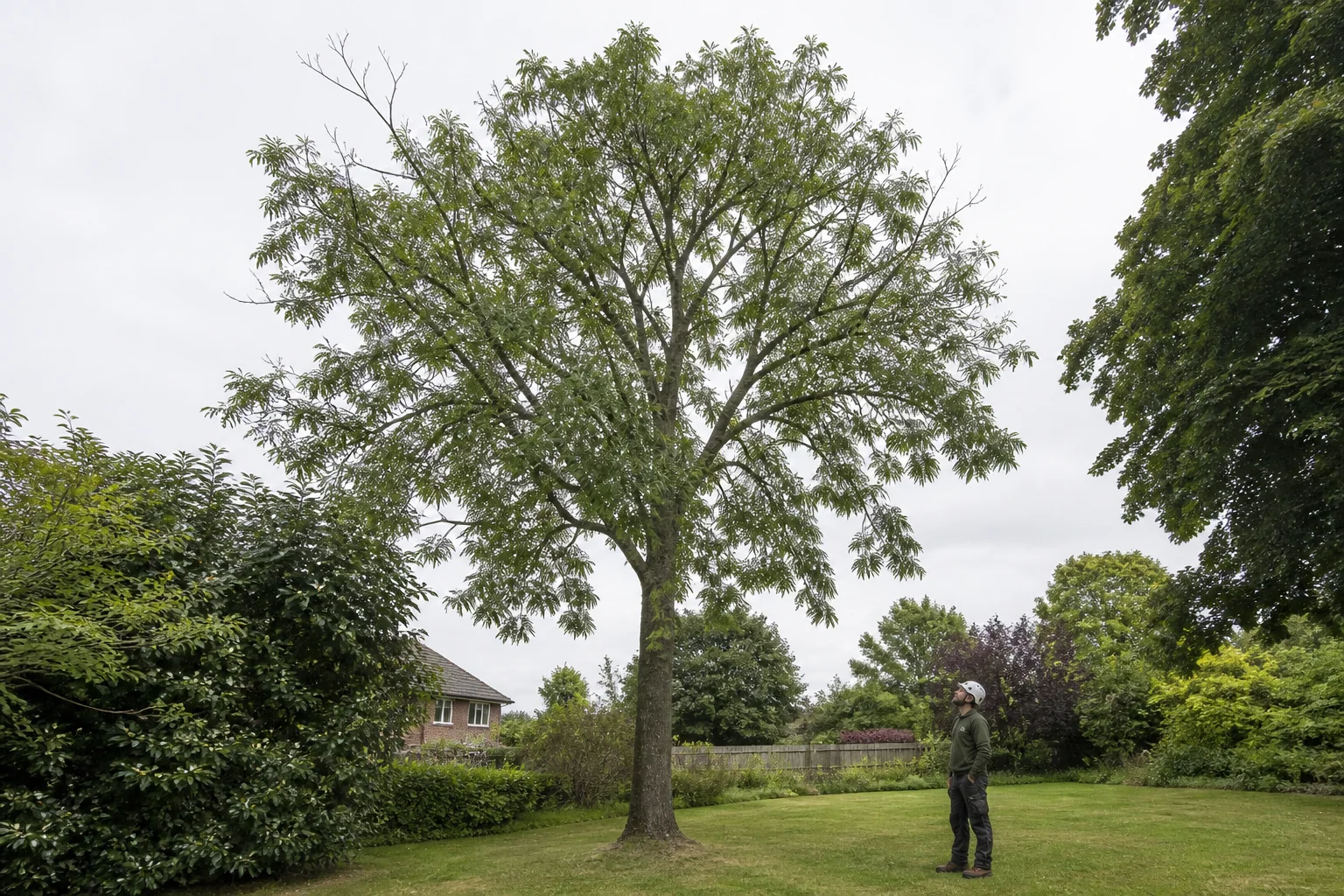
Government guidance advises retaining ash where it is safe and appropriate because some trees show tolerance. Removing every affected tree would also remove habitat and reduce the chance of tolerant ash contributing to the future population.
The decision changes when an ash can reach a road, building, path or busy garden. Dead branches and weakened stems may create a risk that needs work. The amount of decline, site use and what the tree could strike all belong in the decision.
An ash in a quiet corner can present a different problem from one beside a school entrance or main road, even when the crowns look similar. That does not make low-use trees risk free. It means the frequency of people below, the possible impact and the tree's changing condition are considered together.
Work on declining ash needs careful planning
Ash affected by dieback can become brittle. That can reduce the reliability of branches and anchor points that might normally be used during climbing. The tree may therefore need a different access method, a larger controlled area or work completed in sections from suitable machinery.
Do not climb or cut a declining ash yourself. Keep people away if branches have recently fallen or the crown overhangs a busy route. Photographs should be taken from a position outside the area the tree or branches could reach.
Condition also affects when work is left too late. A tree that can no longer provide dependable climbing points may need more equipment and a wider work area than it did earlier in its decline. Regular observation can therefore help the owner act on a clear change rather than waiting for a branch to fail.
Know when you need an independent report
We carry out pruning, deadwood removal and felling where tree work is the agreed response. Send photographs of the whole ash, the crown, the base and the access route with the address and what is causing concern.
We do not provide surveys or consultancy reports. Where a written condition assessment, mortgage report or formal management plan is needed, arrange that with a suitable arboricultural consultant. Any resulting work specification can then be used to quote the practical tree work.
Make the purpose of any document clear when contacting a consultant. A simple work quote, a safety inspection and a report for planning or insurance are not interchangeable. If another professional has already inspected the ash, send their specification and any site constraints with the quote request rather than paraphrasing the conclusion.
If the concern is a recent branch failure rather than a report, say when it happened and where the branch landed. Keep the area below clear and include that change in the first message. A history of falling deadwood can affect the urgency even when the remaining crown still carries leaves.