

Ash tree work
Ash tree surgery
Ash tree surgery starts with the crown, the tree's condition and what stands below it. We carry out agreed pruning or removal work, with the method set by access and the space available.
Opposite, pinnate leaves with pointed leaflets
Whole-crown photographs help with the first conversation
Pruning, deadwood removal or felling as agreed
Ash tree work
Decide the work from the crown and site
An ash may need dead branches removed, clearance from a roof or road, or a measured reduction where the crown has outgrown the available space. The right specification depends on branch condition, previous cuts and the amount of live crown that can sensibly be retained.
Removal is considered separately. A large tree is not automatically unsuitable, and a smaller one is not automatically safe. We need to see the full crown, the base, the ground beneath it and the route to the road before the handling plan can be settled.
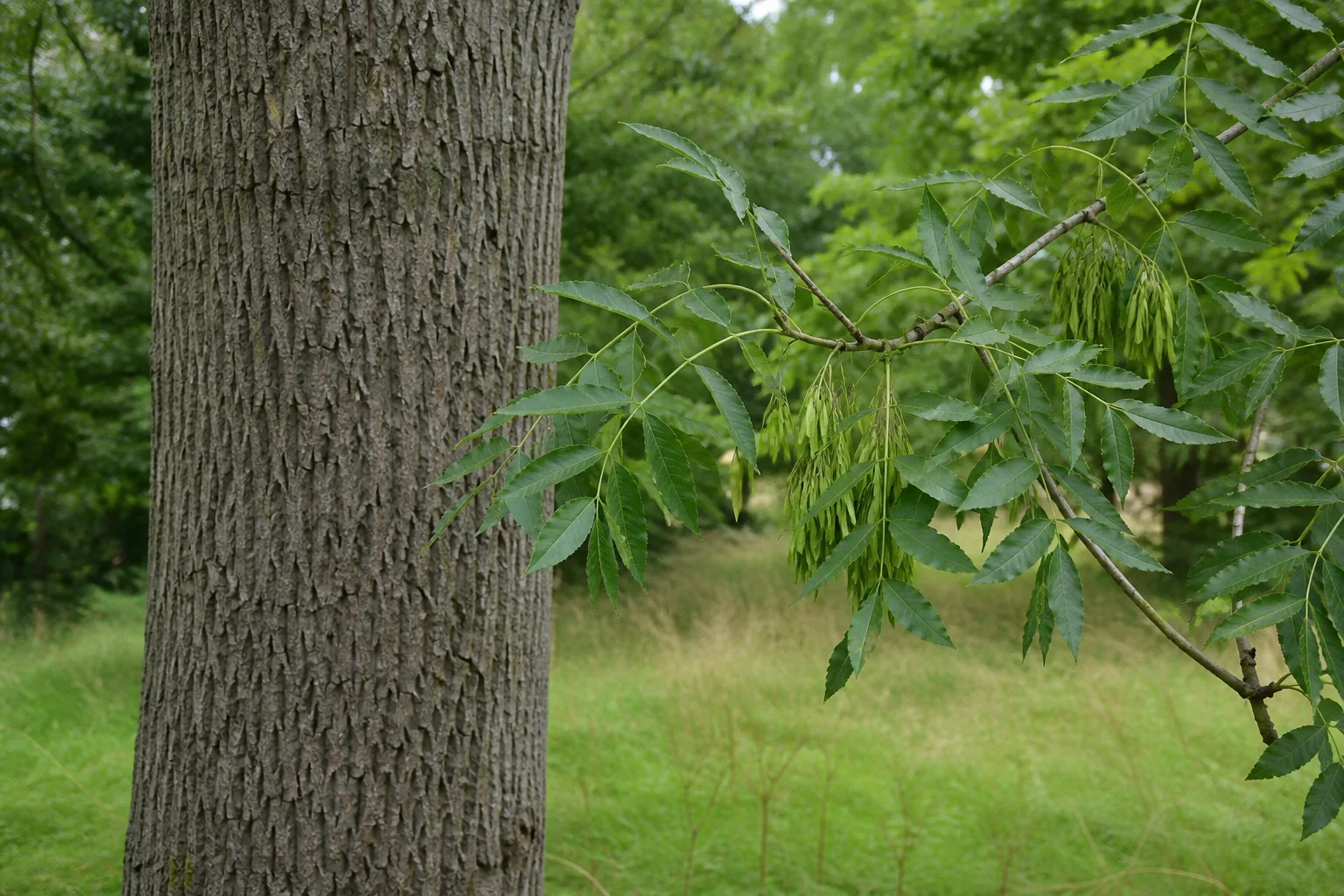
Ash dieback changes the plan
Ash dieback can cause leaf loss, dead branches and progressive crown decline. Those signs are not a reliable diagnosis on their own, but they are a reason to keep people away from falling branches and arrange the right next step. A photograph of the whole crown and the base is more useful than a close shot of one leaf.
Government guidance does not call for every affected ash to be felled. Trees that remain healthy enough can be retained where the risk is acceptable. Where an ash stands beside a road, building or regularly used area, the condition of the crown and the consequences of branch failure need particular attention. We carry out tree work, not surveys or consultancy reports.
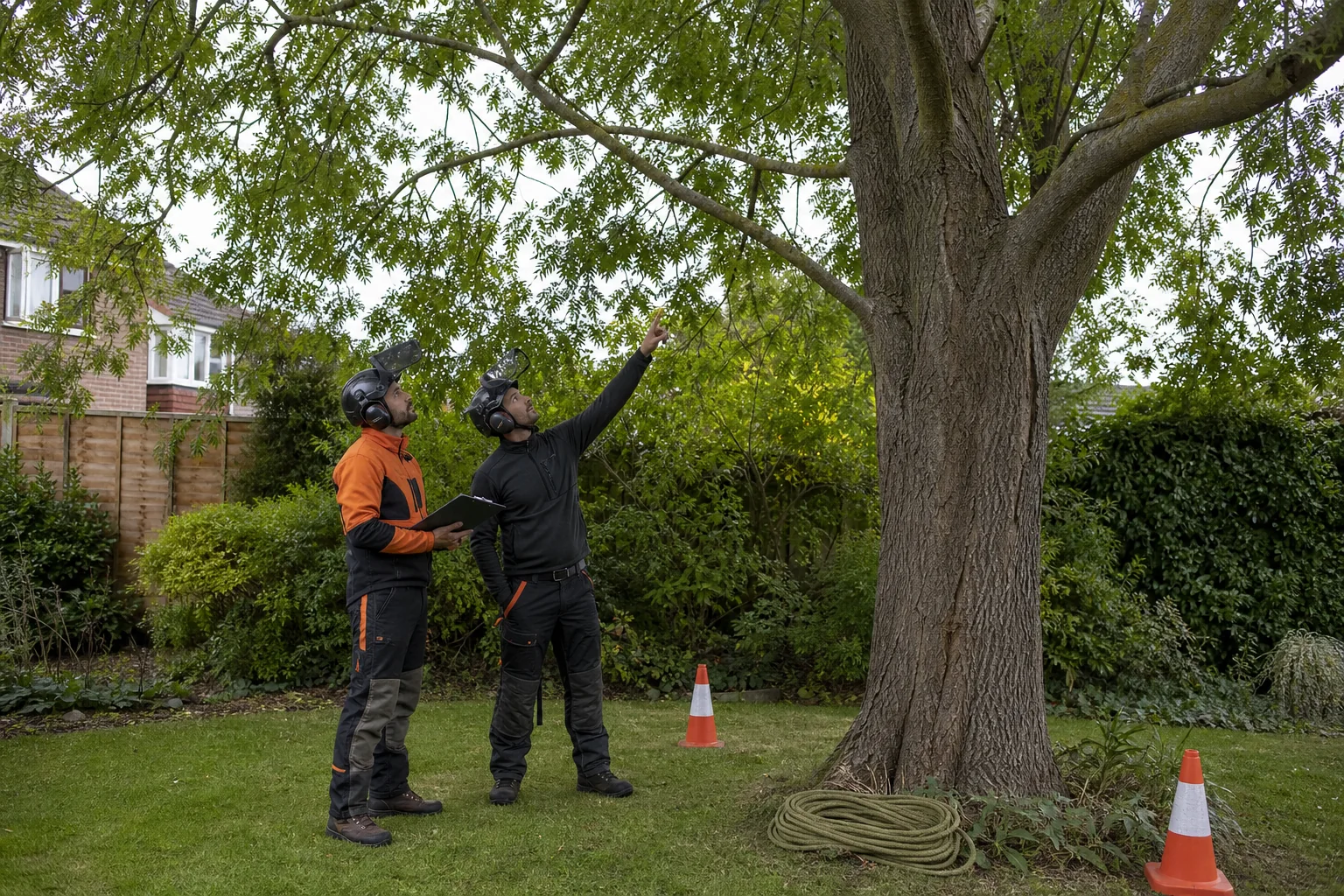
Plan timing and access together
The Arboricultural Association gives late spring to summer as the general optimum period for pruning ash. That is a useful starting point, but the actual date also depends on the specified work, wildlife checks, weather and the condition of the tree. Urgent work on a damaged branch cannot be planned like routine pruning.
Access often decides how the work is completed. Send the narrowest gate, the route from the tree to the road and anything beneath the crown. Clean-up is included, while the treatment of timber and branches is agreed for the individual job.
Check protection before cutting
An ash is not protected simply because it is an ash, but an individual tree may be covered by a Tree Preservation Order. Trees in conservation areas are also subject to controls. The local planning authority can confirm the position for the address.
Permission applies to the proposed work, not just the name of the tree. A clear pruning specification matters, particularly where a broad request such as 'cut it back' could mean several very different results.