
Show us the branch and what is below
Send a safe whole-tree view, the area beneath the crown and the access from the road.

Deadwooding
We remove agreed dead branches from trees across Iver, Slough and Buckinghamshire. The specification identifies which wood matters, what sits below it and how each branch can be controlled.
What this service covers
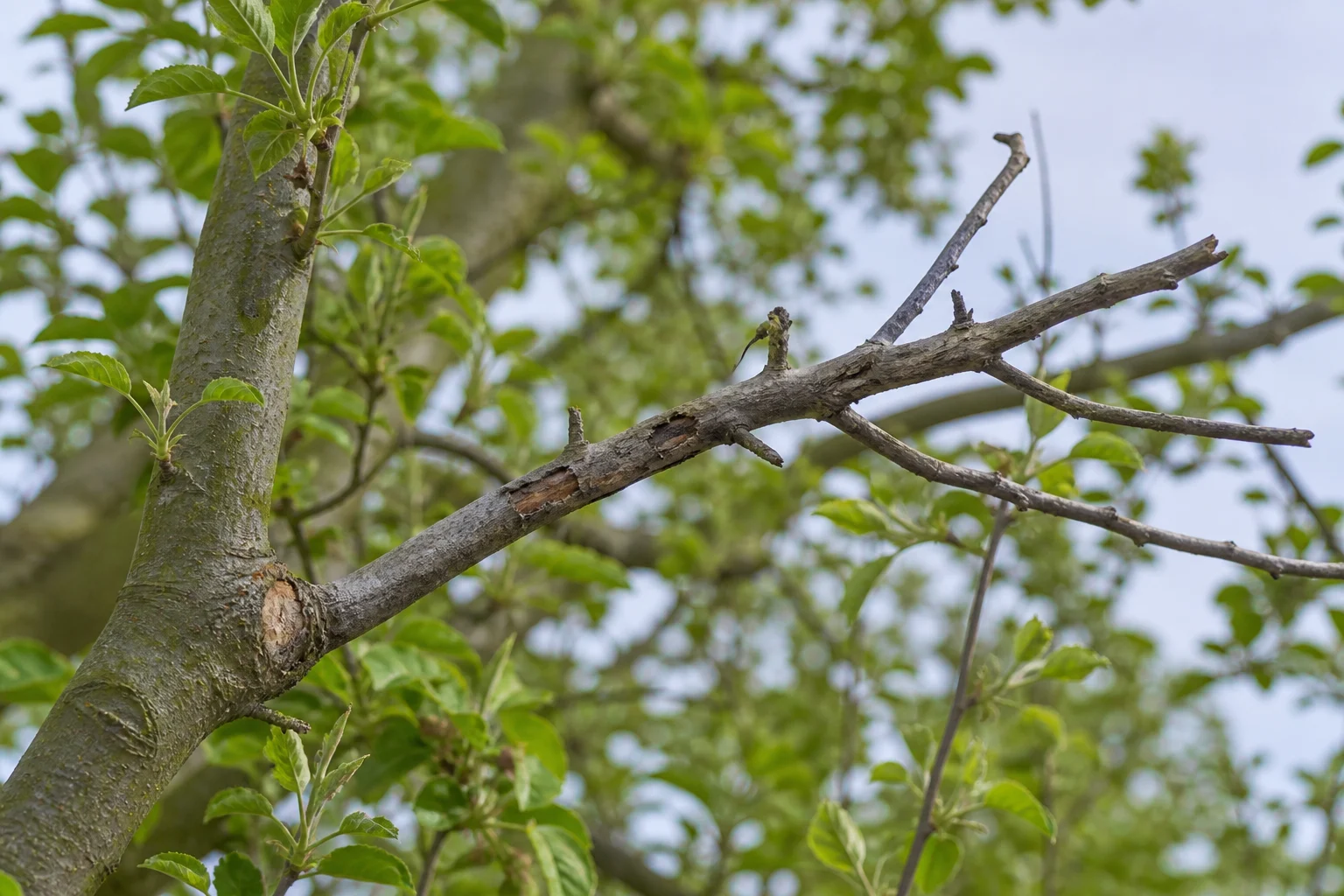
Deadwood is a dead branch or dead part of a branch within an otherwise living tree. In summer it may stand out because it carries no live leaves or shoots. In winter, a bare deciduous branch is much harder to judge from the ground, so seasonal appearance alone is not proof.
Removal is most useful where a dead branch sits above a place people actually use, such as a path, parking space, seating area or roof. Branch diameter, height and what is within reach all affect the job. A small twig over an unused bed is not the same problem as a heavy branch over the only route to a house.
Not every piece of deadwood needs to come out. Government guidance recognises dead branches as valuable habitat and says safety does not always require all deadwood to be removed. The useful specification may cover particular branches or a defined part of the crown. We carry out the agreed tree work. We do not sell tree surveys or consultancy reports.
If a branch has broken and is hanging over an occupied area, keep people clear and use our 24-hour emergency call-out.
How it works
Send a safe whole-tree view, the area beneath the crown and the access from the road.
We write down the branches or crown area, working zone, access and handling of cut material.
The qualified team completes the specified work and clean-up, with branches and timber handled as quoted.
We need to see the whole tree, the branches in question and the ground below. Tell us about sheds, overhead cables, fragile planting and shared access. A photograph can help with the quote if it can be taken safely. Do not stand beneath suspect wood to get a closer picture.
The working zone has to stay clear while material is being removed. HSE guidance calls for controls where forestry work could affect other people and says work should stop if a risk zone is breached. On a domestic job that can mean agreeing another route to the door, moving cars and keeping children, pets and neighbours away until the crew has finished that part of the tree.
The route from the tree to the road matters too. A narrow turn or steps can change the size of material that can be moved at once. Mention parking restrictions and access through another property before the visit so the quote reflects the real job.
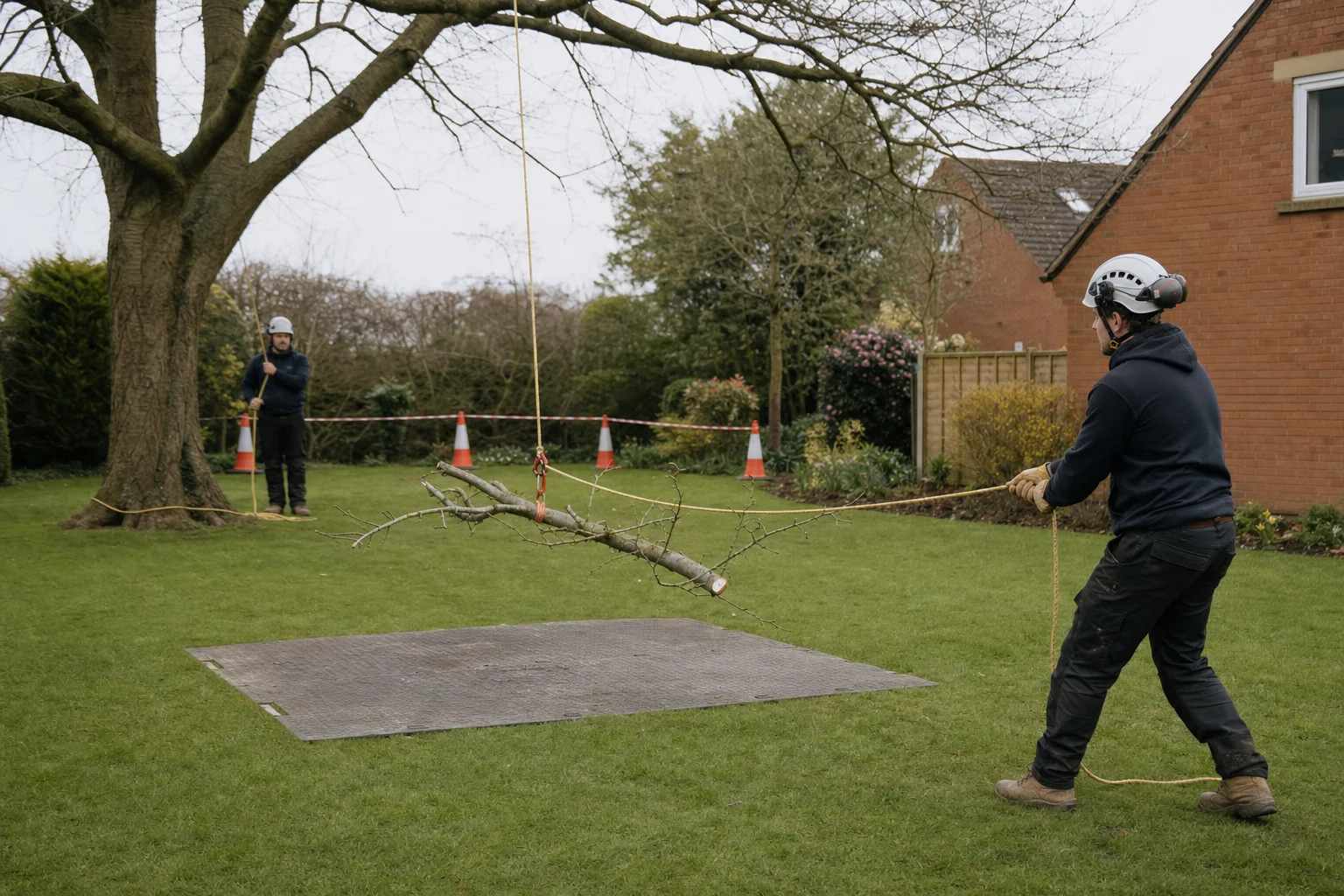
Appropriately assigned members of our qualified team carry out the agreed work. The way they reach a branch depends on the tree, branch position and site. A piece may need to be cut into shorter lengths or controlled on a rope so it does not swing into a roof, fence or planted border. The method is set for the actual tree.
Where a dead branch is removed back to a living junction, the final cut needs to respect the branch attachment and avoid an unnecessary wound to live tissue. The aim is not to reshape the whole crown under the name of deadwooding. If live pruning, crown reduction or another service is needed, it should be described separately so the customer knows exactly what is included.
Clean-up is included in every job. We clear the agreed work area after cutting. What happens to branches, chip and usable timber is recorded for the individual quote, because the right arrangement depends on access and what the customer wants kept. We carry £10 million public liability insurance.
GOV.UK guidance allows dead branches to be removed from a living tree protected by a Tree Preservation Order without prior notice or consent. The same exception can apply to section 211 controls in a conservation area. It is a narrow exception for wood that is actually dead. Live pruning, a dying branch and work to a whole dead tree follow different rules, so the landowner should check the tree's status and the proposed work before it starts.
Deadwood can also be habitat. Wild birds, their eggs and nests are protected by law, and cutting trees can affect them while they breed. Bats and their breeding and resting places have strict protection throughout the year. If an active nest, a bat or a feature that may be used as a roost is found, work may need to stop or change while the right wildlife advice is obtained.
There is no single deadwooding month that fits every tree. Leaf cover can make dead branches easier to pick out, while weather and access affect whether work can proceed. Wildlife and protected-tree controls matter more than a date on the calendar.
Straight answers
No. Deadwood has habitat value, and removal should reflect the branch size, its position and what is below it. The useful job may be limited to dead branches over a drive, path, building or regularly used garden area.
A dead branch may have no live leaves or shoots during the growing season, weathered wood or loose bark. Those signs are not conclusive in every season or species. Send a wider photograph for quoting, but do not stand beneath the branch and do not treat a photo as a safety diagnosis.
GOV.UK says dead branches may be removed from a living tree covered by a Tree Preservation Order without prior notice or consent. That does not cover live or merely dying branches, and the rules for a whole dead tree differ. Check the protection and scope with the local planning authority if there is any doubt.