
Measure the beds
Send photographs, approximate dimensions, planting details and the route to every area that needs mulch.

Mulch for planted areas
We mulch tree circles, shrub beds and planted areas across Iver, Slough and Buckinghamshire. The quote names the material, preparation, area and depth because not every pile of wood chip suits the job.
What this service covers
Mulch is a layer placed over the soil around suitable trees, shrubs or other planting. The RHS identifies moisture retention and weed suppression among its main uses. Biodegradable material also breaks down over time. The effect depends on the material, depth, soil and planting beneath it, so a thin scatter is not the same job as a properly defined layer.
Mulch does not remove a drainage problem, cure compacted soil or guarantee a weed-free bed. Established perennial weeds can grow through it, and material laid over dry ground does not replace watering. Tell us the purpose of the job and show the current surface so preparation can be included where appropriate.
The material must suit the area. Chipped wood, processed bark and composted material behave differently, and stone is another category again. The quote names what is being supplied or reused. We do not assume that chip from any tree or an unknown mixed pile belongs around valued planting.
How it works
Send photographs, approximate dimensions, planting details and the route to every area that needs mulch.
We write the mulch source, soil preparation, intended depth, edges and surplus handling.
We apply the agreed layer, keep stems clear and include clean-up of the working area.
A quote needs the bed dimensions, photographs and intended material. If mulch is to come from tree or hedge work on the same property, that arrangement must be written into both parts of the job. The chip volume and composition cannot be judged from the standing crown alone, and the finished material may not match decorative processed bark.
The Environment Agency's U12 guidance says waste used as mulch must be suitable, untreated and limited to the amount needed to benefit the soil. Business use can also require the correct waste exemption or permit. These rules matter when material is moved or used as part of commercial work. Woodside records the intended source and use rather than describing unwanted material as mulch after the event.
Access affects the cost of moving a bulky material. Show gates, steps, slopes, narrow paths and the distance from the delivery or chipping point to the bed. Tell us if the route crosses a finished lawn, deck or shared passage. The placement plan should prevent a useful path from becoming a temporary storage heap.
The RHS advises that biodegradable mulch should be at least 5 centimetres and ideally about 7.5 centimetres deep to work effectively. It is normally laid over moist, weeded soil that is not frozen. The final depth still needs to suit the material and the plants rather than being copied blindly across every bed.
Mulch should not be heaped against a tree trunk or woody plant stem. Direct contact can keep the stem damp and make it more vulnerable to problems. A visible gap around the stem base also makes it easier to see the original planting level. The aim is an even soil covering, not a mound around the trunk.
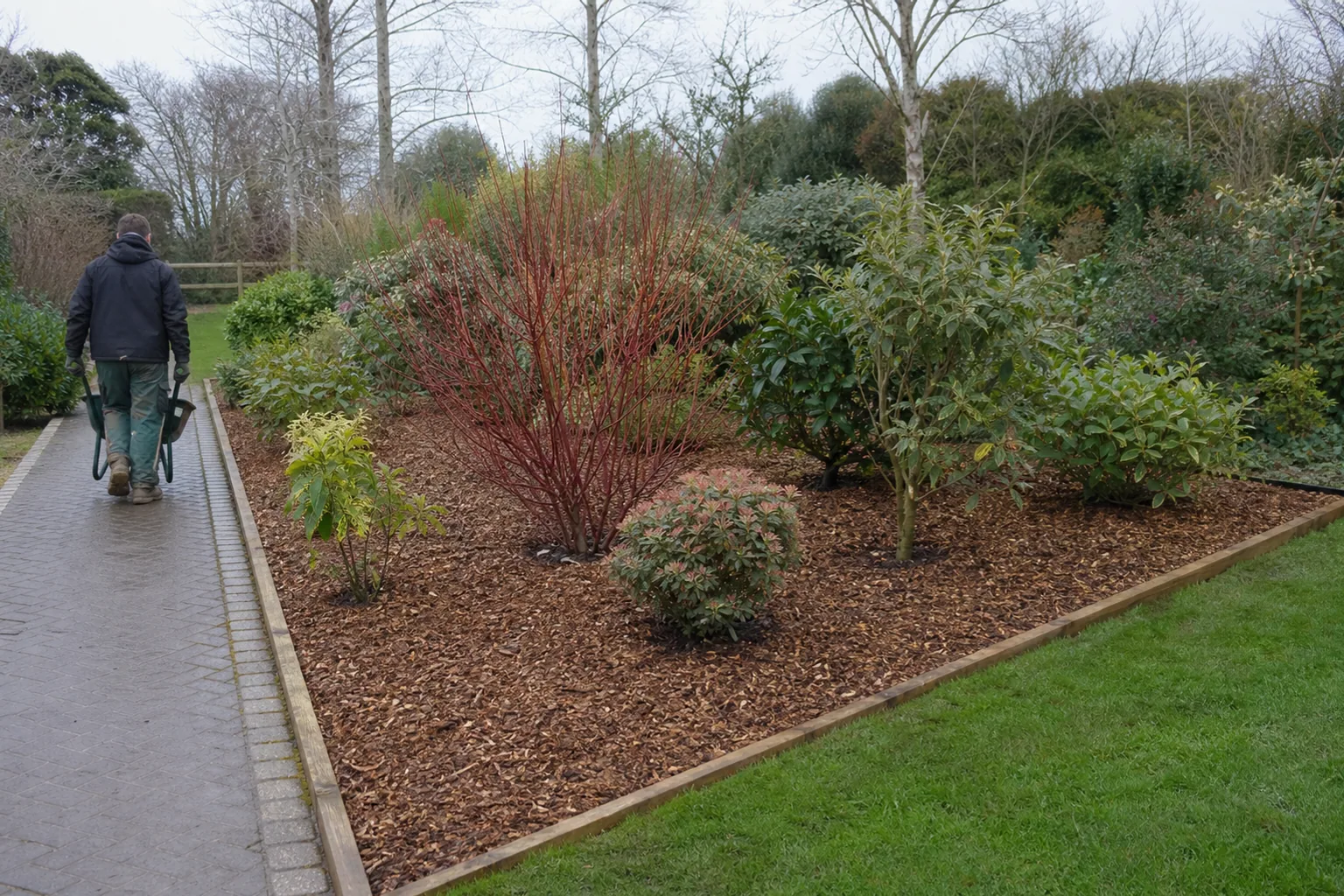
Edges need agreeing too. A bed beside paving, lawn, drainage gravel or a building may need a clean limit so loose material does not spread onto the adjoining surface. Low-growing plants can also be smothered if the material is pushed through them. We work to the stated bed rather than covering every exposed patch of soil.
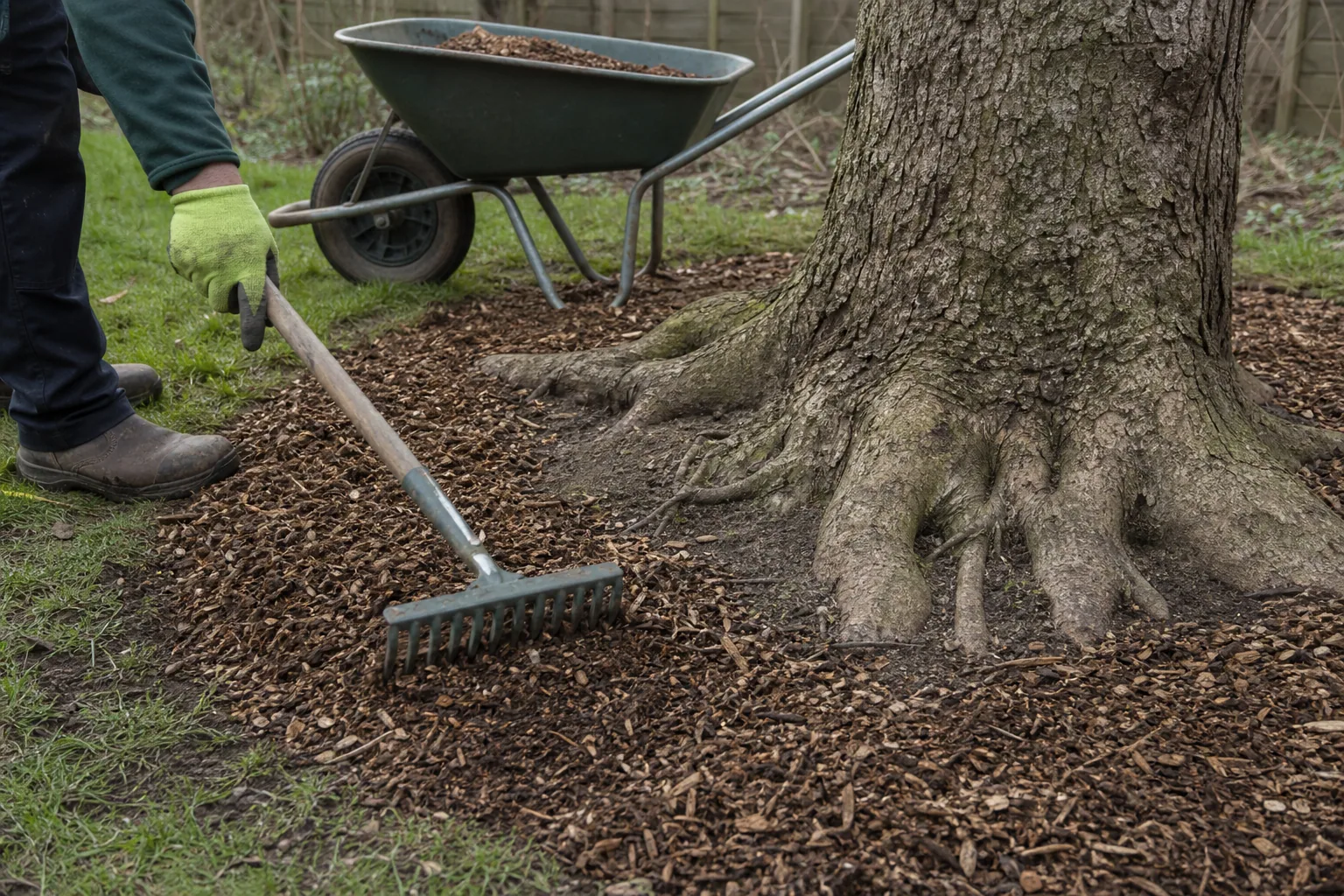
Before spreading starts, we confirm the beds, retained plants, preparation, material, depth and access. The surface work written into the quote is completed first, then the mulch is distributed to the agreed edges while plant stems and inspection points remain clear.
Clean-up is included in every job. We leave the agreed work area and access route clear, with surplus material handled as recorded in the quote. Woodside Forestry Ltd was established in 2008 and carries £10 million public liability insurance. Future topping-up, watering and weed removal are not automatic repeat services.
Straight answers
It can be suitable in some planted areas when its source, condition and intended use are agreed. It does not automatically match decorative bark or suit every bed. The quote should state whether chip is retained and where it will be used.
No. Mulch should cover the soil while leaving the trunk or woody stem clear. Piling it against the stem can retain moisture where it is not wanted.
No. A suitable layer can suppress many weeds, but established perennial weeds may return and wind-blown seed can germinate on top. Preparation and later hand weeding may still be needed.