
Show us the position and access
Send wide photographs, the proposed position, the route from the road and any information about nearby services.

Tree planting
We plant trees across Iver, Slough and Buckinghamshire in positions chosen for their eventual size and the site. We write the tree, exact position, access and included aftercare.
What this service covers
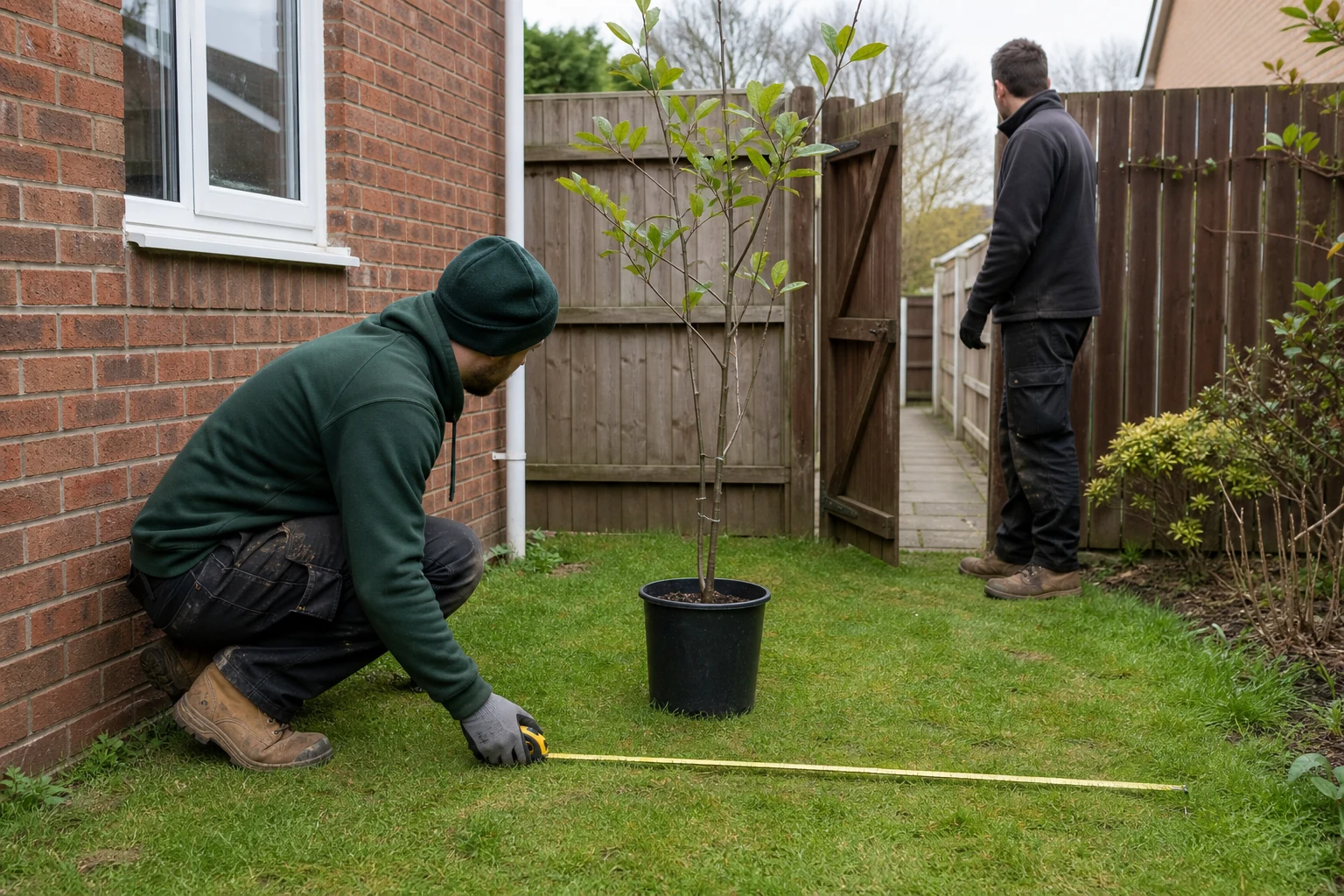
A young tree can look small against a fence or house. Its eventual height and spread are the useful measurements. The position should allow for the crown, trunk and roots as the tree develops, rather than making regular hard pruning inevitable. Nearby walls, windows, boundaries, paths and overhead obstructions all belong in that first check.
The tree also has to suit the ground. Light, drainage, exposure and available soil affect the choice. A dry, sunny lawn is different from a shaded corner that stays wet through winter. The RHS advises checking both the mature size and the site conditions before buying. We can work from a tree you have chosen or discuss practical options for the available position. This service is planting work, not garden-design consultancy.
Send one photograph looking across the whole planting area, another showing the route from the road, and the approximate position you have in mind. If a particular tree is already ordered, include its name, supplied size and whether it is container-grown, bare-root or rootballed.
How it works
Send wide photographs, the proposed position, the route from the road and any information about nearby services.
We write the planting stock, supply responsibility, access, support, mulch, clean-up and any agreed aftercare.
The team completes the agreed planting work and clean-up, then explains any aftercare written into the quote.
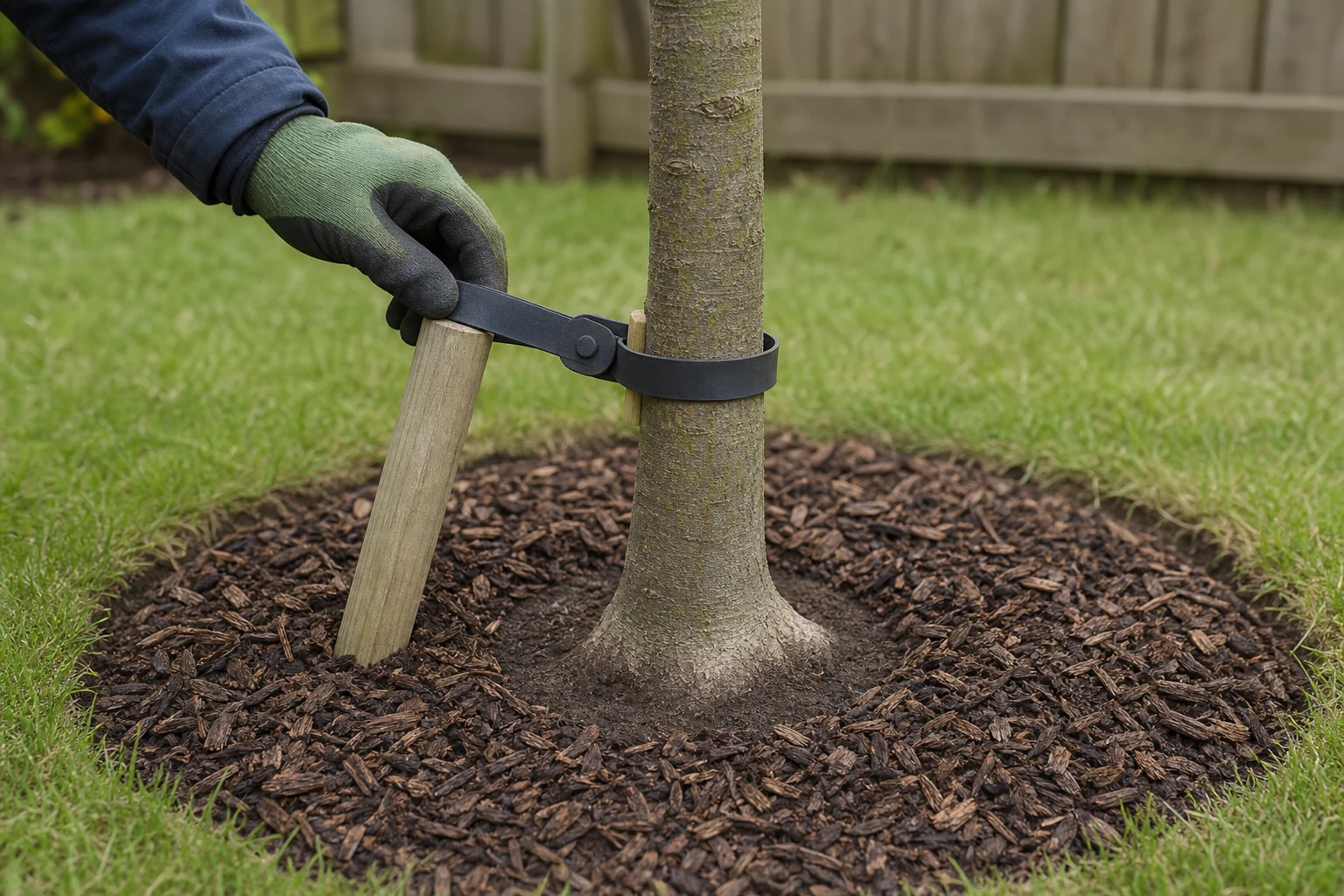
Planting too deep can cause a poor start. The first flare of roots should finish at soil level, with the bare trunk above the ground. The planting area needs room for roots to spread into loosened soil. A deep pocket of soft material under the rootball can settle later and take the tree down with it, so the finished level is checked before backfilling.
A stake is support, not a permanent part of the tree. Small trees may not need one. Where support is useful, the method depends on the tree, rootball and exposure. The tie should hold the root area steady without rubbing or tightening around the trunk, and it needs checking as the tree grows. Mulch can help the soil retain moisture, but it should lie over the soil rather than being heaped against the bark.
We agree whether Woodside is supplying the tree and whether staking, a guard, mulch or an initial watering is included. Clean-up is included in every job. Soil, pots, wrapping and other material are handled as agreed for that site, so there is no assumption hidden behind the price. Woodside Forestry Ltd was established in 2008 and carries £10 million public liability insurance.
The route may include steps, a narrow side gate, a shared passage or a turn beside an extension. That affects the size of planting stock that can reach the garden and how excavated soil can be moved.
Digging means buried services must be considered. HSE guidance says plans or suitable information about buried services should be checked before excavation and that plans show only an indication of their position. Tell us about known electric, gas, water, drainage, telecoms and garden supplies. If there is doubt, the excavation must wait until the risk has been dealt with properly.
Planting on land you do not own requires the landowner's agreement. Replacement planting may also be controlled by a planning decision, protected-tree consent or tree replacement notice. Those documents can specify the number, size, type, position or planting period. Send the full decision and plan rather than relying on a summary. The council decides whether its condition has been met. We carry out planting, but do not provide surveys or consultancy reports.
Autumn to early spring is usually the straightforward planting period, provided the ground is not frozen or waterlogged. Bare-root and rootballed trees are normally supplied while dormant. Container-grown trees can be planted at other times, but a spring or summer planting can need much closer attention to water. Hot, dry ground is a poor time to install a tree and then leave it unattended.
Water has to reach the rootball and surrounding soil. A wet-looking surface does not prove that the roots have enough moisture, and constant saturation can also cause problems. The person responsible for aftercare should check below the surface and respond to weather and soil conditions. Grass and weeds around the base compete for water, so the agreed clear or mulched area needs to be maintained.
Ties should be inspected and loosened before they constrict the stem. Stakes should come out once the tree has anchored, rather than being left until they rot or rub the bark. We list any aftercare Woodside has specifically agreed. Unless it says otherwise, ongoing watering, tie checks, guards and replacement are the customer's responsibility. No planting contractor can guarantee establishment when later watering, weather, damage and site conditions are outside the agreed work.
If you already have the tree, keep its roots protected and follow the supplier's storage instructions until the planting date.
Straight answers
Autumn to early spring is normally best, while the ground is workable rather than frozen or waterlogged. Container-grown trees can be planted at other times, but warm or dry weather increases the watering commitment.
We can discuss practical options using the available space, access and growing conditions. We do not provide garden-design consultancy or tree surveys. If a planning condition controls the replacement, its approved details come first.
Only if it is written into the quote. An initial watering may be part of the planting job, while ongoing watering and tie checks normally need a named person at the property. We make that responsibility clear before work starts.