
Show us the existing heads
Send a whole-tree photograph, close views of the pollard heads and the date of the last cut if it is known.

Pollarding
We maintain established pollards across Iver, Slough and Buckinghamshire by cutting regrowth back to the existing heads. This continues a managed cycle; it is not a reason to top any large tree.
What this service covers
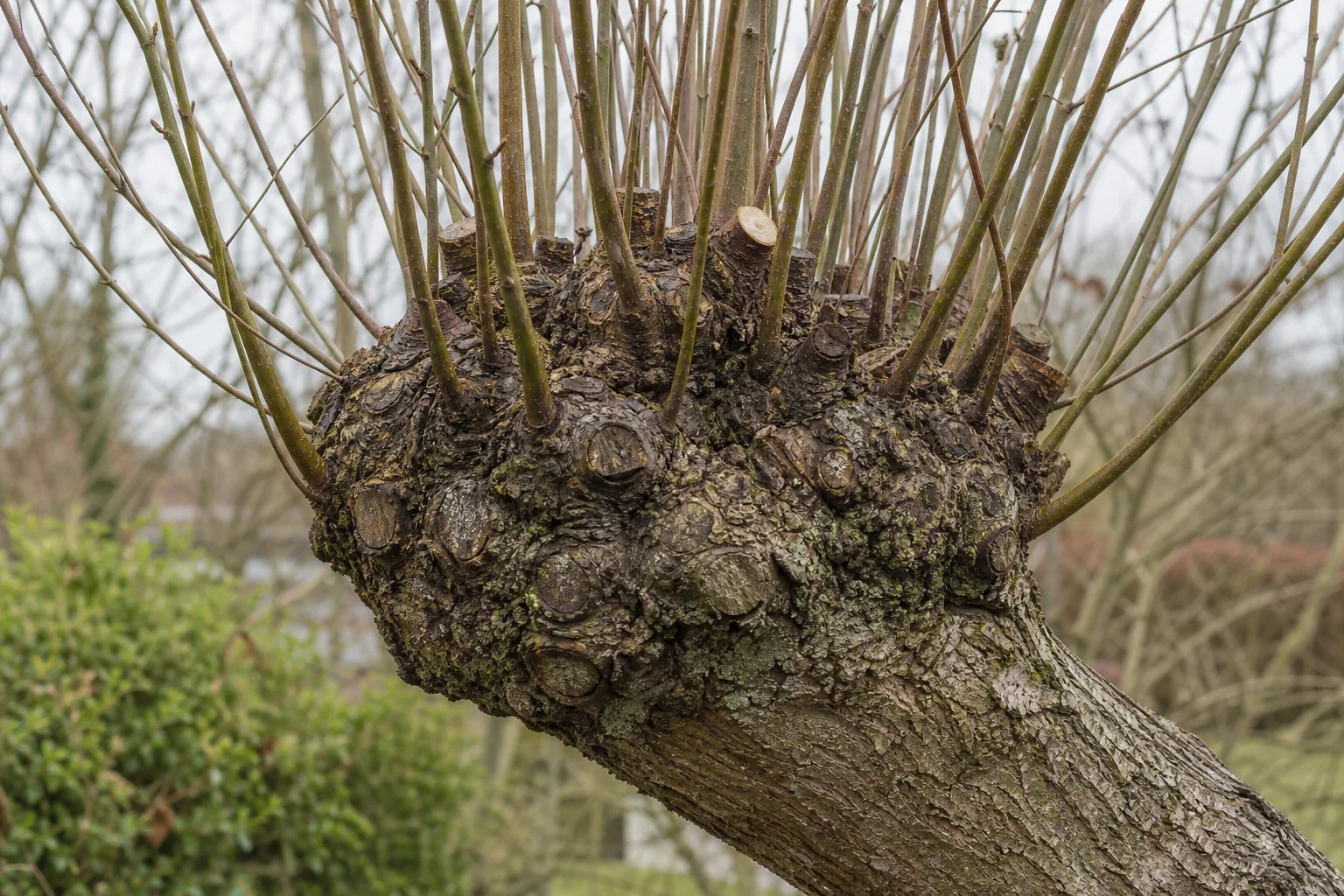
A genuine pollard is managed back to the same framework on a repeated cycle. The system normally begins while a tree is young or its branches are still relatively small. New shoots grow from the chosen points and, over successive cuts, swollen knuckles known as pollard heads develop. Future work removes the regrowth above those heads while leaving the established framework intact.
That is different from taking large limbs or the whole upper crown from a mature tree that has never been pollarded. The Arboricultural Association treats pollarding as a long-term regime started at a young age or small size, with visible knuckles and cyclical pruning. It specifically separates that work from topping and lopping. Calling a hard cut pollarding does not make it the same operation.
If your tree already has distinct pollard heads, tell us when it was last cut if you know. A recent photograph of the whole tree and a closer view of the heads are useful for the quote. Where there is no established framework, we do not assume that first-time pollarding is suitable. Another pruning specification may be more appropriate, or we may decline to quote for the requested cut.
How it works
Send a whole-tree photograph, close views of the pollard heads and the date of the last cut if it is known.
We write the retained framework, regrowth to remove, working area, access and handling of cut material.
We continue the agreed pollard cycle, protect the established heads and leave the work area clear.
The quote should identify the tree, the established heads and the extent of regrowth to be removed. Vague wording such as cut it right back leaves too much open to interpretation. A clear specification states that the pollard cycle is being continued and records any shoots that must remain. It also avoids cutting into the old heads simply to make the finished outline look neater.
Species and timing need to be considered together. RHS guidance lists lime and London plane among trees commonly managed this way, while also noting different timing for some maples. An overgrown pollard is not just a bigger version of a recently maintained one. Larger stems and a long-lapsed cycle can change the available options, so we do not publish one interval or one cut position for every tree.
Show us the ground beneath the crown, nearby roofs, sheds, planting and the route to the road. Those details affect how cut shoots can be controlled and moved. Mention parking restrictions or shared access before the visit. We carry out tree work, but do not provide tree surveys or consultancy reports.
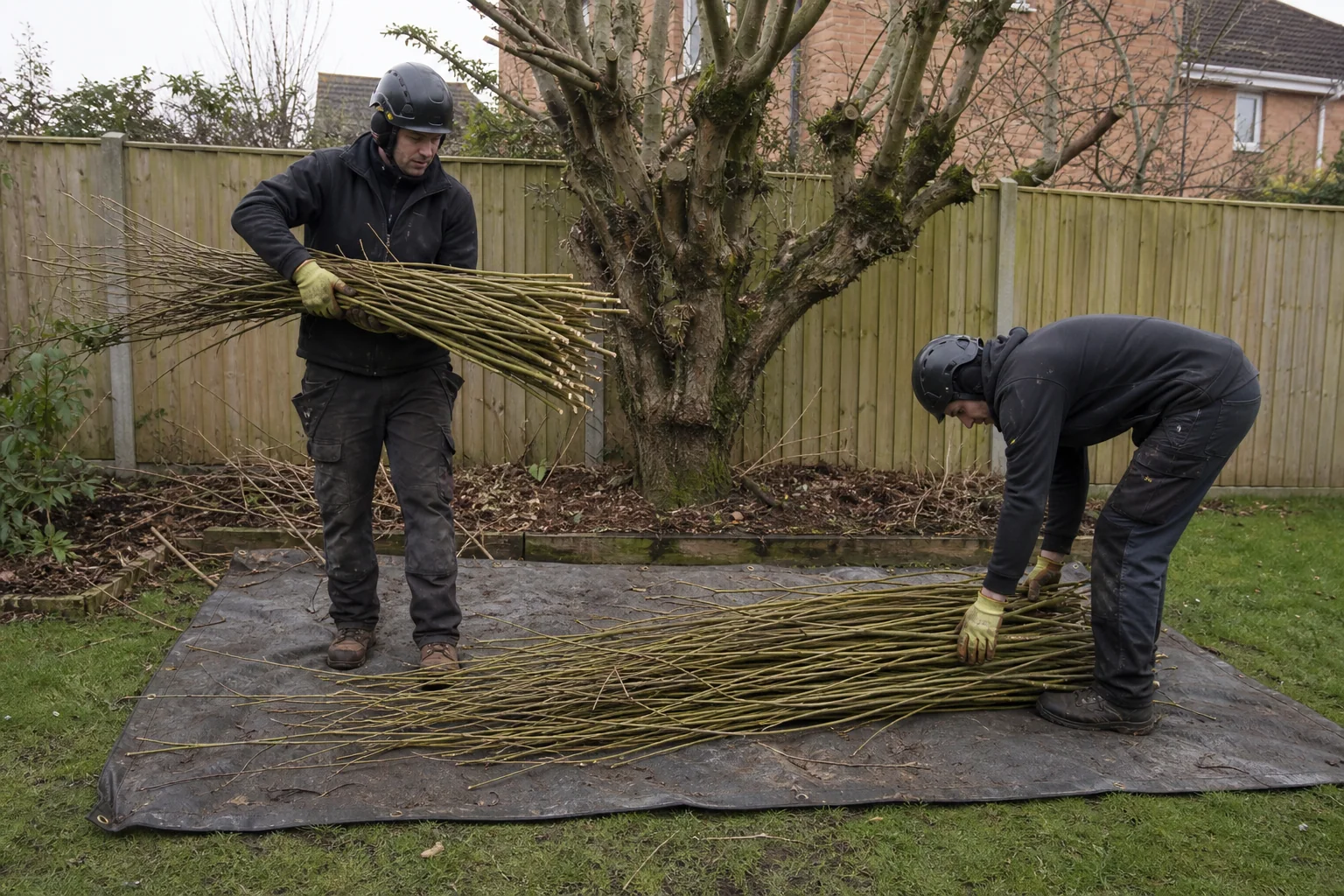
The qualified team works to the agreed pollard points and keeps the old framework in place. Slender regrowth is removed above the previous cuts. The exact access and control method depends on the tree, the ground and what sits below it. The work area must stay clear while cutting is under way, particularly where shoots overhang a roof, greenhouse, drive or neighbouring garden.
Cut material from a maintained pollard is often long and narrow rather than heavy crown timber. Even so, the route out matters. Long shoots can catch fences, windows and planting if they are dragged through a tight passage. We break down and move the material in amounts suited to the access instead of treating the garden as an open work site.
Clean-up is included in every job. What happens to the cut shoots, chip and any timber is written into the individual quote. Woodside Forestry Ltd was established in 2008 and carries £10 million public liability insurance. Those facts do not replace a precise specification, but they give the customer a clear basis for who is carrying out the agreed work.
Late winter or early spring suits many established pollards, but it is not a rule for every tree. The RHS advises avoiding spring work on maples that are prone to sap bleeding and notes that autumn can leave cuts more exposed to decay fungi. The tree type, length of regrowth, agreed cycle and site conditions all belong in the timing decision.
Pollarding can be controlled by a Tree Preservation Order. Unless an exception applies, work to a protected tree needs the local planning authority's written consent. Trees in a conservation area can require a section 211 notice, normally six weeks before work. The approved wording may specify the pollard points or the extent of pruning, so the job must follow the decision rather than a different verbal request made on the day.
Wild birds, their eggs and nests are protected by law. Cutting a tree can affect an active nest, whatever month appears on the booking. Keep the area around the tree undisturbed if you notice birds repeatedly carrying nesting material or food into the crown, and tell us before work starts. The timing or scope may need to change when protected wildlife is present.
For a recently failed branch or immediate danger, keep people away and use the 24-hour emergency call-out service.
Straight answers
No. Genuine pollarding is a repeated management system usually established while the tree or its branches are young. A hard first cut on an unpollarded mature tree is not automatically suitable and should not be relabelled as pollarding.
There is no single interval for every pollard. Species, shoot size, the established cycle and the intended result all matter. Long-lapsed pollards can need a different specification from trees maintained regularly.
Yes. Clean-up is included. The quote also states what will happen to the shoots, chip and any timber because those details are agreed for the individual job.